High Performance Habits: The 6 Habits Explained
Brendon Burchard's 6 high performance habits explained: clarity, energy, necessity, productivity, influence, courage, and how to build them.

The six high performance habits are: seek clarity, generate energy, raise necessity, increase productivity, develop influence, and demonstrate courage. They come from Brendon Burchard’s 2017 book High Performance Habits: How Extraordinary People Become That Way, built on survey research covering people in 190 countries. His central claim: high performance is trainable. It comes from deliberate habits, not talent or hustle.
Below are the six habits as the book actually defines them, why each one matters, and a practical plan for building each instead of just reading about them.
Last updated: August 2026
Build the Habits on GrowthDay →
TL;DR: Brendon Burchard’s six high performance habits are Seek Clarity, Generate Energy, Raise Necessity, Increase Productivity, Develop Influence, and Demonstrate Courage. The first three are personal habits (how you manage yourself); the last three are social habits (how you create results with others). The framework is free to learn. The hard part is daily consistency, which is what tools like GrowthDay are built to support.
What Are the High Performance Habits?
The high performance habits are six deliberate practices that, in Burchard’s research, separate people who succeed over the long term from people who plateau. The book defines high performance as “succeeding beyond standard norms, consistently over the long term,” while staying healthy and maintaining good relationships. The habits are practices anyone can train, which is the entire reason the framework matters.
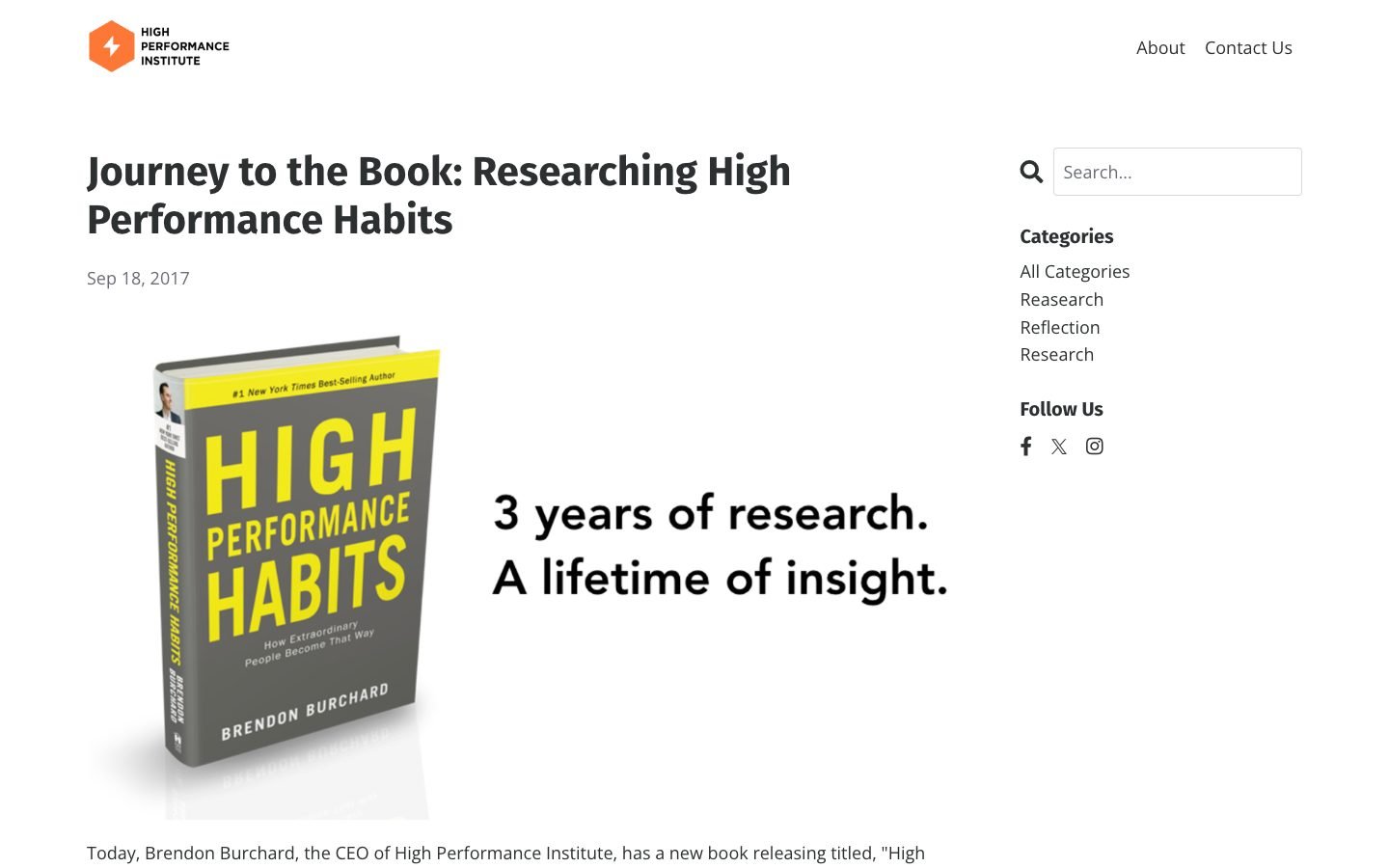
The research base is bigger than the usual self-help anecdote pile. Burchard’s High Performance Institute built the framework from large-scale surveys, coaching session data, and a validated assessment called the High Performance Indicator, with respondents across 190 countries. You can argue with survey methodology, but this is closer to organizational-psychology research than to a guru’s hunch.
Burchard splits the six into two groups. The personal habits (clarity, energy, necessity) govern how you manage yourself. The social habits (productivity, influence, courage) govern how you produce output and lead others. You need both halves. Strong personal habits without the social ones cap your impact at self-improvement.
1. Seek Clarity
Seeking clarity means deciding, on a daily basis, who you want to be, how you want to interact with others, what you want, and what will make your work meaningful. The book calls these the “Future Four”: self, social, skills, and service. High performers do not set direction once a year; they re-ask these questions constantly.
The practical move is a short daily check-in: name your top goal, the feeling you want to bring to the day, and the one thing that would make today a win. Burchard’s own tool is asking “What is the primary feeling I want to generate today?” before the day starts. Vague intentions produce vague results. Clarity points the other five habits in one direction.
2. Generate Energy
Generating energy means actively producing the physical and mental stamina your goals require, rather than running on fumes. In the book, energy covers three layers: physical (sleep, movement, nutrition), emotional (the feelings you deliberately generate), and mental (focus and presence). High performers treat all three as resources they create, not weather they endure.
The book’s signature tactic is the release-tension-set-intention transition: between every major activity, stop, breathe, let go of the last task, and choose the energy you want for the next one. It sounds minor. Done ten times a day, it is the difference between arriving at 6pm useful or fried.
3. Raise Necessity
Raising necessity means making high performance a must, not a preference, by tying it to identity and obligation. Burchard’s phrase is “performance necessity”: the mix of internal standards (identity, passion) and external demands (duty, deadlines, people counting on you) that makes showing up non-negotiable.
The book’s tool is one question asked before important work: “Who needs me on my A game right now?” Name the person your work serves and what is at stake if you fail to deliver. When success feels necessary rather than nice-to-have, you stop negotiating with yourself about whether to start. This habit converts intention into action.
4. Increase Productivity
Increasing productivity, in Burchard’s specific definition, means increasing your output of what he calls prolific quality output (PQO): the few outputs that actually determine your success in your field. For a blogger it is published posts, for a salesperson closed deals. The book recommends aiming for roughly 60% of your work time on PQO and treating the rest as necessary overhead.
The discipline is subtraction. Identify your PQO, block time for it first, and say no to the busywork that feels productive but moves nothing. Producing more of the right thing beats doing more things. For solo operators, this habit pairs naturally with systems like the one-person marketing machine.
5. Develop Influence
Developing influence means earning the ability to shape how others think and act. The book gives three concrete practices: teach people how to think about themselves and the situation, challenge them to grow (in character, connection, and contribution), and role model the behavior you want them to adopt. No manipulation involved; influence is earned by adding value and asking more of people.
You build it by teaching what you know, asking people to rise, and being the example first. Influence compounds. The more you help others succeed, the more your own goals become achievable through them, which is why this is a social habit and not a charisma trait.
6. Demonstrate Courage
Demonstrating courage means taking action despite fear, uncertainty, or risk: sharing your real ambitions, speaking up, and honoring the struggle instead of resenting it. In Burchard’s survey data, courage scores correlate strongly with overall high performance, because every meaningful goal eventually demands a scary step.
The habit is choosing the harder right action when an easier wrong one is available: publishing before it feels perfect, having the difficult conversation, betting on yourself. Courage carries the other five habits across the gap between knowing and doing.
How to Build Each Habit: A Practical Table
Knowing the six habits takes ten minutes. Building them takes a daily trigger, a small repeatable action, and a way to check yourself weekly. Here is a working plan drawn from the book’s own practices:
| Habit | Daily trigger | Small action | Weekly check |
|---|---|---|---|
| Seek Clarity | First 5 minutes of the morning | Write your top goal and the feeling you want to generate today | Did my days match what I said mattered? |
| Generate Energy | Every transition between tasks | Close eyes, breathe, release tension, set intention for the next block | Sleep hours and workout count |
| Raise Necessity | Before each work session | Ask “Who needs me on my A game right now?” and name them | Did I show up when I did not feel like it? |
| Increase Productivity | Start of the workday | Block the first 90 minutes for your PQO before anything else | Percent of hours spent on PQO (target ~60%) |
| Develop Influence | Each meaningful conversation | Teach one thing, or ask one person to raise their standard | Who did I help succeed this week? |
| Demonstrate Courage | Whenever you notice avoidance | Do the avoided action within 24 hours, imperfectly | What did I ship or say that scared me? |
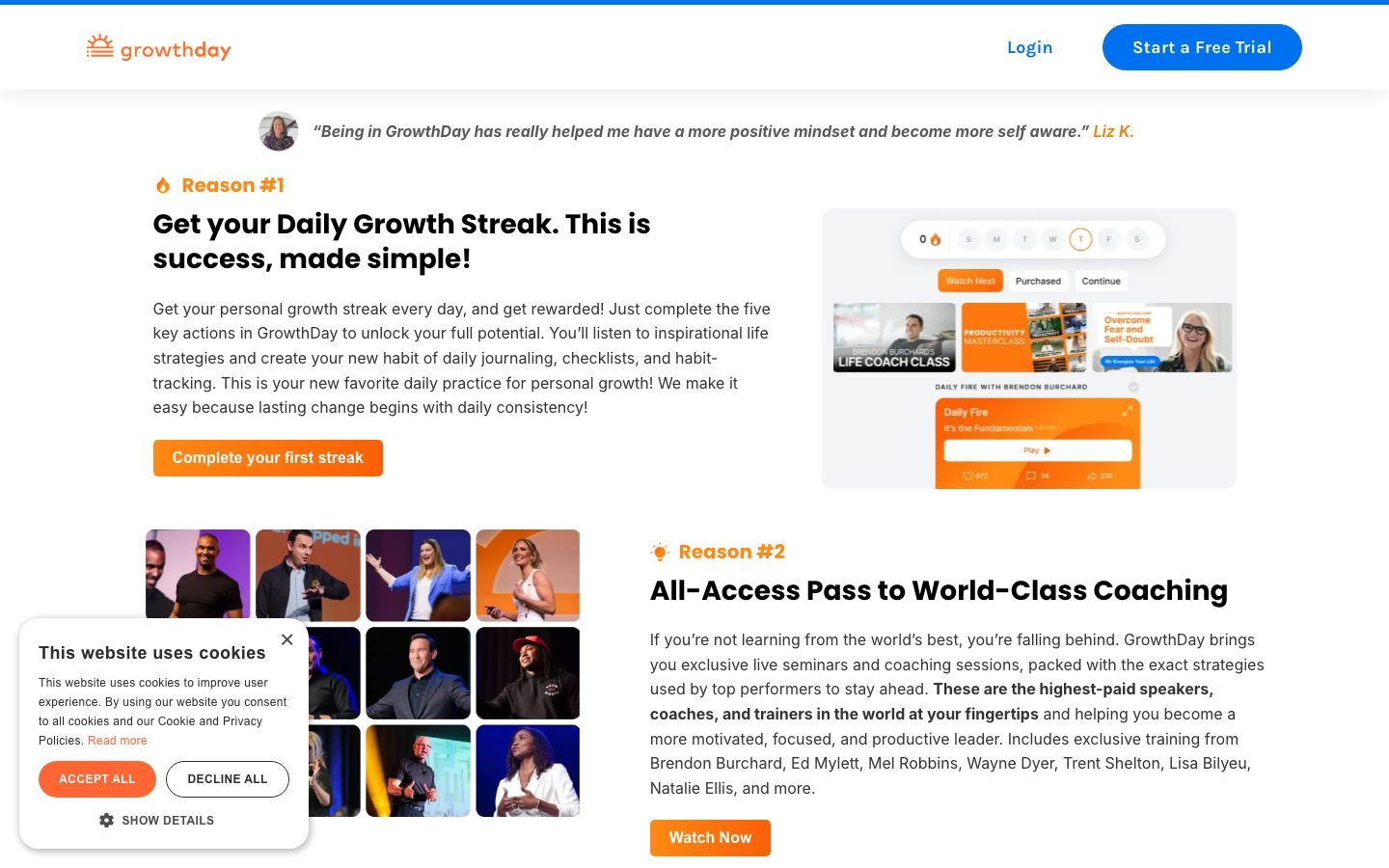
Run this for 30 days before judging it. Most people fail the framework at the tracking step, not the knowledge step. A notebook works fine. If consistency is your weak point, Burchard’s GrowthDay app builds the daily journaling, habit scoring, and coaching around this exact framework, from $49/month. And if you want to coach others on the framework professionally, that is what the Certified High Performance Coach certification trains, at a much steeper price.
Build the Habits on GrowthDay →
Related Reading
- Certified High Performance Coach Review: Burchard’s certification for coaching this framework
- The One-Person Marketing Machine: productivity applied to a solo business
FAQ
What are the 6 high performance habits?
The six high performance habits from Brendon Burchard are: Seek Clarity, Generate Energy, Raise Necessity, Increase Productivity, Develop Influence, and Demonstrate Courage. The first three are personal habits; the last three are social habits.
Who created the high performance habits framework?
Brendon Burchard, a personal development trainer and founder of GrowthDay, created the framework. He published it in his 2017 book “High Performance Habits,” based on High Performance Institute survey research covering people in 190 countries.
Are the high performance habits free to learn?
Yes. The framework itself is free to understand and apply with nothing more than a notebook. Paid tools like GrowthDay help with the hard part, daily consistency and tracking, but they are optional.
What is the difference between personal and social high performance habits?
The personal habits (clarity, energy, necessity) govern how you manage yourself. The social habits (productivity, influence, courage) govern how you create results and lead others. High performance requires developing both groups together.
Try it yourself
Ready to put it to the test?
We may earn a commission at no extra cost to you. Affiliate disclosure.
Reader feedback
Was this review helpful?
Your feedback helps us write better reviews.
Thanks for your feedback.

AI Funnel Insider is an independent review site covering AI tools, Skool communities, and online courses. Every community and tool reviewed here is personally joined, paid for, and tested before a verdict goes live. Reviews are independent and may contain affiliate links, at no extra cost to you.
Related Posts

Certified High Performance Coach Review: Worth $15k?
Is Brendon Burchard's Certified High Performance Coach (CHPC) certification worth ~$15,000? Honest 2026 review of the program, fit, and cost.

Brendon Burchard ULTRA Review 2026
Honest review of Brendon Burchard's ULTRA mastermind on GrowthDay: what it is, the real cost, who it's for, and a cheaper way in.

Best AI Tools for Online Business
The best AI tools for online business in 2026, ranked by job: content, video, automation, analytics, and funnels. Honest picks for solopreneurs.

Taskade Review 2026: AI OS or Overhyped?
Is Taskade a real AI operating system for solopreneurs or overhyped? An honest take on the AI agents, features, pricing (free to $250/mo), and fit.

The $271/Month Solo AI Stack: Where Every Dollar Goes
The full solo AI marketing stack costs $271/month ($3,252/year). See the 8-tool table, where the money goes, the $0 version, and the break-even math.

ClickFunnels Pricing 2026: $97 Is All Most People Need
ClickFunnels costs $97 to $297 a month in 2026, plus $0.675 per 1,000 emails. Full plan table, three real monthly bills, and why Launch is enough.
The Insider Newsletter
One honest review, every Sunday.
Get our weekly breakdown of which AI tools and Skool communities are worth buying. Built for marketers, founders & solopreneurs.