Ultimate Branding Course Review 2026: MRR Catch?
Is the Ultimate Branding Course worth it? 57,000+ members, 270+ lessons, Master Resell Rights. My honest breakdown and who should skip it.

Short answer: the Ultimate Branding Course is worth $499 if you already have a small warm audience and will actually use the Master Resell Rights. Everyone else should skip it, because there is no refund policy and no trial. That is the whole verdict, and the rest of this page is the evidence behind it.
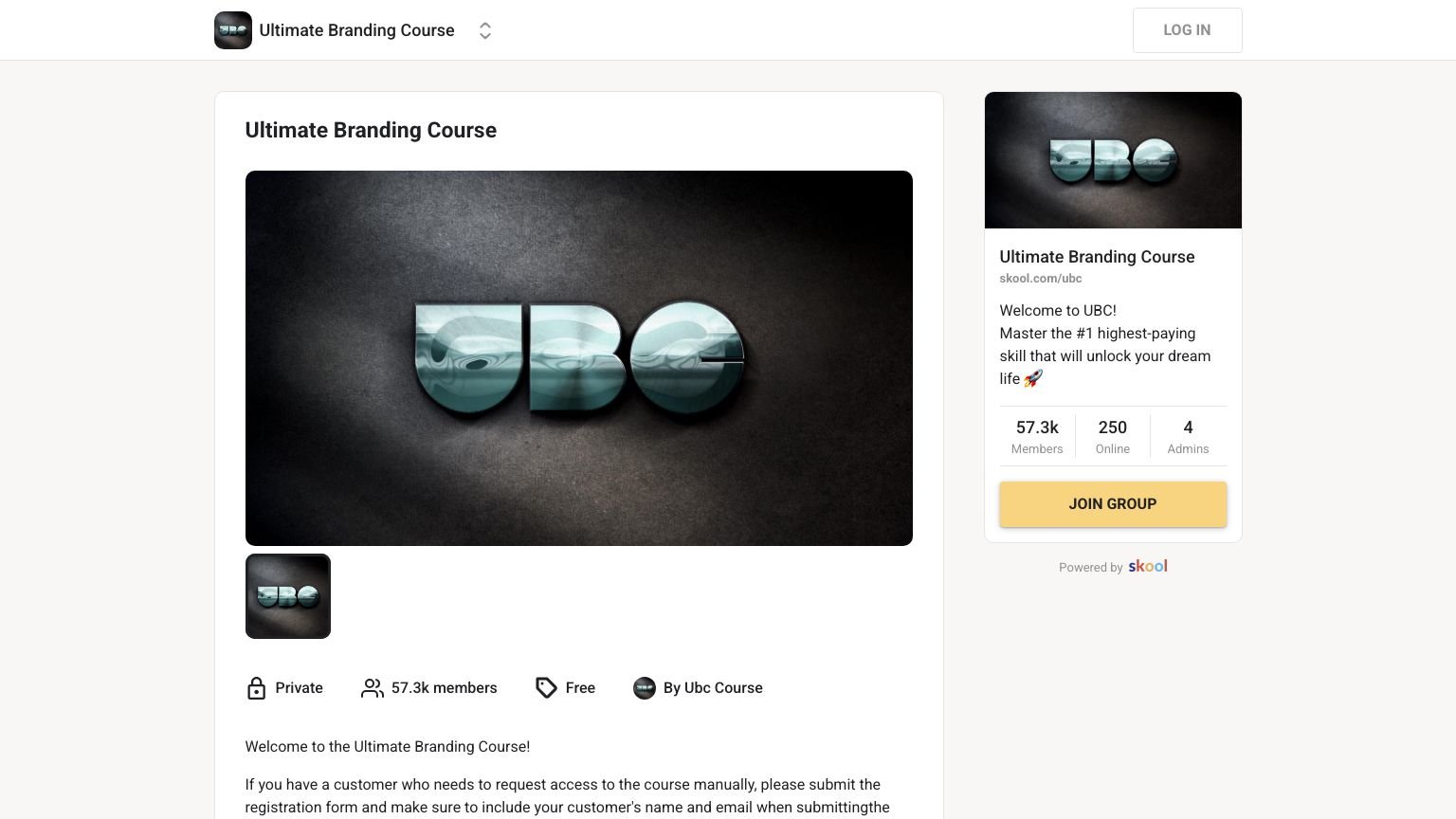
Dray Mijatovic’s course bundles 24 modules, a Skool community that crossed 57,300 members in August 2026, and a resell license into one $499 payment. No monthly fee. No upsell ladder. The digital course market hit $65.5 billion in 2023 and is forecast to reach $319 billion by 2029 (Statista, 2024), and UBC entered it with a structure almost nobody else uses at this price.
TL;DR: UBC costs $499 one time, includes 270+ lessons across 24 modules, and gives buyers Master Resell Rights to sell UBC and keep 100% of revenue. Best fit: creators building a personal brand on Instagram or TikTok who want training plus a monetization vehicle. There is no refund policy, so read this before you pay. The Skool platform hosting it runs 900,000+ active communities (Skool, 2024).
What Is the Ultimate Branding Course?
UBC launched on August 31, 2023 on Skool, the same community software thousands of digital education businesses run on. It passed 57,000 members inside two years, which puts it near the top of the Skool leaderboard by size. The syllabus covers personal branding, content creation for Instagram and TikTok, email marketing, sales funnels, and business expansion across 24 modules and 270+ video lessons.
Dray Mijatovic (known online as Kdall) hosts weekly live calls with multilingual trainers in English, Spanish, Dutch, and French. Multilingual support at $499 is rare. Most English-only courses in that band never bother. The classroom, the community feed, and the calls all sit inside one Skool account, so there is no second login to manage.
The resell license is the real hook. Buy UBC and you get the right to sell it to someone else at $499 or above and keep every dollar. No tiers. No downline. No recruitment quota. That single clause is what turned the buyer base into the marketing department.
How Much Does the Ultimate Branding Course Cost?
$499, once. I re-checked the merchant page in August 2026 and the number has not moved since launch. Subscription course platforms in the same category run $49 to $97 per month (Forbes, 2024), so UBC breaks even against a $97/month program in just over five months. Lifetime access and future updates are baked in.
There is no free trial and no refund window. For a risk-averse buyer that is a hard stop, and it should be. The no-refund stance filters out passive consumers, which is a common pattern in high-engagement digital products, but it also means a bad fit costs you the full $499. If you want a money-back guarantee, buy something else.
Here is the five-year cost picture, since the one-time price only looks cheap when you stretch the timeline.
| Option | Year 1 | Year 3 | Year 5 | Resell license |
|---|---|---|---|---|
| UBC | $499 | $499 | $499 | Yes |
| $49/mo subscription course | $588 | $1,764 | $2,940 | No |
| $97/mo subscription course | $1,164 | $3,492 | $5,820 | No |
| Coursera Brand Management ($59/mo) | $708 | $2,124 | $3,540 | No |
Against a $97/month program you are ahead by roughly $5,300 over five years. That gap only matters if you stay in the game five years, which most course buyers do not.
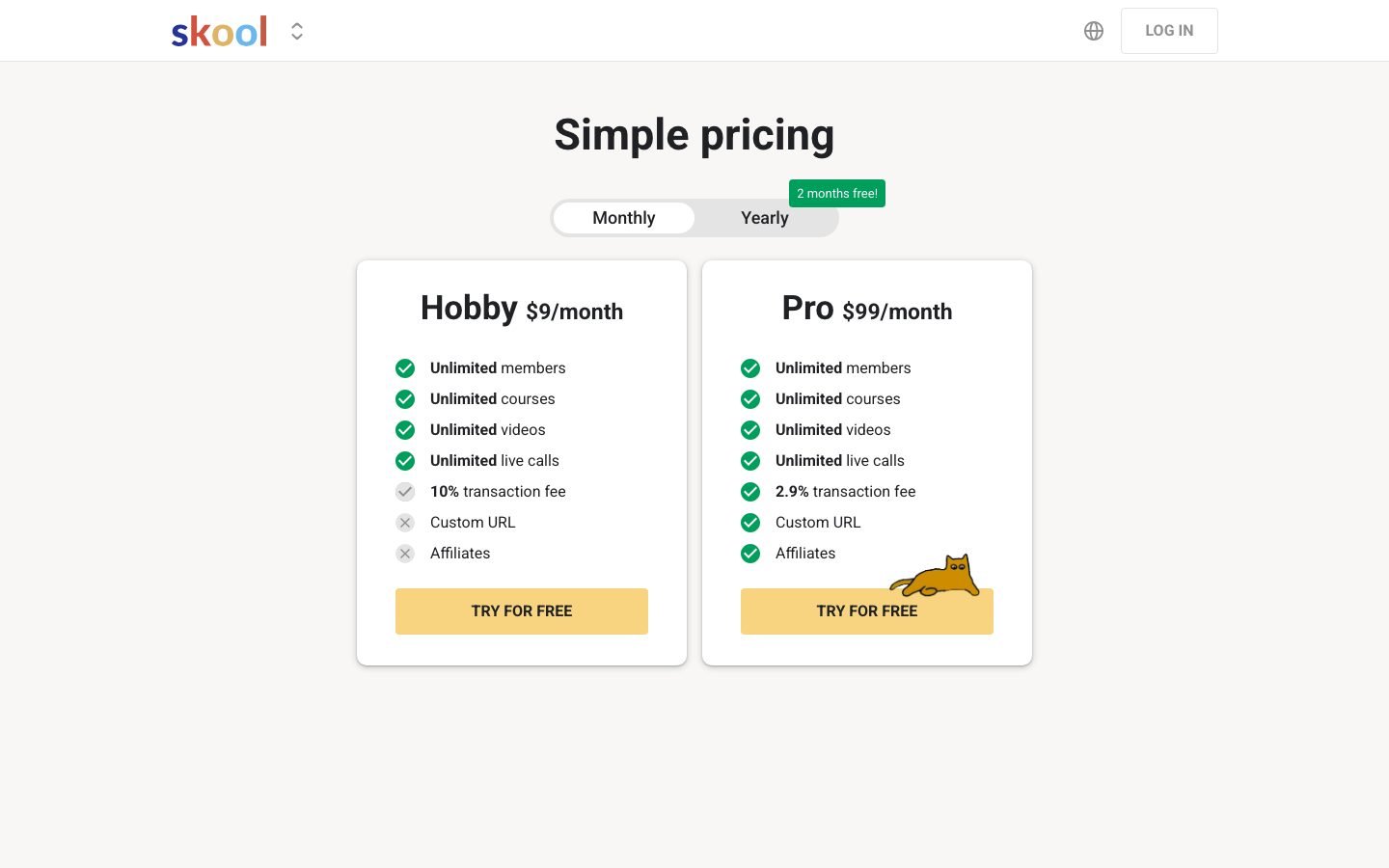
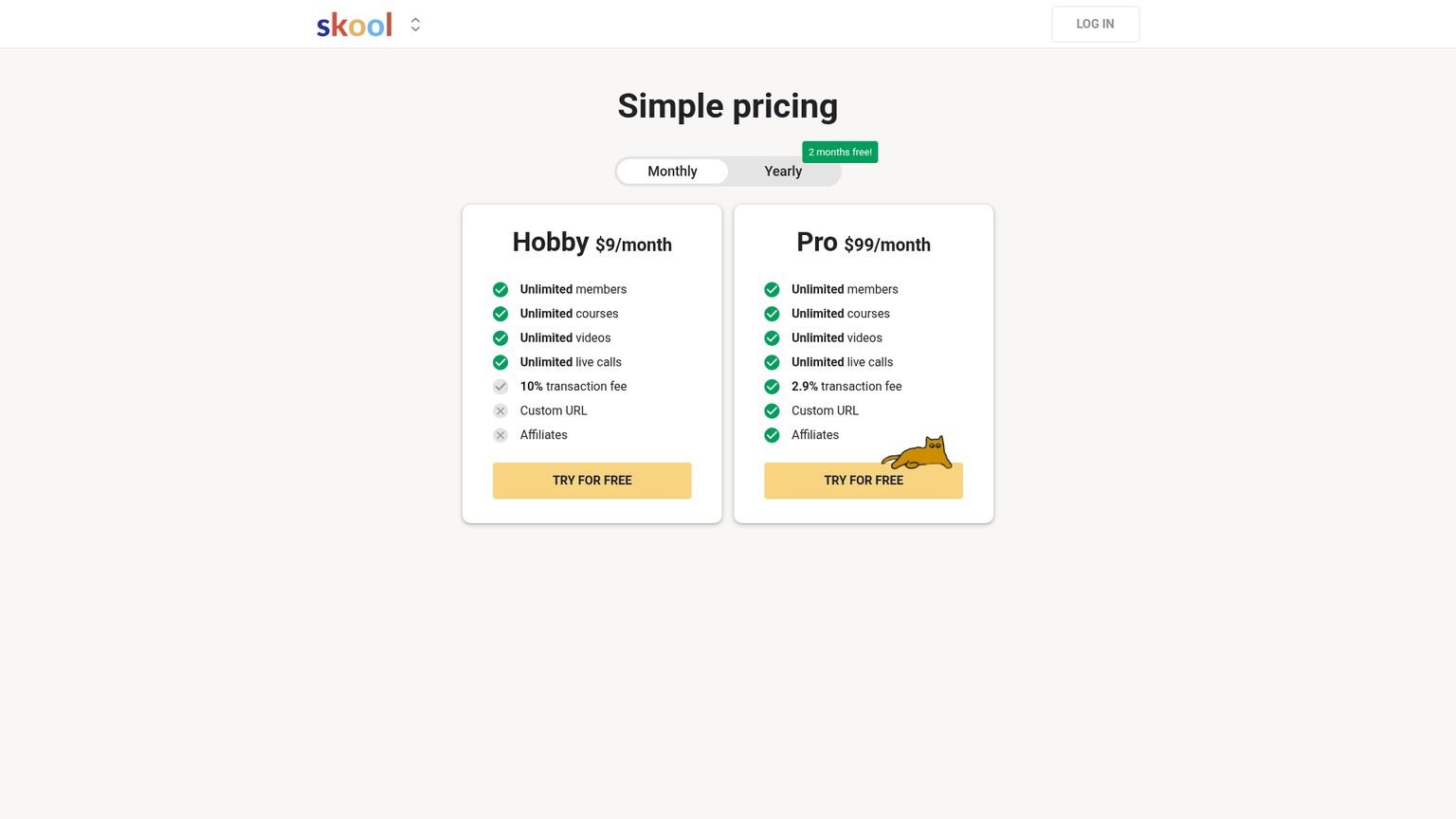
For how Skool itself prices communities, see my Skool pricing breakdown.
What’s Inside UBC’s 24-Module Curriculum?
The curriculum goes wider than the word “branding” suggests. The opening modules handle foundations: niche identification, positioning, finding a voice. Standard material, sequenced well.
The middle block turns into content mechanics for Instagram and TikTok specifically. Platform strategy, format guidance, production systems for consistent output. These get updated when the algorithms shift, which buys the course shelf life that static video libraries never have.
Email marketing gets its own dedicated track. List building, welcome sequences, automated follow-up. Creators who skip this section and chase content only tend to stall around week six, when organic reach flattens and there is no list to fall back on.
Sales funnels and digital product creation cover the backend: offer structure, funnel architecture, delivery. Whether you sell UBC or your own product, that is where the plumbing lives.
Business expansion and team building close it out. Useful once you are past solo operator and pushing beyond $5,000 a month. Before that, it is theory you cannot apply.
Across comparable Skool courses, the most expensive mistake I see is front-loading consumption with no shipping deadline. Members who set a “post something by day 7” rule in module one beat the ones who waited until module ten. UBC’s sequencing allows it, since the branding modules do not gate the content modules.
Is the Ultimate Branding Course a Scam?
No, and it is worth explaining why the question keeps coming up. The resell model looks like MLM at a glance: people selling a course about selling a course. That skepticism is fair. The structure is still different.
In MLM your income depends on recruiting people who recruit more people. UBC does not chain. You pay $499. You sell to one person for $499. You keep $499 and the transaction is finished. Your buyer owes you nothing and your income does not depend on what they do next. The FTC defines a pyramid scheme by income derived primarily from recruitment rather than product sales (FTC, 2024). UBC does not meet that test.
The member count is publicly verifiable on the Skool community page. The lessons exist. Dray runs the calls. Fake operations do not sustain instructor-led communities at this scale for three straight years.
What Do Real Students Say About UBC?
Reviews are mixed, which is a good sign. Uniform praise means planted content. The same pattern repeats across independent Reddit threads and YouTube teardowns.
On the upside, people praise curriculum depth. 270+ lessons spanning mindset through funnel automation is a lot of course for $499. Several reviewers describe getting clear on brand messaging inside the first three modules. A handful report making their first $499 sale within weeks by reselling UBC itself, almost always people who already had a warm audience of 500 to 2,000 followers.
The complaints repeat just as reliably. Beginners with no marketing background find 24 modules paralyzing. Engagement has thinned since the 2023 launch peak, and Reddit reviewers say response times and peer support quality slipped as the community grew. Big rooms feel colder than small ones. That is a platform dynamic rather than a UBC failure.
The live calls come out as the highest-rated element in nearly every independent review. Direct access to Dray and the multilingual trainers is the one thing a passive video course cannot copy.
The engagement dip is predictable. Research on community platforms shows active participation falls to 1-3% once a community passes 10,000 members (Nielsen Norman Group, 2023). At 57,300 members, the live discussion layer is realistically 570 to 1,700 people in a given week. Still a real peer network. Just not the 57,000 responsive peers the sales page implies.
How Does UBC Compare to Alternatives?
The market splits into three tiers, and where UBC lands decides whether $499 is defensible.
| Course / Platform | Price | MRR License | Live Calls | Community Size | Refund Policy |
|---|---|---|---|---|---|
| Ultimate Branding Course | $499 one-time | Yes, keep 100% | Weekly | 57,000+ members | None |
| Digital Wealth Academy (DWA) | $497 one-time | Yes | Varies | ~20,000 members | None |
| Udemy Branding Courses | $15-$30 one-time | No | No | Per-course only | 30-day refund |
| StoryBrand Framework | $500+ | No | Limited | None included | Case-by-case |
| Coursera Brand Management | $49-$79/month | No | No | Cohort-based | 14-day refund |
| Stan Store Creator Course | $97/month | No | Monthly | ~5,000 members | Limited |
Nothing else at $499 pairs a one-time price, a resell license, weekly live calls, and a community this size. Digital Wealth Academy is the closest structural match: same price band, same MRR model, a fraction of the members. DWA pushes the passive income angle harder. UBC has more depth on the actual brand-building work.
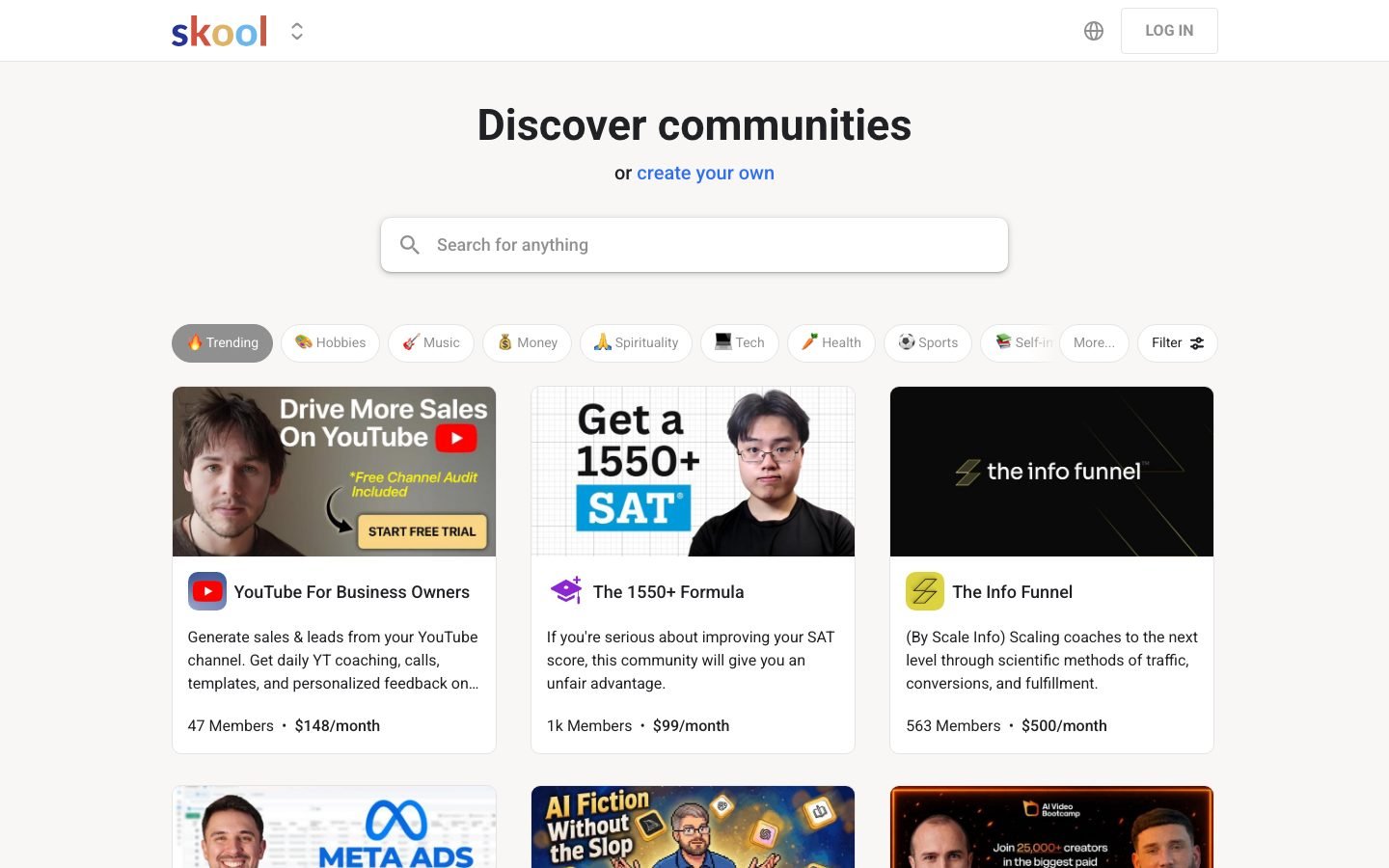
Udemy covers branding theory fine for $20, with no community, no live instruction, and no resell rights. If you want to understand the concepts and nothing more, take the $20 option and keep your $479. If you want implementation support and a monetization path, the infrastructure gap is the whole point. For a broader view of the platform landscape, I compared the options in 7 best Skool alternatives and Skool vs Kajabi.
Is UBC Worth $499 in 2026?
The arithmetic case is easy. At $499 once, UBC beats recurring alternatives inside five months and costs nothing after that. The harder question is whether you are the buyer it was built for.
UBC works if you are a creator or operator building a personal brand on social media, you want a repeatable system for selling digital products, and you are willing to treat the resell license as one income stream among several. With even 1,000 warm followers, one UBC sale pays back the entire purchase. Very few courses can offer that math honestly.
It fails if you need visual identity work, because UBC never touches logo design or brand systems in the agency sense. It fails if you want a refund option. And it fails if you are a total beginner who needs hand-holding, because 270+ lessons is an asset for self-directed learners and a trap for anyone who needs a linear path with check-ins.
The no-refund policy decides it. If you are only 80% sure, do not buy. Nothing undoes the purchase three weeks in when you work out that content creation is not your medium.
Your First 30 Days Should Be Shipping, Not Watching
Week 1 is orientation, not consumption. With 24 modules in front of you the instinct is to watch everything before acting. Resist it. Finish the first three branding modules, pick one platform, and post something by day 7. It will be rough. Post it anyway.
Week 2 forces the MRR decision. Are you building a brand around your own niche and product, or are you here mainly to resell UBC? Both work. Mixing them without deciding is what stalls people in week three.
Week 3 belongs to the email and funnel modules. Members who skip these and chase content alone hit a wall around week six when organic reach stalls. No list means no fallback. The funnel work matters whether you sell UBC or your own offer.
Week 4: get on a live call. The recorded curriculum is fixed. Algorithm shifts, new tools, and your specific stuck point get handled live, and that is the fastest route past an obstacle you have been chewing on for three weeks.
By day 30 the realistic outcome is a working content calendar, one complete offer setup, and a posting streak you did not break. Early wins trace back almost every time to people who treated week one as shipping week.
Frequently Asked Questions
Is the Ultimate Branding Course a scam?
No. UBC has 57,000+ verifiable members, 270+ real video lessons, and weekly live calls on Skool. The Master Resell Rights model draws MLM comparisons because buyers can resell the product, but there are no tiers, no downlines, and no requirement to recruit anyone. The FTC’s definition of a pyramid scheme requires income to come primarily from recruitment rather than product sales (FTC, 2024). UBC does not meet that definition.
How much does the Ultimate Branding Course cost?
$499 as a one-time payment. No subscription, no upsells, no recurring fees. Comparable subscription courses run $49 to $97 a month (Forbes, 2024), so UBC breaks even in 5 to 10 months and then costs nothing while competitors keep billing.
Can I get a refund on UBC?
No. The no-refund policy is strict. Be certain before you pay. If you are not committed to working the content for at least 60 days, this course is not built for you.
What platform hosts the Ultimate Branding Course?
Everything runs on Skool{rel=“sponsored”}. Modules, community discussions, and live calls are all inside your Skool account. No extra software required.
What are Master Resell Rights and how do they work with UBC?
Buying UBC gives you a license to resell the course at $499 or above and keep 100% of what you collect. No downline, no recruitment chain, no obligation to sell at all. The $499 price floor protects the market value. You can work through all 270+ lessons and never sell a single copy.
Who should skip the Ultimate Branding Course?
Skip it if you want visual identity design, since UBC teaches social media personal branding rather than logos or brand systems. Skip it if you need a refund window. Skip it if you are brand new to social media content and need paced, structured progression, because 24 modules rewards self-direction and punishes everyone else.
The Verdict
UBC delivers real value at $499, especially for creators who will actually use the resell license. The curriculum is deep, the room is large, and the one-time price beats most competitors inside five months. It suits a narrow buyer. The no-refund policy means you commit or you walk.
If you are building a personal brand on social media and want a system that can pay for itself in one sale, UBC deserves a serious look. If you want visual identity training or a risk-free window to change your mind, spend the $499 somewhere else.
Related Reading
Full pros & cons
- Lifetime access to 24 modules and 270+ video lessons for one payment, with no recurring fees
- Master Resell Rights included, so you can sell the course and keep 100% of revenue
- Weekly live calls with Dray and multilingual trainers in English, Spanish, Dutch, and French
- 57,000+ member Skool community with active peer support
- Covers personal branding, content, email, funnels, and business expansion end to end
- No refund policy. Once you pay $499 you are locked in
- 24 modules overwhelm beginners with no marketing background
- Community engagement has dipped since the 2023 peak as member count grew
- The MRR angle is hard to execute without an existing audience
- Built for social media personal branding, not visual identity or logo design
Try it yourself
Ready to put it to the test?
We may earn a commission at no extra cost to you. Affiliate disclosure.
Reader feedback
Was this review helpful?
Your feedback helps us write better reviews.
Thanks for your feedback.

AI Funnel Insider is an independent review site covering AI tools, Skool communities, and online courses. Every community and tool reviewed here is personally joined, paid for, and tested before a verdict goes live. Reviews are independent and may contain affiliate links, at no extra cost to you.
Related Posts

AI Advantage Summit Review 2026: Worth 9 Hours?
The AI Advantage Summit is free, runs 3 days, and stars Tony Robbins and Igor Pogany. Is it worth 9 hours, or just a pitch? Honest verdict.

AI Automation Agency Hub Review 2026: Free, But Good?
Liam Ottley's free Skool has 333k members and 60+ hours of training. Is the AI Automation Agency Hub actually worth your time in 2026?

AI Creator Bootcamp Review 2026: What $9/mo Gets You
AI Creator Bootcamp packs 13 courses, 165 modules, and 2,100+ members into $9/mo. My honest breakdown of the curriculum and who it is built for.

Buildy AI Review 2026: Is It Any Good?
Buildy AI builds apps from plain English, no code, free to join. What actually works, where it falls short, and my honest 2026 take.

Closer Academy Review 2026
Mike Barron's Closer Academy reviewed: the real pricing, curriculum quality, member complaints, and who should actually join in 2026, before you pay.

Digital Boss Academy Review 2026: Legit or Hype?
Digital Boss Academy bundles 30 courses and 40,000+ PLR pieces for 40,400 members. Is the one-time price worth it? Honest verdict inside.
The Insider Newsletter
One honest review, every Sunday.
Get our weekly breakdown of which AI tools and Skool communities are worth buying. Built for marketers, founders & solopreneurs.