8 Best Skool Alternatives 2026 (Ranked by Fees)
Evidence Review Built from public, vendor and customer evidence. We did not buy or use it.The 8 best Skool alternatives for 2026, compared on price, transaction fees, and features. See which one wins before you switch.

- Review type
- Evidence Review. Built from public, vendor and customer evidence. We did not buy or use it.
- Last verified
- August 20, 2026
- Affiliate relationship
- Yes, disclosed above
| Closest alternatives | Price | Score |
|---|---|---|
| AI SEO Rainmakers | $319/month for new members (checked October 12, 2026) | 4.2/5 |
Rank the eight best Skool alternatives by what they actually take from your revenue and the order changes completely. Teachable Builder, Podia Shaker, Thinkific and Kajabi charge no platform cut. Circle and Mighty Networks now take 2% on their entry plans. Whop takes 3% but costs nothing monthly. Skool Hobby, the $9 plan everyone quotes, takes 10%.
That last number is the whole story. Skool is the cheapest sticker price on this list and one of the most expensive platforms to actually run.
Skool earns its price on one thing: keeping members coming back. The gamification (leaderboards, levels, points) builds daily habits most platforms cannot match. Sam Ovens built it to be simple, and the simplicity costs you features. No quizzes. No certificates. No drip content. No email. One community per subscription.
If any of those gaps block your business model, switching is the smarter fix. What follows is each platform’s current pricing, what it does better than Skool, and the tradeoff a promotional roundup will not mention.
Last updated: August 2026
TL;DR: The best Skool alternatives in 2026 are Circle ($89/mo, 2% fee, multi-community), Kajabi ($179/mo, 0% fee, all-in-one), Mighty Networks ($79/mo, 2% fee, deepest LMS), Podia (from $42/mo), and Whop (free to start, 3% fee). Pick based on the feature Skool is missing and the fee you can live with (Kajabi, 2026).
What Are the Top Skool Alternatives in 2026?
The best Skool alternatives in 2026 are Circle, Kajabi, Mighty Networks, Whop, Podia, Teachable, Thinkific, and Heartbeat. Each closes a specific gap Skool leaves open. Skool’s Hobby plan starts at $9/month but carries a 10% transaction fee, roughly 3.5x the 2.9% processing rate on Pro (Skool pricing, 2026).
- Circle: multiple communities, white-label, 2% fee at entry
- Kajabi: all-in-one courses, email, and funnels, 0% fee
- Mighty Networks: quizzes, certificates, LMS depth
- Whop: free to start, marketplace discovery
- Podia: cheapest paid all-in-one at $42/mo
- Teachable: pure course selling, 0% on Builder and up
- Thinkific: scalable course catalog, no platform cut
- Heartbeat: coaching-first cohort communities
A note before the numbers. Every platform here sits on top of Stripe or PayPal, so roughly 2.9% plus 30 cents per sale goes to the card processor no matter which you choose. The percentages below are the platform’s own cut on top of that. That is the number you can actually change by switching.
Why Are Creators Looking for Skool Alternatives?
Creators leave Skool because it deliberately skips core LMS features. No quizzes, no certificates, no drip scheduling, no built-in email (Skool pricing, 2026). They are not looking for a better Skool. They need a different category of tool.
The pattern in public creator discussion is consistent. Someone moves to a feature-rich platform, then misses the daily engagement the gamification created, and churn spikes in month two. That is an argument for switching carefully, not for staying.
Here is what Skool lacks, so you can match the gap to the right fix:
- No quizzes, assessments, or certificates: a real problem for credentialing or compliance
- No drip content or prerequisites: you cannot lock modules by completion or date
- No built-in email marketing: you are paying ConvertKit or Mailchimp on top
- No native sales funnels or landing page builder
- One community per subscription: $99/month per community adds up fast
- The 10% Hobby fee: cheap until members actually pay you
If the fee is your main issue rather than the features, read the full Skool pricing breakdown before you commit to a migration you may not need.
Best-For Summary: Skool Alternatives at a Glance
| Platform | Entry Price | Best For | Platform Fee |
|---|---|---|---|
| Circle | $89/mo | Multiple communities, white-label | 2% |
| Kajabi | $179/mo | All-in-one (email + funnels + courses) | 0% |
| Mighty Networks | $79/mo | Quizzes, certificates, LMS depth | 2% |
| Whop | Free | Selling digital products, fastest start | 3% |
| Podia | $42/mo | Budget-friendly courses + email | 5% (0% on Shaker) |
| Teachable | $39/mo | Pure course selling | 7.5% (0% on Builder) |
| Thinkific | $40/mo annual | Scalable course catalog | 0% platform cut |
| Heartbeat | $49/mo | Coaching cohorts without LMS | 0% |
Circle Is the Right Call for Multiple Communities, But It No Longer Charges Zero
Circle is the most direct Skool competitor, and its fee structure changed. Professional runs $89/month on annual billing with a 2% transaction fee. Business is $199/month at 1%. Plus is custom priced at 0.5%. Extra admin seats cost $10/month each (Circle pricing, 2026).
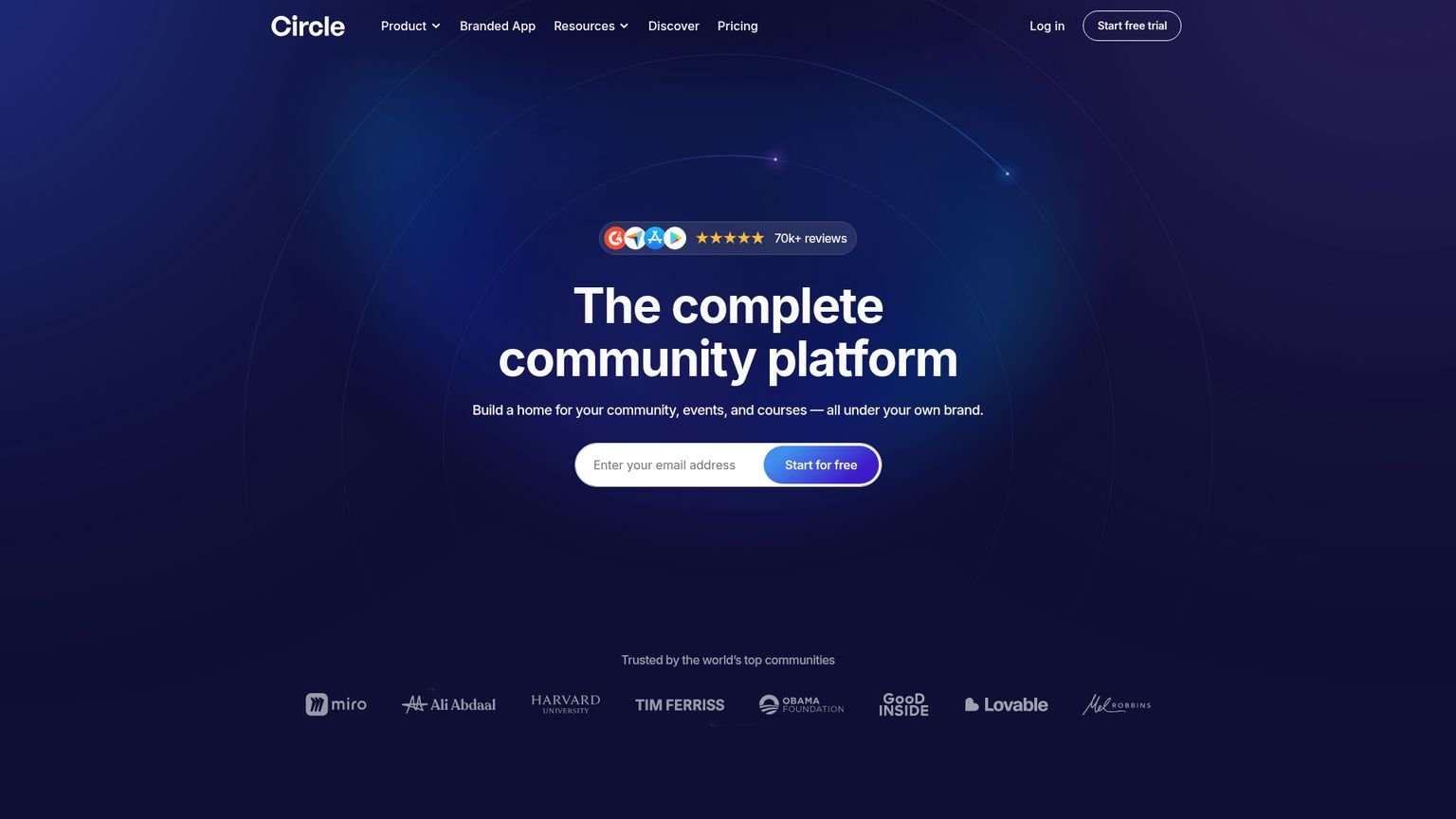
That 2% still beats Skool Hobby’s 10% by a wide margin. It no longer beats Kajabi or Teachable Builder, which take nothing. If you were choosing Circle specifically for zero fees, that reason is gone.
Pricing: $89/month (Professional, 2%), $199/month (Business, 1%), Plus custom (0.5%). Admin seats $10/month.
Where Circle beats Skool:
- Multiple spaces: separate communities or sub-groups in one account
- White-labeling: custom domain and full brand removal on higher plans
- Native live streaming: built in, no Zoom integration required
- Workflows and automations: auto-tag members, trigger actions by activity
- Zapier and API access: deeper integration with your stack
- Granular permissions: tighter control over public and private content
Where Skool beats Circle:
- Gamification (leaderboards, levels, points) is much stronger on Skool
- Skool’s course interface is cleaner and faster to set up for beginners
- Skool’s $9/month Hobby plan has no Circle equivalent, since Circle starts at $89
The tradeoff: Circle has a real learning curve. Want a clean community live in a day? Skool is faster. Running multiple communities or white-label client work? Circle is the correct platform, and the admin seat charge is the line item people forget to budget.
Best for: Established creators running multiple communities, agencies, and businesses needing white-label plus workflow automations. The full Circle.so pricing breakdown covers the add-ons in detail.
Kajabi Only Makes Sense If You Use Two of Its Three Toolsets
Kajabi replaces four tools at once: community, email marketing, landing pages, and course hosting. Entry is now Basic at $179/month, or about $143/month on annual billing (Kajabi pricing, 2026). The old $69 tier is gone, so the honest comparison starts at $143.
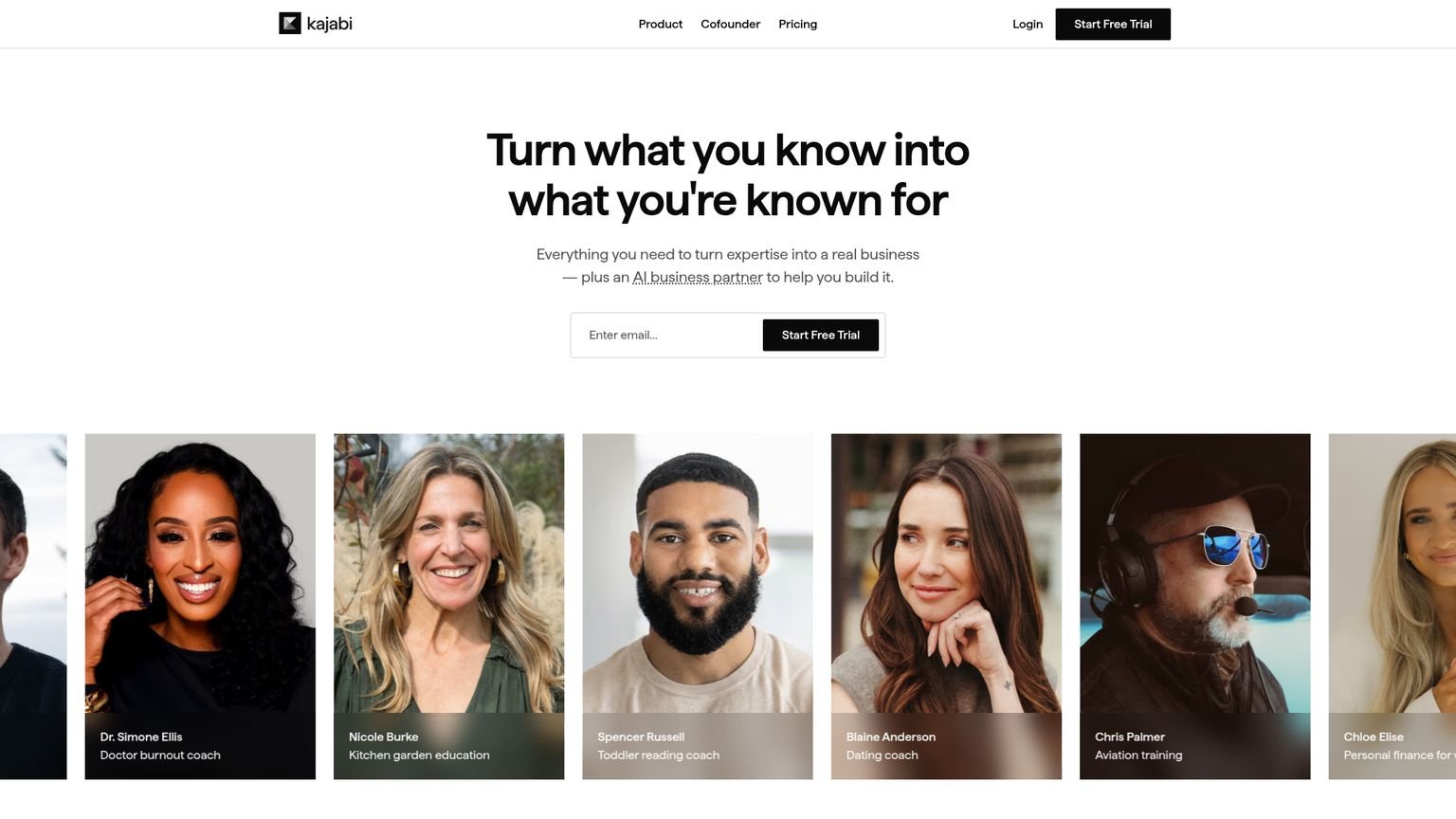
Run the stack math. Skool Pro at $99, an email tool at $30, and a funnel builder at $50 is $179/month for three logins and three billing dates. Kajabi at $143 annual is one login, and it adds quizzes, certificates, and drip content Skool has no plan to build.
Pricing: Basic $179/month monthly, roughly $143/month on annual billing. Higher tiers add products, funnels, and admin users. 0% platform fee.
Where Kajabi beats Skool:
- Built-in email marketing: broadcasts, automations, segmentation
- Full funnel builder: landing pages, upsells, order bumps, checkout
- Full LMS features: quizzes, certificates, drip scheduling, prerequisites
- Podcasting and newsletters: native publishing alongside courses
- Affiliate management: run your own affiliate program inside Kajabi. (ClickFunnels is the usual comparison for a funnel-first stack instead.)
- Revenue analytics: open rates, completions, and conversions in one dashboard
Where Skool beats Kajabi:
- Community engagement: Skool’s gamification drives far more daily activity
- Simplicity: Kajabi is powerful and complex, and the learning curve is real
- Entry price: $143/month annual is a serious commitment at low revenue
The tradeoff: Kajabi pays off only if you use at least two of its major feature sets. Just running a community? It is overpowered and overpriced. Building a business on courses plus email plus funnels? The consolidation covers the price difference.
Best for: Solopreneurs and course creators who want email, funnels, and courses under one roof, already doing $3k+/month. The Skool vs Kajabi comparison runs the fee math side by side.
Mighty Networks Has the LMS Depth Skool Refuses to Build
Mighty Networks has the most mature quiz and course-completion infrastructure on this list. Launch starts at $79/month with a 2% transaction fee. Scale is $179/month at 1%, and Mighty Pro is custom priced at 0.5% (Mighty Networks pricing, 2026).
Quizzes, assessments, completion certificates, and drip scheduling exist on none of Skool’s plans. If you sell a credential rather than a conversation, that difference decides the platform on its own.
Pricing: Launch $79/month (2%), Scale $179/month (1%), Mighty Pro custom (0.5%).
Where Mighty Networks beats Skool:
- Quizzes and assessments: full builder with pass and fail thresholds
- Completion tracking: see who finished what and when
- Certificates: tied to quiz performance
- Drip content: release by date or days since signup
- Multiple pricing models: free, one-time, subscription, bundles
- Native live video: built in, no third party
- Custom-branded mobile apps: iOS and Android on Mighty Pro
Where Skool beats Mighty Networks:
- Gamification drives more daily participation
- The UI is simpler, since Mighty feels heavier to members
- Skool’s feed surfaces new members naturally
- Skool Hobby at $9/month is a fraction of Mighty’s cheapest plan
The tradeoff: If members buy for structured learning, Mighty wins. If they buy for the daily discussion, Skool wins. See the Skool vs Mighty Networks breakdown for the feature-by-feature version.
Best for: Course creators needing real LMS depth that Skool has no roadmap to add.
Whop Is the Only Real Zero-Upfront Option
Whop has no monthly subscription. You pay a 3% platform fee when you make a sale, plus the usual card processing of about 2.7% and 30 cents (Whop pricing, 2026). Nothing leaves your account until money comes in. It is closer to a digital-product marketplace with community attached than a community platform.
Pricing: $0/month. 3% platform fee on sales.
Where Whop beats Skool:
- No monthly subscription: pay nothing until you earn
- Marketplace discovery: Whop’s buyer marketplace can send organic traffic
- Flexible product types: Discord access, software, courses, newsletters
- Lower barrier to test: no $9 or $99 commitment while validating
Where Skool beats Whop:
- Community depth: no gamification, weaker native course builder
- Brand perception: Skool has a stronger coaching-space reputation
- Engagement tools: Skool’s classroom and leaderboard are more mature
The tradeoff: Whop is built for selling access rather than building a long-term engaged community. Great for launching fast at zero cost. Wrong tool if daily participation is the metric you are paid on. The Whop vs Skool cost comparison shows where the 3% overtakes a flat subscription.
Best for: Creators starting out who want $0 upfront, and sellers of digital products or Discord access paired with a community.
Which Skool Alternative Is Cheapest With Real Features?
Podia Mover at $42/month is the cheapest paid all-in-one, though it carries a 5% transaction fee. Shaker at $84/month drops that to zero (Podia pricing, 2026). Both include courses, digital downloads, basic community, and email marketing.
Do the arithmetic before you pick the cheaper sticker. At $1,000/month in sales, Mover costs $92 all in and Shaker costs $84. Above roughly $840 in monthly revenue, the more expensive plan is the cheaper plan.
Pricing: Mover $42/month (5% fee). Shaker $84/month (0%). Earthquaker $150/month (0%).
Where Podia beats Skool:
- Price: $42/month against $99 for most core features
- Email marketing included: broadcasts and basic automations
- Digital downloads: PDFs, templates, and swipe files natively
- 0% fee on Shaker and above, compared with 10% on Skool Hobby
- Unlimited products and students on higher plans
Where Skool beats Podia:
- Community quality: Podia is basic, with no gamification and no leaderboard
- Engagement: Skool’s feed drives return visits, while Podia’s community feels bolted on
- Reputation: Skool is the stronger brand in high-ticket coaching in 2026
The tradeoff: Podia is the right starting point when budget is the binding constraint. It is not where you stay if community engagement is the product. Podia vs Teachable covers the fee difference in detail.
Best for: Bootstrapped creators needing courses, digital products, and basic email without $99/month.
Teachable’s Cheap Plan Is Its Most Expensive Plan
Teachable Starter costs $39/month and takes 7.5% of every sale. Builder at $89/month and Growth at $189/month both take 0% when you use Teachable Pay (Teachable pricing, 2026). Annual billing knocks about 22% off.
That 7.5% is the second-highest platform cut on this page, behind only Skool Hobby. At $1,500/month in sales, Starter costs $151 and Builder costs $89. The $39 plan is a trap above roughly $670 in monthly revenue.
There is no meaningful community here, which is the point. Teachable sells courses. It does not run communities.
Pricing: Starter $39/month (7.5%). Builder $89/month (0%). Growth $189/month (0%). Custom on request.
Where Teachable beats Skool:
- Quizzes, certificates, compliance: full LMS at every paid tier
- Course bundles and subscriptions: flexible pricing models
- Built-in affiliate center: no third-party tool needed
- Upsells and order bumps: native checkout optimization
- Student progress tracking: per-student completion and quiz scores
- 0% platform fee from Builder up
Where Skool beats Teachable:
- Community: Teachable has none, it is purely an LMS
- Daily engagement: zero gamification
- Retention: no community feed to pull members back
The tradeoff: These two barely compete. Skool is a community that teaches. Teachable is a course platform that sells. Pick by whether your revenue is recurring memberships or one-time courses.
Best for: Course creators whose primary product is the course itself, and coaches needing certifications and progress tracking.
Thinkific Takes No Platform Cut, But the Free Plan Is Gone
Thinkific charges no platform commission on any plan. You pay about 2.9% to Thinkific Payments as processing, which is the card fee every platform passes through, not a cut of your margin (Thinkific pricing, 2026). The free tier has been replaced by a 30-day full-access trial.
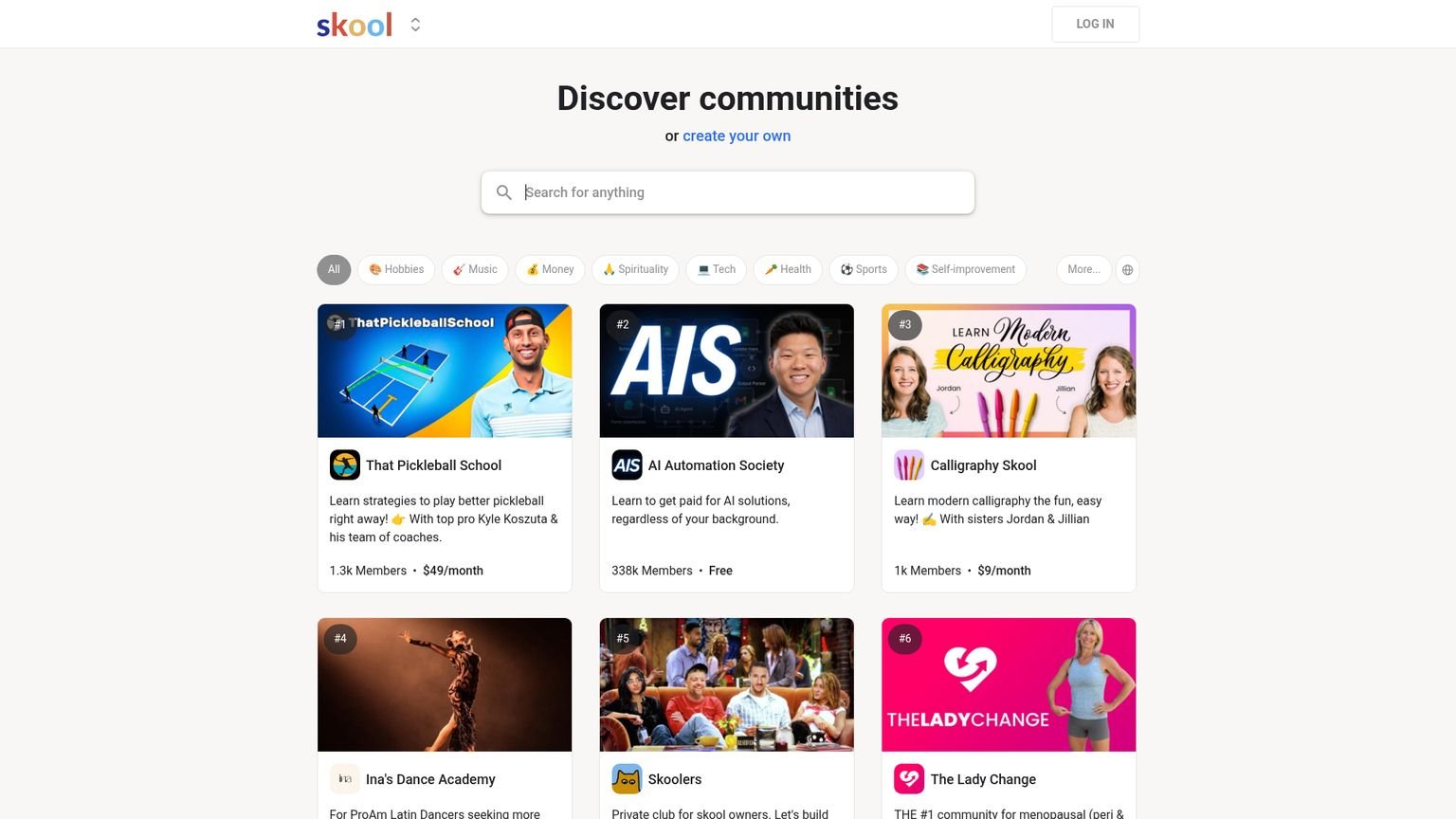
Pricing: Basic $54/month, or $40/month billed annually. Start $109/month ($82 annual). Grow $219/month ($164 annual). Plus is custom priced. 30-day free trial.
Where Thinkific beats Skool:
- No platform commission at any tier
- Quizzes, surveys, assignments: compliance-ready LMS
- Completion certificates
- Drip content: release by date or days since enrollment
- Thinkific Apps marketplace: Zapier, Calendly, Mailchimp, and 100+ integrations
- Community spaces: now includes discussion boards
Where Skool beats Thinkific:
- Gamification: Skool is still far stronger
- Speed to launch: Thinkific has more settings to configure
- Creator ecosystem: Skool has louder social proof in 2026
The tradeoff: Thinkific is strong for a course catalog and its community is secondary. Worth noting for anyone who bookmarked this page last year: the old free plan is no longer an option, so “start free on Thinkific” is outdated advice. Thinkific vs Teachable compares the two head to head.
Best for: Course businesses needing LMS depth and a catalog that scales past a handful of products.
Which Skool Alternative Is Best for Coaching Cohorts?
Heartbeat is built specifically for coaching programs and accountability groups. As of mid-2026 it starts around $49/month with no platform fee and includes native cohort scheduling, direct messaging between members, and group spaces, all without the weight of a full LMS (Heartbeat pricing, 2026). Confirm the current tiers on their pricing page before you commit, since this category has repriced twice this year.
Pricing: roughly $49/month (Creator) and $119/month (Business). No platform transaction fee.
Where Heartbeat beats Skool:
- Direct messaging: members DM each other natively, which Skool does not allow
- Cohort scheduling: time-bound programs with defined start and end dates
- Coaching-specific UX: designed around cycles, not indefinite memberships
- No platform cut on payments
Where Skool beats Heartbeat:
- Gamification drives habitual daily engagement
- The classroom is more polished for video courses
- Better recognized in the creator and marketer space
Best for: Coaches running cohort programs or accountability groups that need native DM and scheduling.
Master Comparison Table: Skool vs All Alternatives
| Platform | Entry Price/mo | Gamification | Quizzes | Drip | Platform Fee | |
|---|---|---|---|---|---|---|
| Skool | $9 (Hobby) / $99 (Pro) | Yes | No | No | No | 10% / 0% |
| Circle | $89 | Basic | No | No | No | 2% |
| Kajabi | $143 annual | No | Yes | Yes | Yes | 0% |
| Mighty Networks | $79 | No | Yes | Yes | No | 2% |
| Whop | Free | No | No | No | No | 3% |
| Podia | $42 | No | No | No | Yes | 5% (0% on Shaker) |
| Teachable | $39 | No | Yes | Yes | No | 7.5% (0% on Builder) |
| Thinkific | $40 annual | No | Yes | Yes | No | 0% |
| Heartbeat | $49 | No | No | No | No | 0% |
Skool has the highest daily active engagement per member of anything listed here. It also has the weakest completion outcomes, because there is no quiz wall pushing members through the material. If your product is measured in certificates issued, Skool’s engagement lead stops mattering.
The Real Cost at $2,000/Month in Member Payments
Sticker price is the wrong number. Here is what each platform actually costs a community collecting $2,000/month, platform fee plus subscription, before card processing.
| Platform and plan | Subscription | Platform fee | Total/mo |
|---|---|---|---|
| Skool Hobby | $9 | $200 | $209 |
| Teachable Starter | $39 | $150 | $189 |
| Podia Mover | $42 | $100 | $142 |
| Circle Professional | $89 | $40 | $129 |
| Mighty Networks Launch | $79 | $40 | $119 |
| Skool Pro | $99 | $0 | $99 |
| Teachable Builder | $89 | $0 | $89 |
| Podia Shaker | $84 | $0 | $84 |
| Whop | $0 | $60 | $60 |
| Thinkific Basic (annual) | $40 | $0 | $40 |
Two things fall out of that table. Skool Hobby is the most expensive way to run a $2,000/month community, not the cheapest. And Whop, the platform with the scariest-looking percentage, comes second cheapest because it charges no subscription at all.
Run this same table at your own revenue number before you switch. The ranking flips as revenue climbs, and the flip points are not where most people guess.
What Is the Cheapest Skool Alternative?
Thinkific Basic at $40/month on annual billing with no platform commission is the cheapest credible paid option. Podia Mover is $42/month but takes 5%, and Teachable Starter is $39/month but takes 7.5% (Podia pricing, 2026). Whop is the only genuinely free start, at 3% per sale.
Whop costs less than Thinkific Basic until you cross about $1,300/month in sales. Below that, Whop wins on cost. Above it, the flat subscription is cheaper.
Short answer by revenue level:
- $0 to $500/month: Whop, since free plus 3% beats any subscription
- $500 to $3,000/month: Thinkific or Podia Shaker
- $3,000+/month: Kajabi or Circle, where consolidation covers the price
Which Skool Alternative Has No Transaction Fees?
Kajabi, Thinkific, Heartbeat, Podia (Shaker and above), and Teachable (Builder and above) take no platform cut (Kajabi pricing, 2026). Circle now charges 2% on Professional, 1% on Business, and 0.5% on Plus. Mighty Networks runs the same ladder from 2% down to 0.5%. Whop takes 3%. Every one of them still sits on top of standard card processing of roughly 2.9% plus 30 cents.
Fees matter more than most creators plan for. A Skool Hobby community collecting $2,000/month pays $200 in platform fees before the $9 subscription. The same revenue on Thinkific Basic costs $40 flat. Comparing subscription prices tells you almost nothing. Total platform cost is the number.
Which Platform Is Best for Course Creators in 2026?
Teachable and Thinkific are the strongest purpose-built course platforms. Both include quizzes, certificates, and drip content, and both dropped their free tiers this year (Teachable, Thinkific, 2026). Kajabi wins when you want course features plus email plus a funnel builder without managing three subscriptions.
The deciding factor is usually whether your model runs on one-time course sales or ongoing memberships. Teachable and Thinkific optimize for selling. Skool optimizes for retention. Different metrics produce different winners.
By specific need:
- Quizzes and certificates: Mighty Networks or Teachable
- Drip scheduling: Kajabi, Mighty Networks, or Thinkific
- Lowest total cost under $1,000/month: Whop
- All-in-one including email and funnels: Kajabi
Which Skool Alternative Should You Choose?
The right alternative depends on which gap Skool leaves in your model. There is no universal winner, and anyone who names one is selling something.
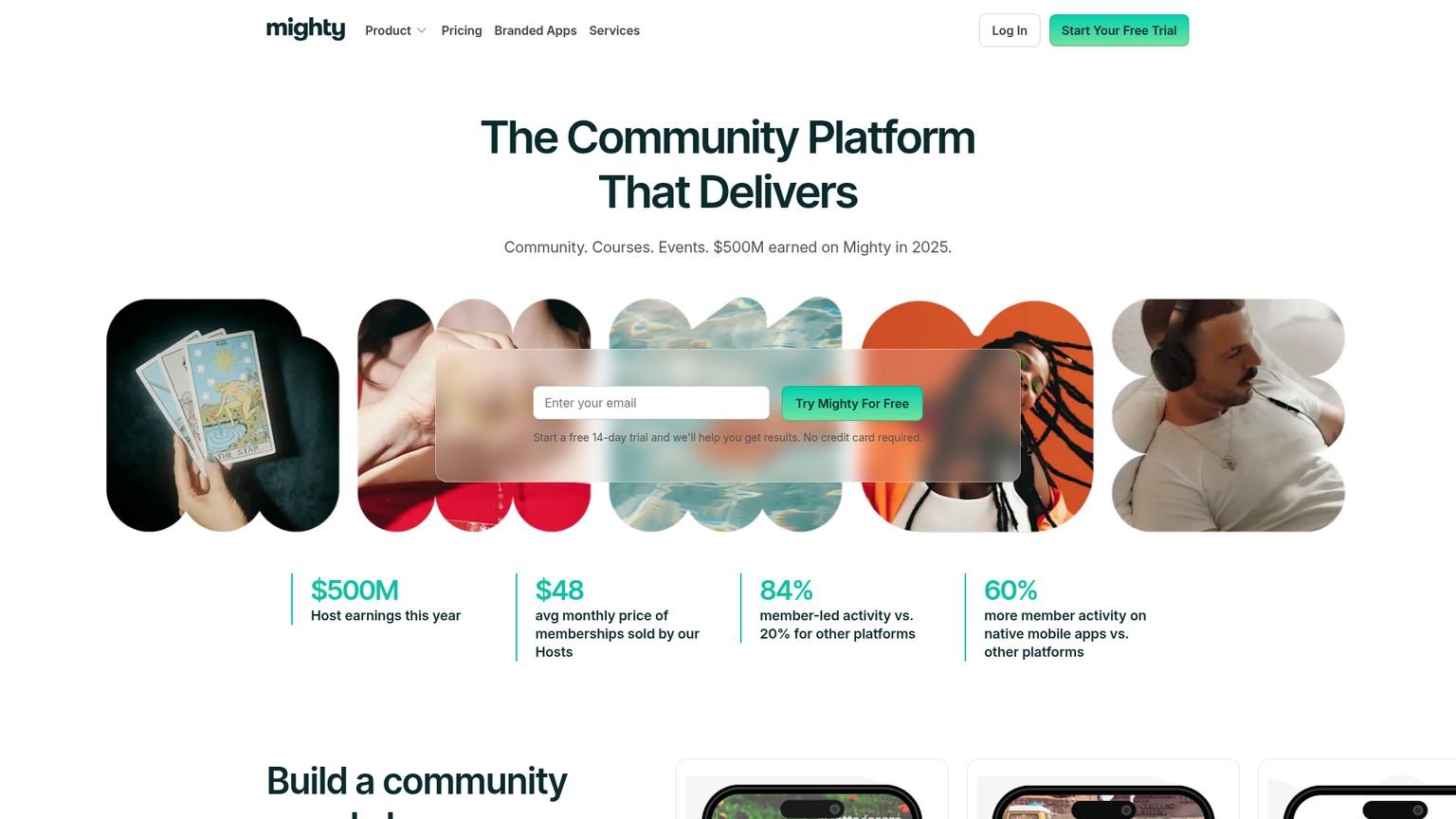
Decision shortcut:
Need quizzes, certificates, or drip content → Mighty Networks or Kajabi
Want email, funnels, and courses in one tool → Kajabi
Running multiple communities or need white-label → Circle
Budget is the main constraint → Thinkific ($40 annual) or Podia ($42)
Only care about selling courses → Teachable Builder or Thinkific
Want $0 upfront with marketplace discovery → Whop
Running a coaching cohort → Heartbeat
Want the strongest daily engagement and gamification → Stay on Skool Pro, not Hobby
Skool wins on community engagement. Its gamification is genuinely better than everything on this list, and if daily participation is your primary metric, no alternative beats it in 2026.
If quizzes, certificates, email, or multi-community management are essential, one of the eight above is the right call. Switch for a specific functional reason. And if you are on Hobby collecting real money, the 10% alone is reason enough to move up or move out.
Migration Checklist: Moving Off Skool Without Losing Members
Member churn of 10-20% is typical during any platform migration. The variable you control is how much warning paying members get and whether you run both platforms in parallel during the cutover. Skip the overlap and you lose everyone whose billing date falls in the gap.
Before you cancel Skool:
- Export your full member list from the Members tab: names, emails, join dates.
- Download all course content from Skool’s Classroom. You do not own what is only hosted on Skool.
- Note which members have active paid memberships and when they renew. Those are your highest churn risk.
- Screenshot the community structure, course organization, and levels. You will rebuild from these.
On the new platform (week 1):
- Set up courses before inviting anyone. Members expect content on day one.
- Import your email list into the new platform or your email tool first.
- Write an announcement that is specific about what is better. Vague “exciting changes” messaging generates cancellations.
During the transition:
- Run both platforms in parallel for at least 30 days if any members are on active subscriptions.
- Set a migration deadline with a clear incentive: extended access, a bonus module, or a locked price.
- Cancel Skool only after all recurring billing has migrated and is confirmed on the new platform.
Frequently Asked Questions
Is there a free Skool alternative?
Whop is the only one that is genuinely free to start, at a 3% fee per sale. Teachable and Thinkific both retired their free plans, and Thinkific now offers a 30-day full-access trial instead (Thinkific, 2026). For a free community tool without monetization, Geneva works alongside a paid platform.
What’s the biggest difference between Skool and Circle?
Skool wins on engagement through gamification, where leaderboards, points, and levels drive daily returns Circle does not match. Circle wins on flexibility: multiple spaces, white-labeling, workflow automations, and a 2% fee against Skool Hobby’s 10%. Circle starts at $89/month on annual billing (Circle pricing, 2026).
Can I migrate my Skool community without losing members?
Not without some churn, but you can hold it down. Export your list, rebuild the content first, run both platforms in parallel for 30 days or more, and set a migration deadline with an incentive. Expect 10-20% drop-off regardless. The bigger the community, the more the parallel-run window matters.
Does Skool have quizzes or certificates?
No. As of August 2026, Skool has no native quiz, assessment, or certificate features at any plan level. Mighty Networks, Kajabi, Teachable, and Thinkific all include them on their paid plans (Skool, 2026).
Is Kajabi really cheaper than running Skool plus separate tools?
It can be. Skool Pro at $99, an email tool at $30, and a landing page builder at $50 comes to $179/month. Kajabi Basic at roughly $143/month on annual billing consolidates all three and adds quizzes, certificates, and native affiliate management. The math only works if you actually use the email and funnel tools (Kajabi pricing, 2026).
Which Skool alternative is easiest for beginners?
Podia has the gentlest learning curve among paid options. You get courses, digital downloads, and basic email in one interface without the complexity of Kajabi or Circle. Mover is $42/month at 5%, so move to Shaker at $84 once monthly sales pass roughly $840.
Key Takeaways
- Best overall alternative: Kajabi at roughly $143/month annual, for creators doing $3k+/month who will use email and funnels as well as courses
- Cheapest real option: Thinkific Basic at $40/month annual with no platform cut, or Whop free at 3% below $1,300/month in sales
- Best for LMS depth: Mighty Networks or Teachable Builder, both with quizzes, certificates, and drip content
- Biggest fee trap: Skool Hobby’s 10%, Teachable Starter’s 7.5%, and Podia Mover’s 5%, all attached to the cheapest-looking plans
- Biggest strategic mistake: switching for features while underestimating the engagement drop when gamification disappears
- What to check first: is your revenue built on daily engagement (Skool wins) or on completions and certification (alternatives win)?
Related Reading
Full pros & cons
- Best-in-class gamification drives daily member participation
- Simple 3-part structure: community feed, classroom, events
- Hobby plan at $9/month is the lowest entry price in the category
- No per-member fees, so a flat subscription scales as you grow
- Built-in affiliate tracking and pixel support on Pro
- No quizzes, certificates, or SCORM support
- No native drip content or course prerequisites
- No built-in email marketing, so you pay for a separate tool
- One community per subscription, and multiples get expensive fast
Try it yourself
Ready to put it to the test?
We may earn a commission at no extra cost to you. Affiliate disclosure.
Reader feedback
Was this review helpful?
Your feedback helps us write better reviews.
Thanks for your feedback.

AI Funnel Insider is an independent review site covering AI tools, Skool communities, and online courses. Every review states what was paid for, what was accessed and what was verified before a verdict goes live. Reviews are independent and may contain affiliate links, at no extra cost to you.
Related Posts

8 Best Teachable Alternatives 2026
Teachable charges a 7.5% transaction fee on its cheapest plan. Here are 8 better alternatives with lower fees and verified 2026 pricing, free to $99/mo.

Skool vs Mighty Networks 2026: Which Fits You?
Skool vs Mighty Networks compared for 2026 on real pricing, transaction fees, engagement, and mobile apps, so you pick right before you commit.

Skool Free Trial 2026: 14 Days Free (One Catch)
Skool's 14-day free trial works on both plans, but there is a credit card catch most guides skip. How to start it and exactly what is included.

Skool Review 2026: Honest Verdict and the Catch
Is Skool worth it in 2026? My honest verdict on the platform: real pricing, Hobby vs Pro, the catch nobody mentions, and who should skip it.

Skool vs Kajabi 2026: Which Costs Less, Really?
Skool looks cheaper than Kajabi until you do the math on transaction fees. Which one actually costs less in 2026, with real numbers.

8 Best Circle Alternatives 2026
Circle gets pricey once you add the transaction fee. Here are 8 cheaper alternatives that do more in 2026, with a best-for pick for each before you switch.
The Insider Newsletter
New Skool communities, scored.
Each Sunday: one newly reviewed Skool community, plus any price changes in the communities we track.