Best Skool Alternatives 2026
8 best Skool alternatives tested in 2026. Circle from $89/mo, Kajabi from $69/mo, Podia from $33/mo. Pricing, pros, cons, transaction fees compared.
 By Alex Cooper · · Updated
Best-in-class gamification drives daily member participation
No quizzes, certificates, or SCORM support
Skool does one thing genuinely well: keep members coming back. Its gamification — leaderboards, levels, points — builds daily habits most platforms can’t match. But Sam Ovens built Skool to be simple, and that simplicity has real costs.
No quizzes. No certificates. No drip content. No built-in email. One community per $99/month subscription.
If any of those gaps block your business model, switching is the smarter fix. We’ve spent real time inside every platform on this list. Here’s what each one does better than Skool, who it fits, and the honest tradeoffs you won’t see in a promotional roundup.
Last updated: April 2026
TL;DR: The best Skool alternatives in 2026 are Circle ($89/mo, multi-community), Kajabi ($69/mo, all-in-one), Mighty Networks ($41/mo, deepest LMS), Podia ($33/mo, budget), and Whop (free to start, 3% fee). Pick based on the feature Skool is missing — not on price alone (Kajabi, 2026).
What Are the Top Skool Alternatives in 2026?
The best Skool alternatives in 2026 are Circle, Kajabi, Mighty Networks, Whop, Podia, Teachable, Thinkific, and Heartbeat — each solving a specific gap Skool leaves open. Skool’s Hobby plan starts at $9/month but carries a 10% transaction fee, roughly 3.5x its Pro-plan rate (Skool pricing, 2026).
- Circle — multiple communities, white-label, 0% fees
- Kajabi — all-in-one courses + email + funnels
- Mighty Networks — quizzes, certificates, LMS depth
- Whop — free to start, marketplace discovery
- Podia — cheapest paid all-in-one at $33/mo
- Teachable — pure course selling
- Thinkific — scalable course catalog, free plan
- Heartbeat — coaching-first cohort communities
Why Are Creators Looking for Skool Alternatives?
Creators leave Skool because it deliberately skips core LMS features — no quizzes, no certificates, no drip scheduling, no built-in email (Skool pricing, 2026). It’s not a better Skool they want. It’s a different category of tool.
After time across multiple community platforms, we keep seeing the same pattern. Creators leave Skool for a feature-rich alternative, then miss the daily engagement the gamification created — and churn spikes. That doesn’t mean you shouldn’t switch. It means you should switch for the right reasons.
Here’s what Skool lacks, so you can match the gap to the right fix:
- No quizzes, assessments, or certificates — a real problem for credentialing or compliance
- No drip content or prerequisites — you can’t lock modules by completion or date
- No built-in email marketing — you’re paying ConvertKit or Mailchimp on top
- No native sales funnels or landing page builder
- One community per subscription — $99/month per community adds up fast
Best-For Summary: Skool Alternatives at a Glance
| Platform | Starting Price | Best For | Transaction Fee |
|---|---|---|---|
| Circle | $89/mo | Multiple communities, white-label | 0% |
| Kajabi | $69/mo | All-in-one (email + funnels + courses) | 0% |
| Mighty Networks | $41/mo | Quizzes, certificates, LMS depth | 0–3% |
| Whop | Free | Selling digital products, fastest start | 3% |
| Podia | $33/mo | Budget-friendly courses + email | 0% |
| Teachable | Free | Pure course selling | 0–5% |
| Thinkific | Free | Scalable course catalog | 0% |
| Heartbeat | $49/mo | Coaching cohorts without LMS | 0% |
Is Circle the Best Skool Alternative for Multiple Communities?
Yes — Circle is the most direct Skool competitor and charges 0% transaction fees on all paid plans, compared with Skool Hobby’s 10% cut on every member payment (Circle pricing, 2026). Where Skool caps you at one community per subscription, Circle runs multiple spaces under one account from $89/month.
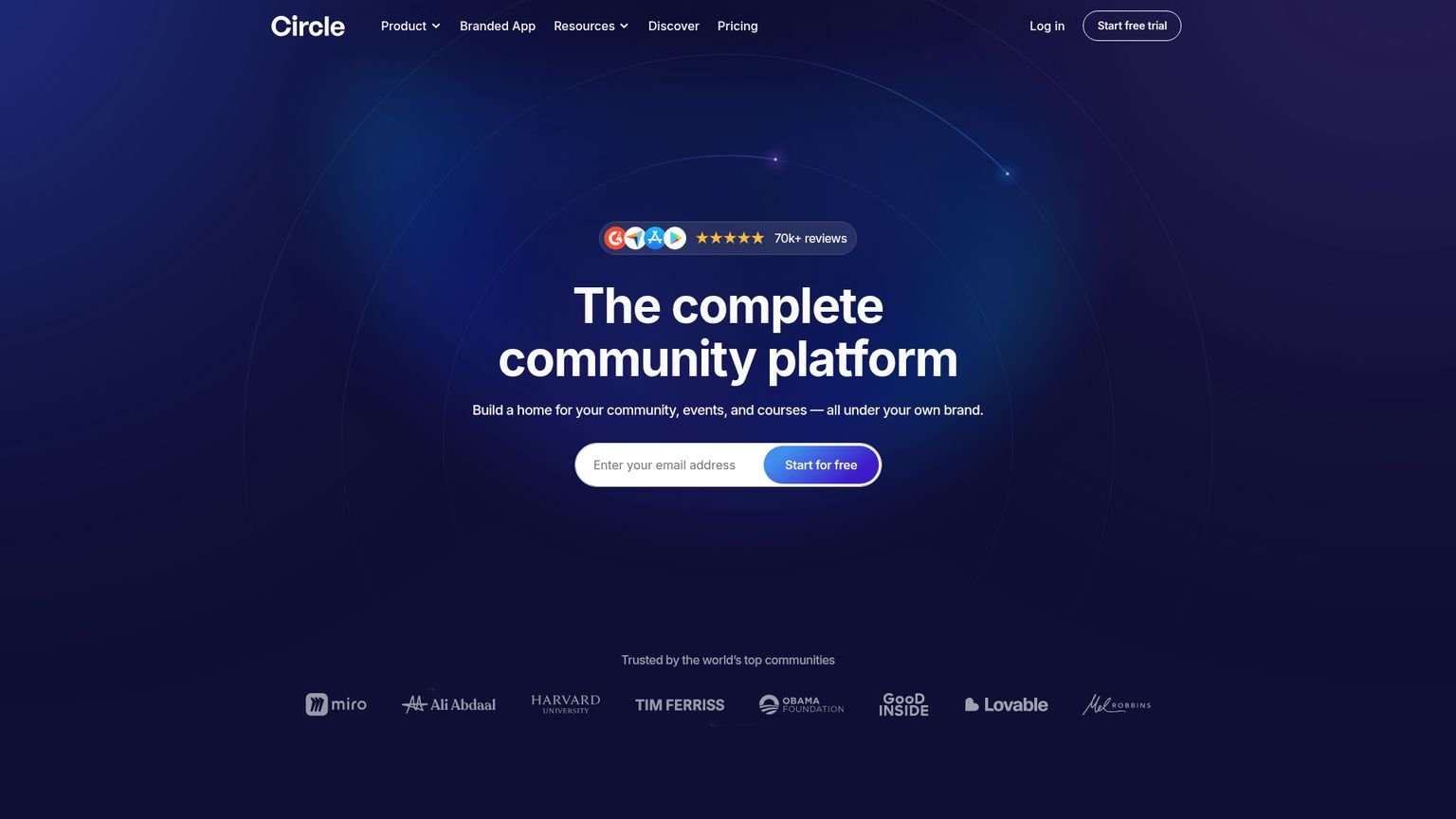
Pricing: $89–$399/month plus Enterprise. 0% transaction fees on all plans.
Where Circle beats Skool:
- Multiple spaces — separate communities or sub-groups in one account
- White-labeling — custom domain and full brand removal on higher plans
- Native live streaming — built-in without a Zoom integration
- Workflows and automations — auto-tag members, trigger actions by activity
- Zapier and API access — deeper integration with your stack
- Granular permissions — tighter control over public vs private content
Where Skool beats Circle:
- Gamification (leaderboards, levels, points) is significantly stronger on Skool
- Skool’s course interface is cleaner and faster to set up for beginners
- Skool’s $9/month Hobby plan has no Circle equivalent — Circle starts at $89/month
Honest tradeoff: Circle has a real learning curve. Want a clean community live in a day? Skool is faster. Running multiple communities or white-label client work? Circle is the correct platform.
Best for: Established creators running multiple communities, agencies, and businesses needing white-label plus workflow automations.
Citation capsule: Circle charges 0% transaction fees on all paid plans from $89/month, supports multiple community spaces under one account, and includes native live streaming and member workflow automations — features Skool’s $99/month Pro plan doesn’t offer (Circle pricing, 2026).
Is Kajabi the Best All-in-One Skool Alternative?
Kajabi replaces four tools at once: community, email marketing, landing pages, and course hosting. If you currently pay for Skool Pro ($99), an email tool ($30), and a funnel builder ($50), Kajabi’s Growth plan at roughly $143/month annually consolidates all three and adds quizzes, certificates, and drip content (Kajabi pricing, 2026).
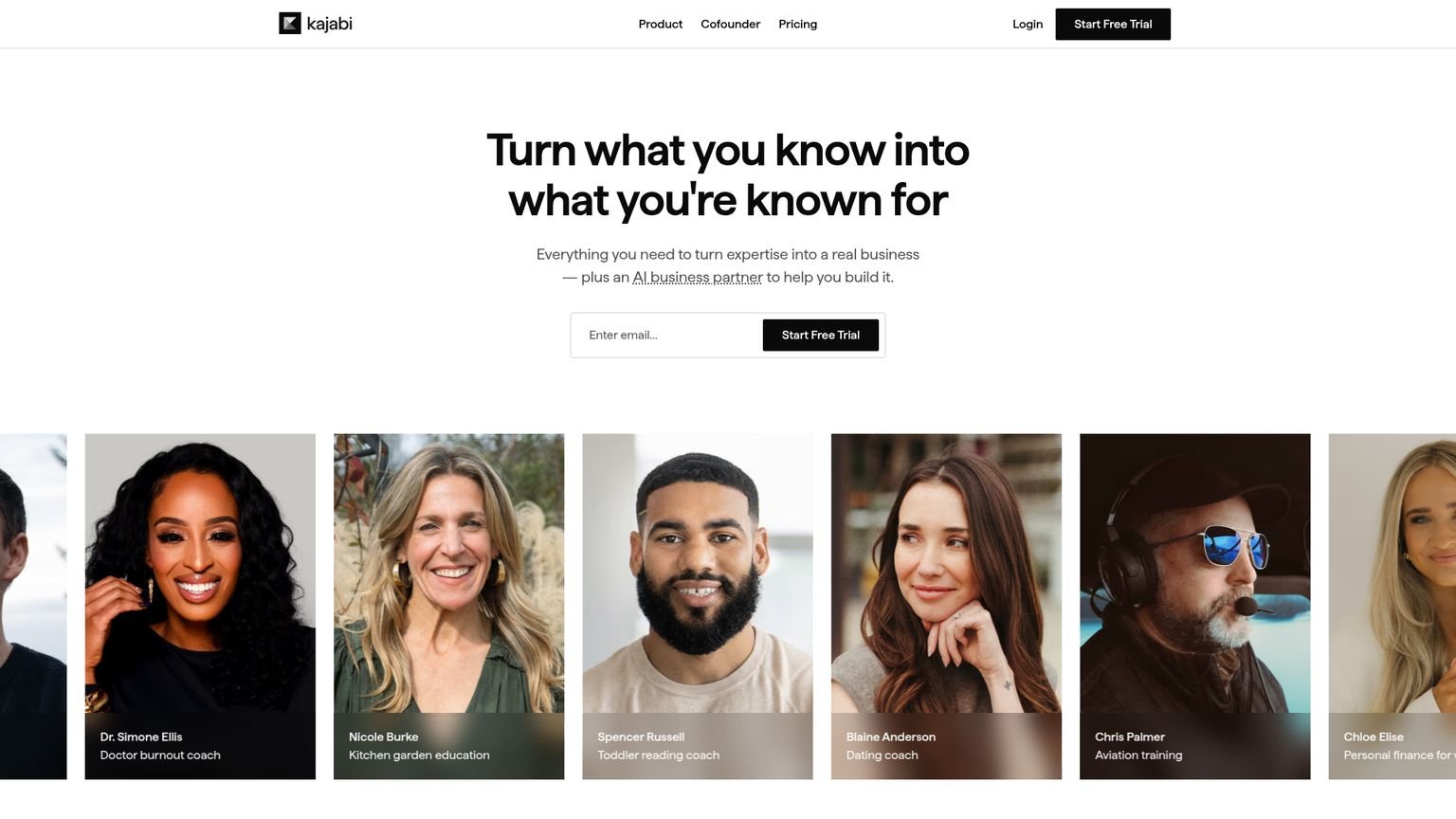
Pricing: $69–$399/month monthly. Annual pricing drops Growth to about $143/month.
Where Kajabi beats Skool:
- Built-in email marketing — broadcasts, automations, segmentation
- Full funnel builder — landing pages, upsells, order bumps, checkout
- Full LMS features — quizzes, certificates, drip scheduling, prerequisites
- Podcasting and newsletters — native publishing alongside courses
- Affiliate management — run your own affiliate program inside Kajabi. (Note: ClickFunnels is often compared here for creators who want a pure funnel-first stack.)
- Revenue analytics — open rates, completions, and conversions in one dashboard
Where Skool beats Kajabi:
- Community engagement: Skool’s gamification drives far more daily activity
- Simplicity: Kajabi is powerful but complex — the learning curve is real
- Real starter price: Kajabi’s $69/month Basic plan caps at 1 product and 1 funnel — you need $149–$199/month for actual utility
Honest tradeoff: Kajabi only makes sense if you’ll use at least two of its major feature sets. Just running a community? It’s overpowered and overpriced. Building a real online business with all three? The consolidation pays for itself.
Best for: Solopreneurs and course creators who want email, funnels, and courses under one roof, already doing $3k+/month.
Citation capsule: Kajabi’s Growth plan at $199/month (or ~$143/month annually) includes unlimited courses, email marketing, funnel pages, quizzes, certificates, and affiliate management — replacing the Skool Pro + email + funnel stack many creators run (Kajabi pricing, 2026).
Which Skool Alternative Is Best for LMS-Heavy Communities?
Mighty Networks has the most mature quiz and course-completion infrastructure on this list. Its $41/month Courses plan includes quizzes, assessments, completion certificates, and drip scheduling — none of which exist on any Skool plan (Mighty Networks pricing, 2026).
Pricing: $41–$179/month. The $41/month plan charges 3%; the $99/month Business plan drops to 0%.
Where Mighty Networks beats Skool:
- Quizzes and assessments — full builder with pass/fail thresholds
- Completion tracking — see who finished what and when
- Certificates — tied to quiz performance
- Drip content — release by date or days since signup
- Multiple pricing models — free, one-time, subscription, bundles
- Native live video — built-in, no third-party
- Custom-branded mobile apps — iOS and Android on Business plans
Where Skool beats Mighty Networks:
- Gamification drives more daily participation
- UI is simpler — Mighty feels heavier to members
- Skool’s feed surfaces new members naturally
- Skool Hobby at $9/month is less than half of Mighty’s cheapest plan
Honest tradeoff: If members buy for structured learning, Mighty wins. If they buy for the daily discussion, Skool wins.
Best for: Course creators needing real LMS depth — quizzes, certificates, drip content — that Skool has no roadmap to add.
Is Whop the Best Free-to-Start Skool Alternative?
Yes — Whop has no monthly subscription. You pay a 3% transaction fee only when you make a sale, making it the lowest-barrier entry for anyone not yet generating consistent revenue (Whop pricing, 2026). It’s less a community platform and more a digital-product marketplace with community bolted on.
Pricing: Free (3% fee). Paid plans reduce or eliminate the fee.
Where Whop beats Skool:
- No monthly subscription — pay nothing until you earn
- Marketplace discovery — Whop’s buyer marketplace can drive organic traffic
- Flexible product types — Discord access, software, courses, newsletters
- Lower barrier to test — no $9 or $99 commitment while validating
Where Skool beats Whop:
- Community depth — no gamification, weaker native course builder
- Brand perception — Skool has a stronger coaching-space reputation
- Engagement tools — Skool’s classroom and leaderboard are more mature
Honest tradeoff: Whop is built for selling access, not building a long-term engaged community. Great for launching fast at zero cost. Wrong tool if daily participation is your metric.
Best for: Creators starting out who want $0 upfront, and sellers of digital products or Discord access paired with a community.
Which Skool Alternative Is Cheapest With Real Features?
Podia at $33/month is the cheapest paid all-in-one — courses, digital downloads, basic community, and email marketing with 0% transaction fees (Podia pricing, 2026). That’s $66/month cheaper than Skool Pro and adds email Skool doesn’t have.
Pricing: Free plan. $33/month (Mover). $89/month (Shaker).
Where Podia beats Skool:
- Price — $33/month vs $99/month for most core features
- 0% transaction fees on paid plans
- Digital downloads — PDFs, templates, swipe files native
- Email marketing included — broadcasts and basic automations
- Unlimited products and students on higher plans
Where Skool beats Podia:
- Community quality — Podia is basic, no gamification, no leaderboard
- Engagement — Skool’s feed drives return visits; Podia’s feels like an add-on
- Reputation — Skool is the stronger brand in high-ticket coaching in 2026
Honest tradeoff: Podia is the right starting point if budget is tight. It’s not where you stay if community engagement is core.
Best for: Bootstrapped creators needing courses, digital products, and basic email without $99/month. Good launchpad before scaling to Circle or Kajabi.
Citation capsule: Podia’s $33/month Mover plan charges 0% transaction fees and bundles courses, digital downloads, and email marketing — features that on competing platforms require separate subscriptions. It’s the most affordable all-in-one entry point among Skool alternatives in 2026 (Podia pricing, 2026).
Which Skool Alternative Is Best for Pure Course Creators?
Teachable’s paid plans charge 0% transaction fees and include a full LMS toolkit — quizzes, certificates, compliance features, and student dashboards — from $59/month (Teachable pricing, 2026). There’s no meaningful community, which is the point: Teachable sells courses, it doesn’t run communities.
Pricing: Free plan (5% fee). $59/mo (Basic), $159/mo (Pro), $249/mo (Pro+).
Where Teachable beats Skool:
- Free plan — sell courses immediately (5% fee applies)
- Quizzes, certificates, compliance — full LMS at every paid tier
- Course bundles and subscriptions — flexible pricing
- Built-in affiliate center — no third-party tool needed
- Upsells and order bumps — native checkout optimization
- Student progress tracking — per-student completion and quiz scores
Where Skool beats Teachable:
- Community — Teachable has none, it’s purely LMS
- Daily engagement — zero gamification
- Retention — no community feed to pull members back
Honest tradeoff: They aren’t really competing. Skool is a community that teaches. Teachable is a course platform that sells. Pick by whether your model runs on ongoing memberships or one-time courses.
Best for: Course creators whose primary product is the course itself. Coaches needing certifications and progress tracking.
Is Thinkific the Best Free Plan for Scaling a Course Catalog?
Thinkific’s free plan lets you sell one course with unlimited students and 0% transaction fees — the most generous free tier among major course platforms in 2026 (Thinkific pricing, 2026). Paid plans add quizzes, drip scheduling, course bundles, and a community feature that now supports discussion spaces.
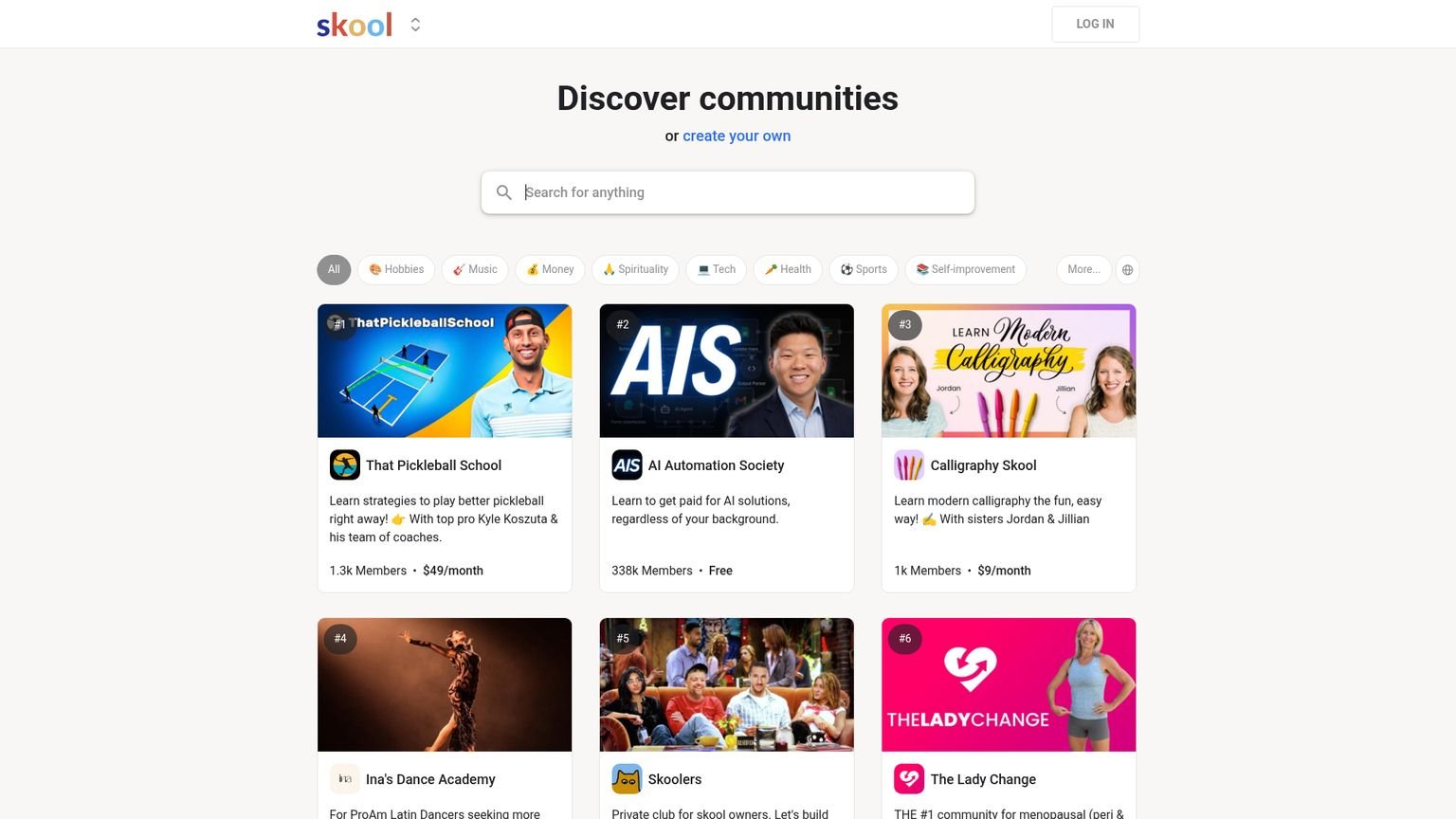
Pricing: Free plan. $49/mo (Basic), $99/mo (Start), $199/mo (Grow).
Where Thinkific beats Skool:
- Free plan with 0% fees — one course, unlimited students
- Quizzes, surveys, assignments — compliance-ready LMS
- Completion certificates
- Drip content — release by date or days since enrollment
- Thinkific Apps marketplace — Zapier, Calendly, Mailchimp, 100+ integrations
- Community spaces — improving, now includes discussion boards
Where Skool beats Thinkific:
- Gamification — Skool is still far stronger
- Speed to launch — Thinkific has more settings
- Creator ecosystem — Skool has louder social proof in 2026
Honest tradeoff: Thinkific is strong for a course catalog. Its community is secondary. If you want LMS depth and a scalable catalog, Thinkific is a solid choice.
Best for: Course businesses needing strong LMS features with a free plan to validate. Scaling solopreneurs building a catalog.
Which Skool Alternative Is Best for Coaching Cohorts?
Heartbeat is built specifically for coaching programs and accountability groups. It starts at $49/month with 0% transaction fees and includes native cohort scheduling, direct messaging between members, and group spaces — without the complexity of a full LMS (Heartbeat pricing, 2026).
Pricing: $49/mo (Creator) and $119/mo (Business). 0% transaction fees.
Where Heartbeat beats Skool:
- Direct messaging — members DM each other natively; Skool doesn’t allow this
- Cohort scheduling — time-bound programs with defined start/end dates
- Coaching-specific UX — designed around cycles, not indefinite memberships
- 0% transaction fees — no platform cut
Where Skool beats Heartbeat:
- Gamification drives habitual daily engagement
- Classroom is more polished for video courses
- Better recognized in the creator/marketer space
Best for: Coaches running cohort programs or accountability groups needing native DM and scheduling Skool doesn’t offer.
Master Comparison Table: Skool vs All Alternatives
| Platform | Price/mo | Gamification | Quizzes | Drip | Txn Fee | Free Trial | |
|---|---|---|---|---|---|---|---|
| Skool | $9–$99 | Yes | No | No | No | 2.9–10% | 14 days |
| Circle | $89–$399 | Basic | No | No | No | 0% | Yes |
| Kajabi | $69–$399 | No | Yes | Yes | Yes | 0% | 14 days |
| Mighty Networks | $41–$179 | No | Yes | Yes | No | 0–3% | Yes |
| Whop | Free–paid | No | No | No | No | 3% | N/A |
| Podia | Free–$89 | No | No | No | Yes | 0% | Free plan |
| Teachable | Free–$249 | No | Yes | Yes | No | 0–5% | Free plan |
| Thinkific | Free–$199 | No | Yes | Yes | No | 0% | Free plan |
| Heartbeat | $49–$119 | No | No | No | No | 0% | Yes |
Based on hands-on use across these platforms: Skool has the highest daily active engagement per member of anything on this list. But it also has the lowest LMS completion rate — because there’s no quiz wall to push members through. If success means completion and certification, Skool’s engagement lead becomes irrelevant.
What Is the Cheapest Skool Alternative?
The cheapest paid Skool alternative is Podia at $33/month with 0% transaction fees — $66/month cheaper than Skool Pro, and it includes email marketing Skool lacks (Podia pricing, 2026). For free options, Teachable and Thinkific both offer usable free plans, and Whop is free to start with a 3% fee.
Whop costs less than Podia until you cross about $1,100/month in revenue. Below that, Whop wins. Above it, Podia’s flat fee saves money.
Short answer by revenue level:
- $0–$500/month: Whop (free + 3% beats any subscription)
- $500–$3,000/month: Podia at $33/month
- $3,000+/month: Kajabi or Circle — consolidation saves real money at scale
Which Skool Alternative Has No Transaction Fees?
Circle, Kajabi, Heartbeat, Thinkific (all plans), and Podia (paid plans) all charge 0% transaction fees (Circle pricing, 2026). Mighty Networks drops to 0% on its $99/month Business plan. Teachable’s paid plans also charge 0% — only the free plan has a 5% fee. Whop charges 3% on its free tier.
Transaction fees matter more than most creators realize. A Skool Hobby community doing $2,000/month in member payments pays $200 in fees alone — before the $9 subscription. That same revenue on Podia costs $33/month flat. The cheaper subscription price is the wrong number to compare. Total platform cost is what matters.
Which Platform Is Best for Course Creators in 2026?
Teachable and Thinkific are the strongest purpose-built course platforms — both include quizzes, certificates, and drip content starting from free (Teachable, Thinkific, 2026). Kajabi wins when you want course features plus email plus a funnel builder without managing three subscriptions.
The deciding factor is usually whether your model runs on one-time course sales or ongoing memberships. Teachable and Thinkific optimize for selling. Skool optimizes for retention. Different metrics, different winners.
By specific need:
- Quizzes and certificates: Mighty Networks or Teachable
- Drip scheduling: Kajabi, Mighty Networks, or Thinkific
- Free plan to start: Teachable or Thinkific
- All-in-one including email and funnels: Kajabi
Which Skool Alternative Should You Choose?
The right alternative depends on what Skool is missing for your model. There’s no universal answer — the best platform is the one that closes the gap between what you need and what Skool doesn’t offer.
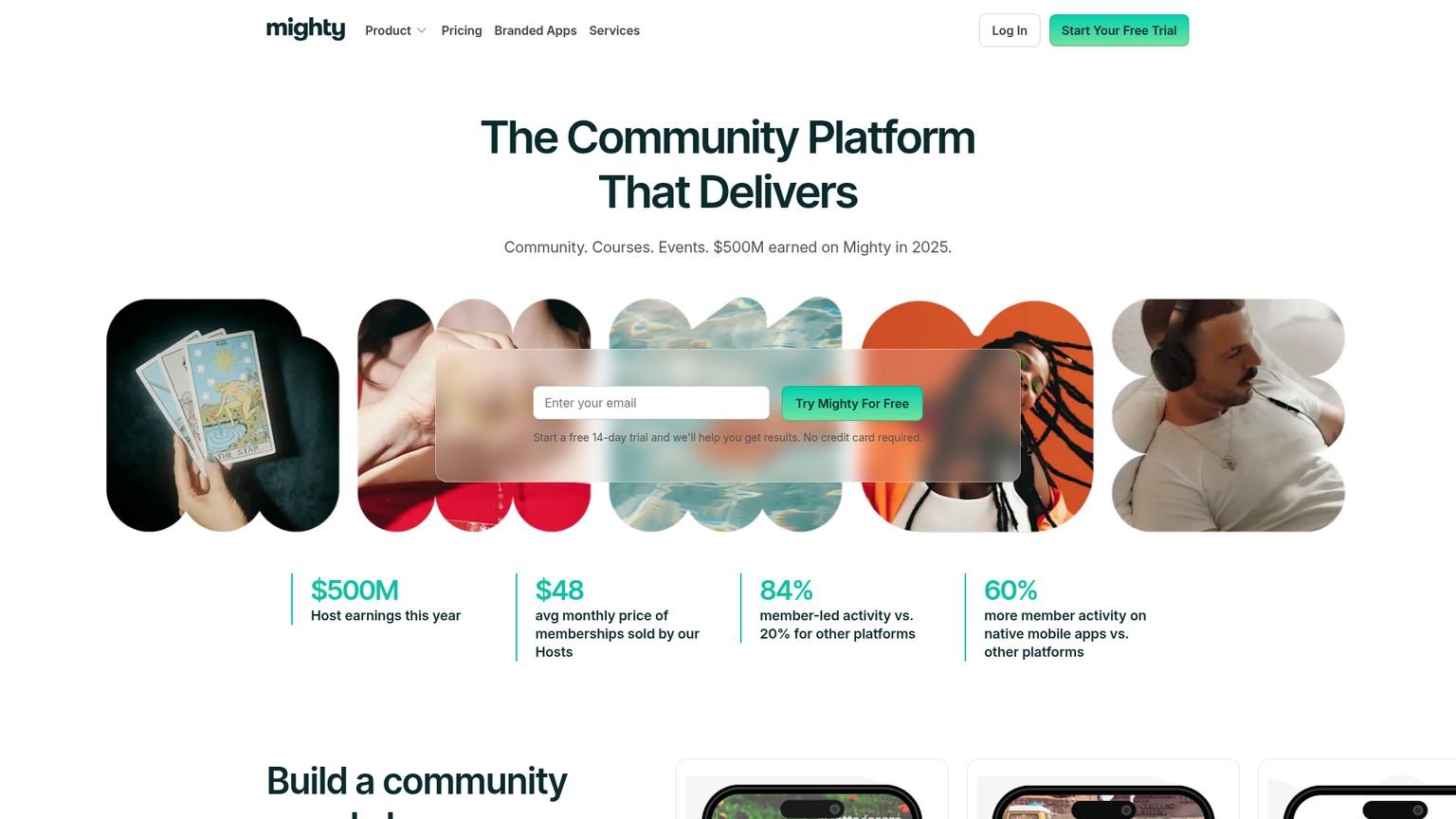
Decision shortcut:
Need quizzes, certificates, or drip content → Mighty Networks or Kajabi
Want email + funnels + courses in one tool → Kajabi
Running multiple communities or need white-label → Circle
Budget is the main constraint → Podia ($33/mo) or Thinkific (free)
Only care about selling courses → Teachable or Thinkific
Want $0 upfront with marketplace discovery → Whop
Running a coaching cohort → Heartbeat
Want the strongest daily engagement and gamification → Stay on Skool
The honest answer: Skool wins on community engagement. Its gamification is genuinely better than everything on this list. If daily participation is your primary metric, no alternative beats it in 2026.
But if quizzes, certificates, email, or multi-community management are essential, one of the platforms above is the right call. Switch for a specific functional reason — not because a pricing page looks attractive.
Migration Checklist: Moving Off Skool Without Losing Members
Member churn of 10–20% is typical during any platform migration. The critical variable is how much warning paying members get and whether you run both platforms in parallel during the cutover. Skip the overlap and you lose people whose billing falls in the gap.
Before you cancel Skool:
- Export your full member list from the Members tab — names, emails, join dates.
- Download all course content from Skool’s Classroom. You don’t own what’s only hosted on Skool.
- Note which members have active paid memberships and when they renew. Highest-churn risk.
- Screenshot community structure, course organization, and levels. You’ll rebuild from these.
On the new platform (week 1):
- Set up courses before inviting anyone. Members expect content on day one.
- Import your email list into the new platform or your email tool first.
- Write an announcement that’s specific about what’s better. Vague “exciting changes” messaging generates cancellations.
During the transition:
- Run both platforms in parallel for at least 30 days if any members are on active subscriptions.
- Set a migration deadline with a clear incentive — extended access, bonus module, locked price.
- Cancel Skool only after all recurring billing has migrated and is confirmed on the new platform.
Frequently Asked Questions
Is there a free Skool alternative?
Yes. Thinkific offers a free plan for one course, unlimited students, and 0% fees. Teachable’s free plan charges 5% but has no monthly cost. Whop is free to start with a 3% fee. For a free community tool without monetization, Geneva works as a pre-sale community alongside a paid platform (Thinkific, 2026).
What’s the biggest difference between Skool and Circle?
Skool wins on engagement via gamification — leaderboards, points, and levels drive daily returns Circle doesn’t match. Circle wins on flexibility: multiple spaces, white-labeling, workflow automations, and 0% fees on all paid plans. Circle starts at $89/month versus Skool Hobby at $9/month (Circle pricing, 2026).
Can I migrate my Skool community without losing members?
Not without some churn, but you can minimize it. Export your list, rebuild content first, run both platforms in parallel for 30+ days, and set a migration deadline with an incentive. Expect 10–20% drop-off regardless. The bigger your community, the more important the parallel-run window.
Does Skool have quizzes or certificates?
No. As of April 2026, Skool has no native quiz, assessment, or certificate features at any plan level. If those are requirements, Mighty Networks, Kajabi, Teachable, and Thinkific all include them — Teachable and Thinkific from their free plans (Skool, 2026).
Is Kajabi really cheaper than running Skool plus separate tools?
It can be. If you pay $99 for Skool Pro, $30 for an email tool, and $50 for a landing page builder, that’s $179/month. Kajabi Growth at roughly $143/month on annual billing consolidates all three and adds quizzes, certificates, and native affiliate management. The math only works if you use Kajabi’s email and funnel tools — not just the course section (Kajabi pricing, 2026).
Which Skool alternative is easiest for beginners?
Podia at $33/month has the gentlest learning curve among paid options — courses, digital downloads, and basic email in one interface without the complexity of Kajabi or Circle. Thinkific’s free plan is the easiest zero-cost start for selling a single course.
Key Takeaways
- Best overall alternative: Kajabi — replaces Skool plus email plus funnels for creators doing $3k+/month who’ll use all three
- Best free option: Thinkific (0% fees, one course) or Whop (free + 3%)
- Best for LMS depth: Teachable or Mighty Networks — both include quizzes, certificates, drip content
- Biggest mistake: Switching for features while underestimating the engagement drop when gamification goes away
- What to check first: Is your revenue built on daily engagement (Skool wins) or completions and certification (alternatives win)?
Related Reading
Full pros & cons
- Best-in-class gamification drives daily member participation
- Simple 3-part structure: community feed, classroom, events
- Hobby plan at $9/month is the lowest entry price in the category
- No per-member fees — flat subscription scales as you grow
- Built-in affiliate tracking and pixel support on Pro
- No quizzes, certificates, or SCORM support
- No native drip content or course prerequisites
- No built-in email marketing — requires a separate tool
- One community per subscription — multiples get expensive fast
Try it yourself
Ready to put it to the test?
We may earn a commission at no extra cost to you. Affiliate disclosure.
Reader feedback
Was this review helpful?
Your feedback helps us write better reviews.
Thanks for your feedback.
I'm obsessed with AI automation — especially Claude Code. I constantly join new Skool communities and online courses to stay ahead of what's actually working right now. Every review here is hands-on and paid out of pocket, so you can make the right call before spending your money.
Related Posts

8 Best Teachable Alternatives 2026
Teachable charges a 7.5% transaction fee on its $39/mo plan. 8 better alternatives with verified pricing — from free to $99/mo.

Skool vs Mighty Networks 2026
Skool Pro $99/mo (2.9% fee) vs Mighty Launch $79/mo (2%). Pricing, features, engagement, and mobile apps compared side-by-side for 2026.

Skool Free Trial 2026: Full Guide
Skool offers a 14-day free trial on Hobby ($9/mo) and Pro ($99/mo). Credit card required. Here's exactly how to start and what's included.

Skool Review 2026 (Tested & Honest)
Skool reviews 2026: honest verdict after running a paid community. Pricing, Hobby vs Pro, Skool Games, pros, cons, and who should skip it.

Skool vs Kajabi 2026: Honest Verdict
Skool starts at $9/mo with a 10% fee. Kajabi starts at $71/mo with 2.9% processing. Which actually costs less? Real numbers inside.

8 Best Circle Alternatives 2026
Circle starts at $89/mo plus a 2% transaction fee. 8 cheaper platforms that do more — with pricing, pros, cons, and a best-for verdict for each.
The Insider Newsletter
One honest review, every Sunday.
Get our weekly breakdown of which AI tools and Skool communities are worth buying. Built for marketers, founders & solopreneurs.