Russell Brunson Scam Allegations: What's Actually True
Is Russell Brunson a scam? The real allegations against him and ClickFunnels, what is true, what is hype, and an honest verdict for 2026.

Quick Decision
🗣 The allegation: Russell Brunson and ClickFunnels are a “scam,” a pyramid scheme that overhypes results and sells dreams.
✅ What I found: No FTC enforcement action, no consumer-protection judgment, no regulator finding against ClickFunnels or Brunson turned up in any public search I ran in August 2026. ClickFunnels is a software company founded in 2014, still selling subscriptions at published prices.
💡 Bottom line: The “scam” label attaches to Brunson’s aggressive marketing style rather than to any proven fraud. Go in clear-eyed. The software is real, the upsells are constant, and a tool has never guaranteed anyone a result.
Last updated: August 2026
Search “Russell Brunson scam allegations” and you get exposé videos, Reddit threads asking whether ClickFunnels is a pyramid scheme, and long blog takedowns about “fake it ‘til you make it.”
Almost none of them cite a document. So I went looking for one. I checked the FTC case library, searched for consumer class actions, pulled ClickFunnels’ live pricing page, and read the affiliate program terms. Below is what is verifiable, what is opinion, and what I could not source at all.
Want to judge Russell Brunson’s newest software for yourself? MarketingSecrets.AI runs a 14-day free trial of Marketing Secrets Core, then $97 a month.
 {rel=“nofollow noopener sponsored”}
Who Is Russell Brunson?
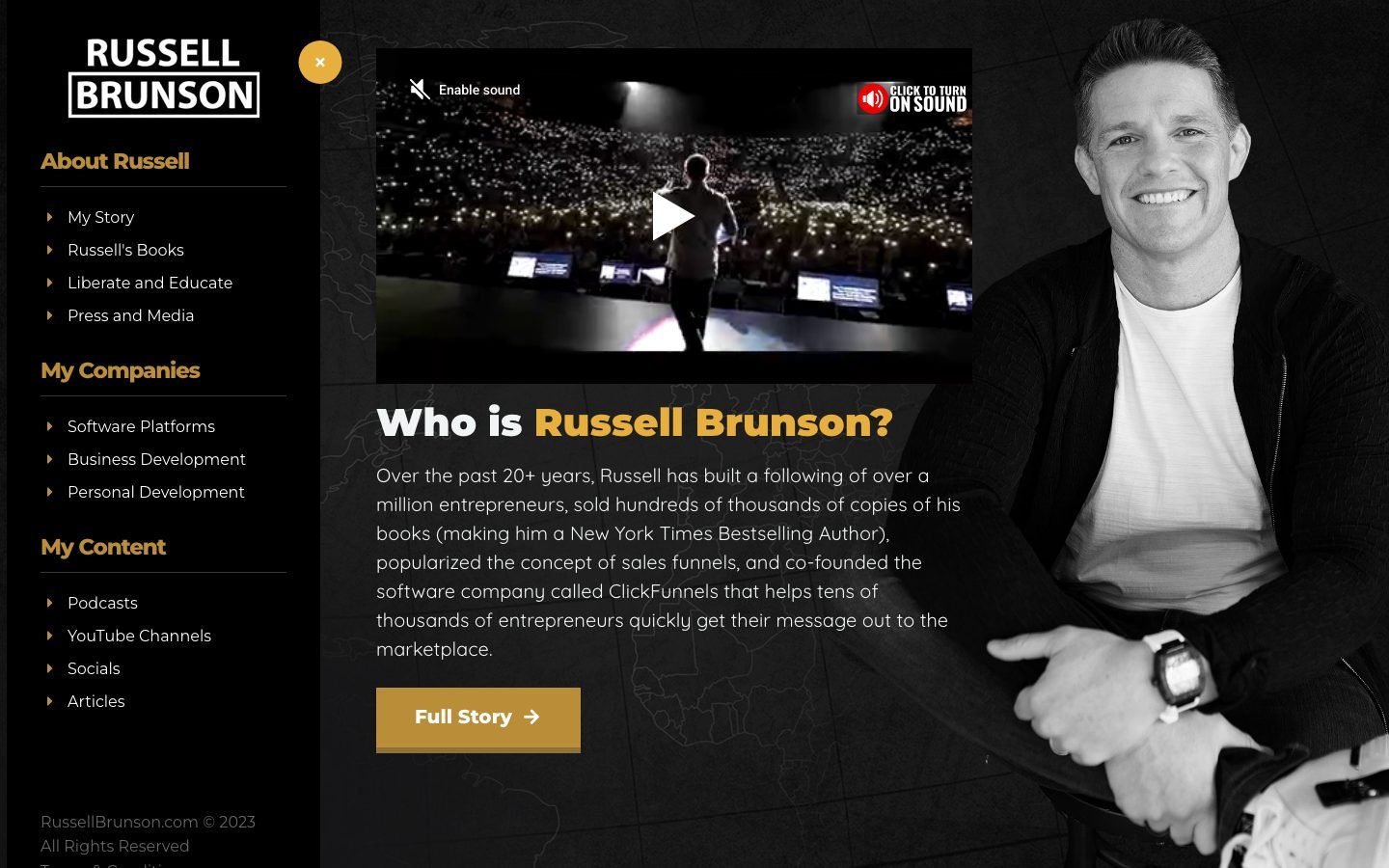
Russell Brunson co-founded ClickFunnels in 2014 with Todd Dickerson, who now runs the company as CEO. Brunson wrote DotCom Secrets, Expert Secrets, and Traffic Secrets, and he is one of the most recognisable figures in the online business world.
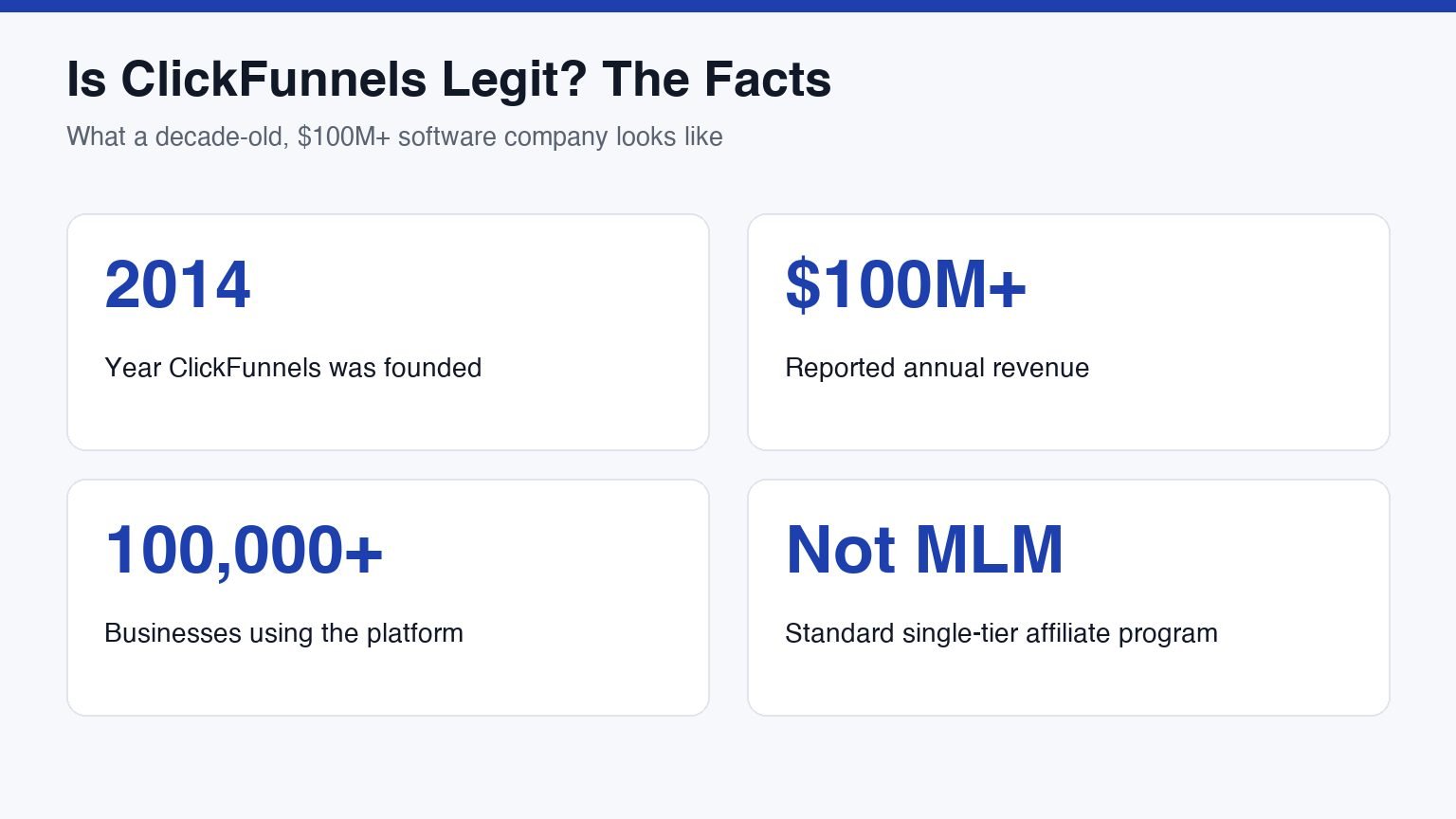
The company is real and large. Third-party revenue tracker Getlatka puts ClickFunnels at roughly $170M in annual recurring revenue for 2024, down from a 2023 peak. ClickFunnels is privately held, so treat any revenue figure as an estimate or a company statement rather than an audited number. Customer counts published by the company and by data aggregators sit in the 100,000 to 150,000 range, again self-reported.
So why the reputation? Three reasons show up again and again, and fraud is not one of them.
What the Public Record Actually Shows
This is the part every “scam” video skips.
I searched the FTC’s enforcement listings for ClickFunnels and for Russell Brunson. Nothing came back. The FTC has been active in this exact industry, and it does not go quiet about it. In March 2025 it moved against a “Click Profit” business-opportunity scheme that it said cost consumers at least $14 million. It has an open matter against Traffic and Funnels, LLC, a separate coaching company with no connection to ClickFunnels beyond a similar-sounding name. When a funnel-adjacent business genuinely crosses the line, there is a press release, a complaint, and a docket number.
I also found no consumer class action against ClickFunnels alleging fraud or an illegal pyramid. The most-cited ClickFunnels lawsuit in search results is a patent dispute the company filed against a competitor, where ClickFunnels is the plaintiff, not the defendant.
Absence of an enforcement action is not a character reference. It does mean that if someone tells you Brunson has been “caught,” you should ask them for the case number. In four years of these claims circulating, nobody has produced one.
The Scam Allegations, Examined
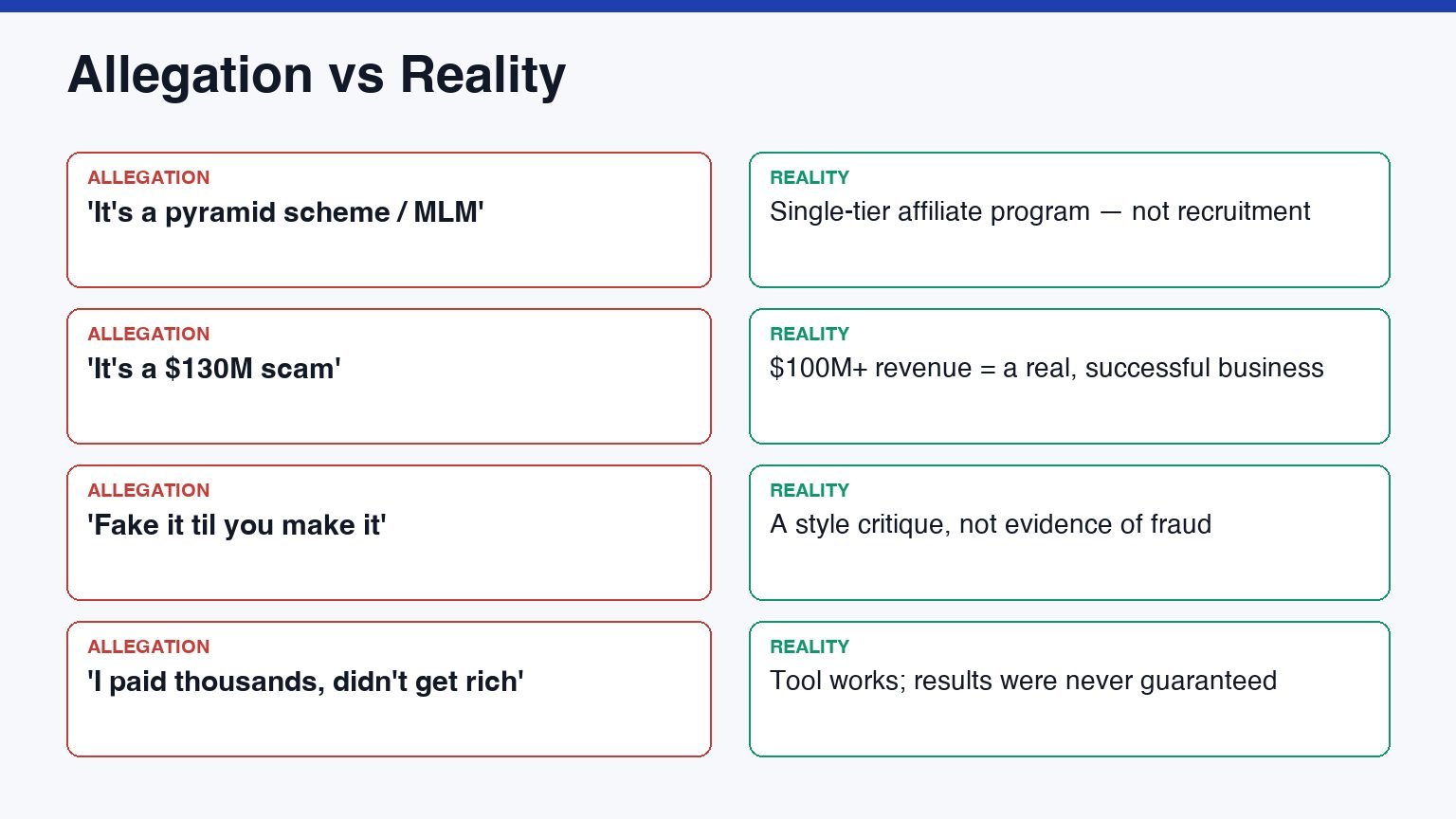
Four claims recur. Here is each one against what I could verify.
Is ClickFunnels a pyramid scheme or MLM?
No. ClickFunnels sells a software subscription and runs a conventional affiliate program on top of it. The published terms pay a flat 30% recurring commission on accounts you refer directly, rising to 40% for affiliates who close 40 accounts in a month, with a 45-day last-click cookie. Referrals are direct only. I found no sub-affiliate or downline tier where you earn a cut of the commissions of people you recruit, which is the structural feature that defines multi-level marketing.
The confusion has two sources. Brunson started out in network marketing, and ClickFunnels affiliates promote the tool with a fervour that reads as cult-like to outsiders. Enthusiasm is not a compensation structure. The company reports having paid out over $136M to affiliates, and every dollar of that traces to somebody buying software.
The famous “Dream Car” bonus, where 100 active referrals gets your car payment reimbursed, is the piece critics point at most. It is an incentive prize, common in SaaS partner programs, and it pays on customers acquired rather than on recruits enrolled.
Does the revenue prove ClickFunnels rips people off?
The exposé genre loves a big round number in the thumbnail. A large revenue figure tells you a lot of people pay for the product, and that many of them keep paying for years. Churn destroys a subscription business that does not deliver. ClickFunnels has been billing monthly since 2014.
You can dislike the marketing and still accept that the product works. Those are separate judgements, and conflating them is the core move in most of these videos.
Is the “fake it ‘til you make it” criticism fair?
Partly, and this is the strongest thing critics have. It is a critique of tone, not evidence of fraud.
Brand strategist Rachael Kay Albers has published the most cited version of it, arguing that the ClickFunnels ecosystem popularised a “fake it ‘til you make it” posture across the online business world, where the appearance of success is manufactured before the success exists. Brunson markets hard: rented-looking abundance, stage events, Two Comma Club awards for members who cross $1M in a funnel. The award celebrates gross revenue through a funnel, not profit, and that distinction gets lost in the applause.
If you want the fair version of the complaint, it is this. Aspirational marketing at that volume sets expectations that most buyers will not hit, and the company benefits from the gap. That is a real criticism. It is also legal, common across the entire info-product industry, and disclosed in ClickFunnels’ own earnings disclaimers.
”I paid thousands and didn’t get rich”: is that a scam?
No, and I say that as someone who has watched plenty of people spend money on funnels that went nowhere. Software and frameworks are inputs. An offer people want, traffic that converts, and the discipline to run the thing for six months are the actual determinants.
Buy the tool, skip the work, blame the tool. That loop is old and it predates Brunson by decades. The honest complaint underneath it is usually about expectation-setting, which brings you back to the criticism above.
What ClickFunnels Actually Costs in 2026
Vague price complaints do more damage than the prices themselves, so here are the live numbers from the ClickFunnels pricing page as of August 2026.
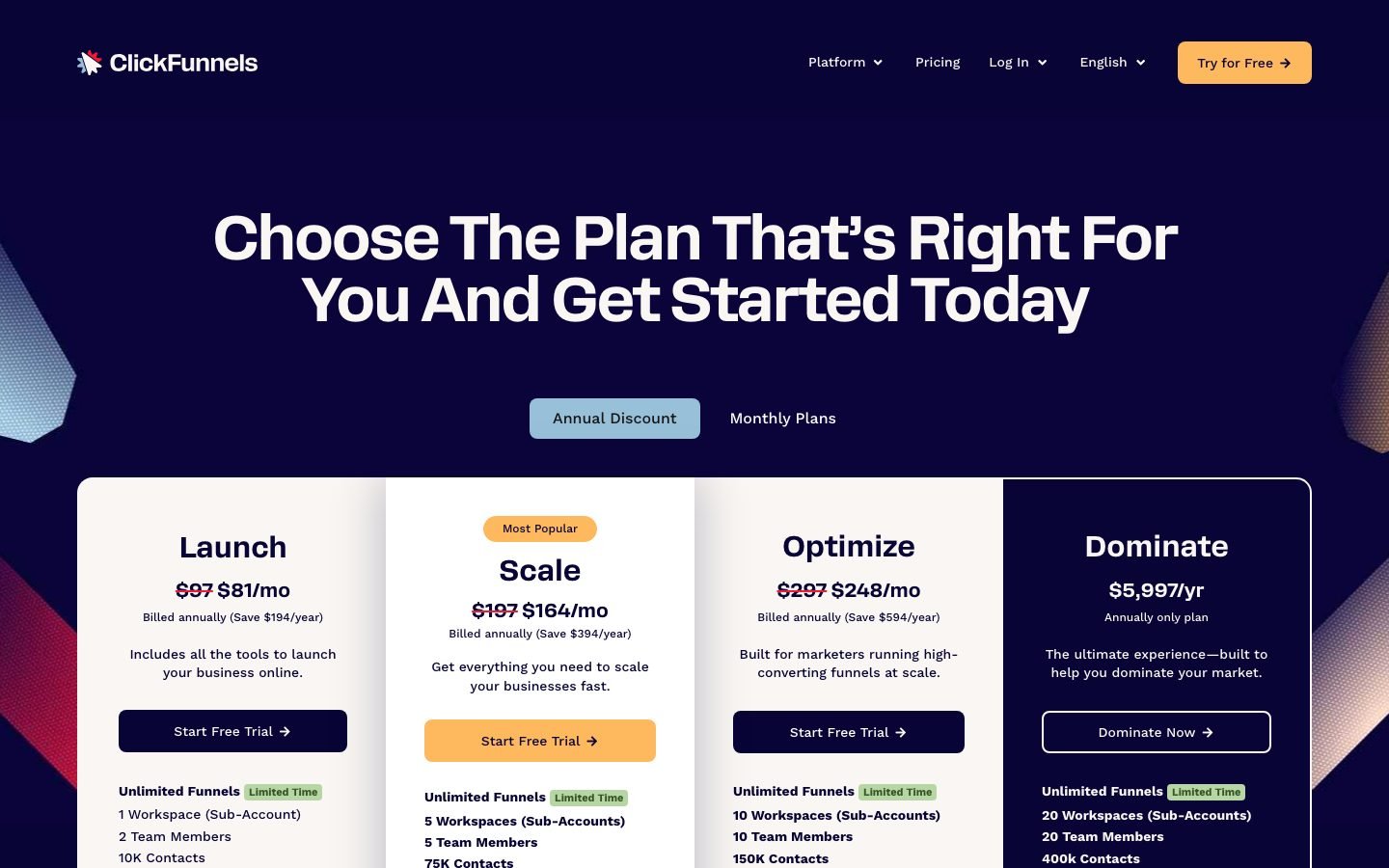
| Plan | Monthly | Annual (per month) | You save |
|---|---|---|---|
| Launch | $97 | $81 | $194/year |
| Scale | $197 | $164 | $394/year |
| Optimize | $297 | $248 | $594/year |
| Dominate | Not offered | $5,997/year | n/a |
Every plan carries a 14-day trial and a 30-day money-back guarantee. That refund window matters when you are weighing a scam claim. Real scams do not publish a guarantee and then honour it at scale for a decade.
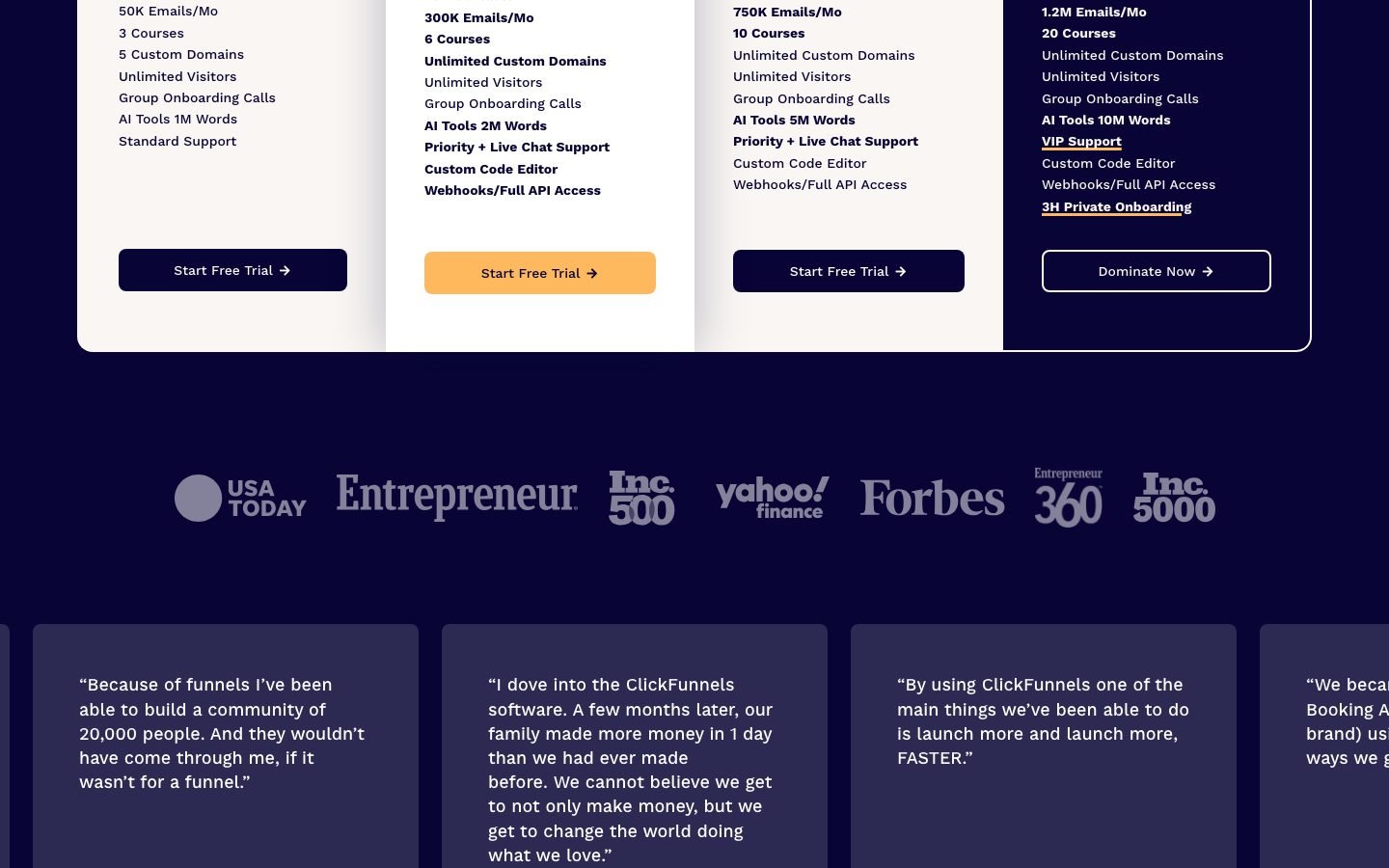
The $97 entry point buys 20 funnels, 100 pages, 10,000 contacts, three courses, and built-in email automation. Whether that is expensive depends entirely on what it replaces. If you are paying separately for a page builder, an email tool, and a checkout, the maths often lands close. If you have no offer yet, it is $97 a month for a very nice empty building. I go deeper on the plan limits in my ClickFunnels 2.0 review.
The Fair Criticisms
Being legitimate does not make the product right for you. The honest cons:
- It is expensive for beginners. $97 to $297 a month is real money before you have made any.
- The upsells never stop. Books, challenges, live events, higher tiers, and coaching. Budget for the pitch as well as the plan.
- Revenue-based awards distort expectations. Two Comma Club measures money through the funnel, not money kept.
- Cheaper tools cover most of it. Systeme.io has a genuinely free tier, and GoHighLevel bundles CRM and SMS if agency work is your angle. My full list is in best ClickFunnels alternatives.
- The ecosystem is loud. If hype marketing makes you switch off, you will be fighting the culture the entire time you use the software.
How to Vet Any Marketing Guru in Ten Minutes
The Brunson question comes up constantly because most people have no method for answering it. Mine takes ten minutes and works on anybody.
Search the FTC case library and your national regulator for the person and the company name. Search the relevant court records for civil filings. Read the earnings disclaimer on the sales page, because the legally required version of the promise is always more honest than the video. Check whether the product has a published price and a refund policy, or whether you have to book a call to find out what it costs. Look at how long the company has been billing customers.
Brunson passes that check. Plenty of people selling “AI business systems” this year do not, which is worth remembering before you buy a course from anyone. Brunson also sells MarketingSecrets.ai and teaches the software-plus-frameworks model I broke down in Billion Dollar Breakthrough. Run the same check on those before buying.
Key Takeaways
- The verdict: Not a scam. ClickFunnels is legitimate software and Brunson is a legitimate, hype-heavy marketer.
- The evidence: No FTC action, no fraud judgment, no pyramid ruling found in public records as of August 2026.
- The affiliate program: 30% recurring on direct referrals, no downline tier, so the MLM claim does not hold.
- The fair critique: Expectation-setting, constant upsells, and revenue-based awards that flatter the numbers.
- What to do: Take the 14-day trial, build one real funnel, and judge it on your own numbers.

Frequently Asked Questions
Is Russell Brunson a scam?
No. Brunson co-founded ClickFunnels in 2014, and the company has been selling software subscriptions at published prices ever since. Public searches of FTC enforcement listings and court records in August 2026 turned up no fraud action against him or the company. The “scam” label refers to his aggressive marketing style.
Is ClickFunnels a pyramid scheme?
No. The affiliate program pays 30% recurring on customers you refer directly, with no commission on affiliates you recruit. There is no downline, which is the defining feature of a pyramid or MLM structure.
Is ClickFunnels legit?
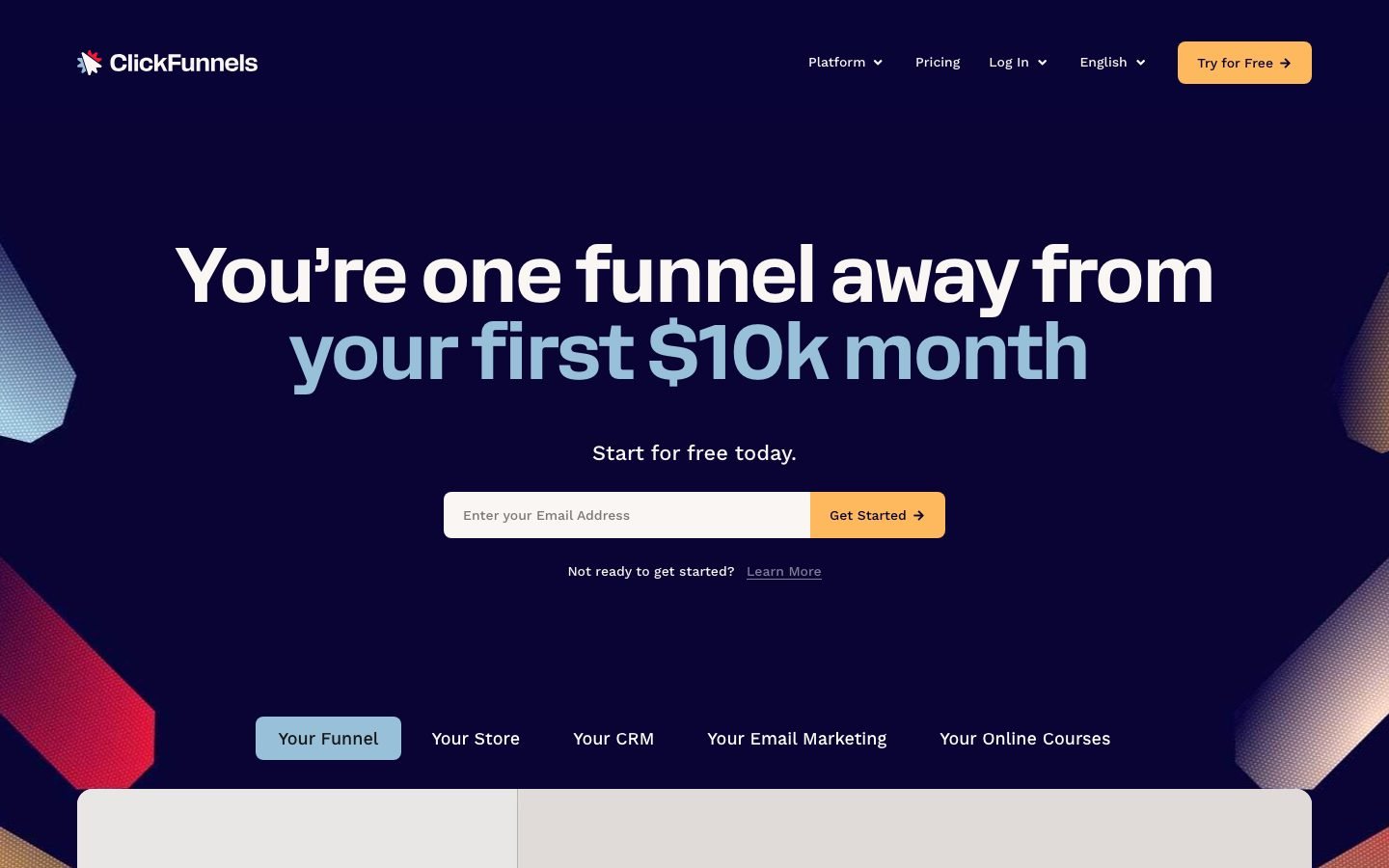
Yes. It is an established SaaS company founded in 2014, used by well over 100,000 businesses for funnels, checkout pages, courses, and email automation. Plans run from $97 to $297 a month with a 14-day trial and a 30-day money-back guarantee.
Why do people call Russell Brunson a scammer?
Mostly the marketing. Big income imagery, Two Comma Club awards based on gross revenue, and relentless upsells strike a lot of people as overselling what is realistically achievable. Critics such as brand strategist Rachael Kay Albers frame it as the “fake it ‘til you make it” culture. That is a critique of style, and it is not evidence of fraud.
Has ClickFunnels ever been sued or investigated?
I found no FTC enforcement action, consumer-protection judgment, or fraud class action against ClickFunnels or Russell Brunson in public searches as of August 2026. The most prominent ClickFunnels lawsuit in search results is a patent case the company itself filed against a competitor. If you see a claim that they were “caught,” ask for the docket number.
Can you actually make money with ClickFunnels?
Yes, but the software will not do it for you. You supply the offer, the traffic, and the follow-through. People who treat it as a button that prints money are the ones who leave angry.
Is ClickFunnels worth the price?
It is worth it when you have something to sell and will genuinely use the funnels, email, and checkout. On a tight budget or without an offer yet, start with a free or cheaper platform and move up once revenue justifies the $97.
Final Verdict
After going through the allegations against the record, my answer is straightforward. Russell Brunson and ClickFunnels are not a scam. A decade of subscription billing, published pricing, a working refund policy, an affiliate program with no downline, and a clean regulatory record do not describe fraud.
What is true is that Brunson sells harder than almost anyone in the industry, and that the distance between buying his software and building a profitable business is much wider than his marketing implies. Both of those things can be true at once.
Judge it on the software and on your own numbers. Take the trial, build one real funnel, and decide from there.
Try ClickFunnels free and judge for yourself →
Related Reading
Try it yourself
Ready to put it to the test?
We may earn a commission at no extra cost to you. Affiliate disclosure.
Reader feedback
Was this review helpful?
Your feedback helps us write better reviews.
Thanks for your feedback.

AI Funnel Insider is an independent review site covering AI tools, Skool communities, and online courses. Every review states what was paid for, what was accessed and what was verified before a verdict goes live. Reviews are independent and may contain affiliate links, at no extra cost to you.
Related Posts

Billion Dollar Breakthrough: Brunson's Software Play
Russell Brunson's Billion Dollar Breakthrough blends software with your frameworks to create sticky recurring revenue. Here is how it works.

Funnel Builder Certification Review: $5,500, Earned by Revenue
ClickFunnels' Funnel Builder Certification costs $5,500. You don't pass a test to get certified: Bronze needs $10,000 in verified sales.

One Comma Club Challenge Review: Free, 5 Days, One $5,500 Pitch
The One Comma Club Challenge is free and runs Oct 26-30, 2026. Expect about 20 hours of content, not 90 minutes a day, and a $5,500 pitch.

AI Secrets Challenge Review: I Attended and Paid $2,997
I attended all five live days in April, then paid $2,997 for MarketingSecrets.AI Platinum. Four months of daily use later, here is what was actually worth it.

MarketingSecrets.ai Review 2026: Worth the Price?
After 120 days on Marketing Secrets AI, here is what the $97/mo AI router does well, where a $20 ChatGPT plan beats it, and who should skip it.

8 Best ClickFunnels Alternatives 2026 (1 Is Free)
ClickFunnels costs $97 to $297/mo. These 8 alternatives match it for less, and one is permanently free. Full 2026 pricing, pros, and cons inside.
The Insider Newsletter
One honest review, every Sunday.
Our weekly breakdown of which AI tools and Skool communities are worth buying. Built for marketers, founders and solopreneurs.