ClickFunnels 2.0 Review 2026: Still Worth $97/mo?
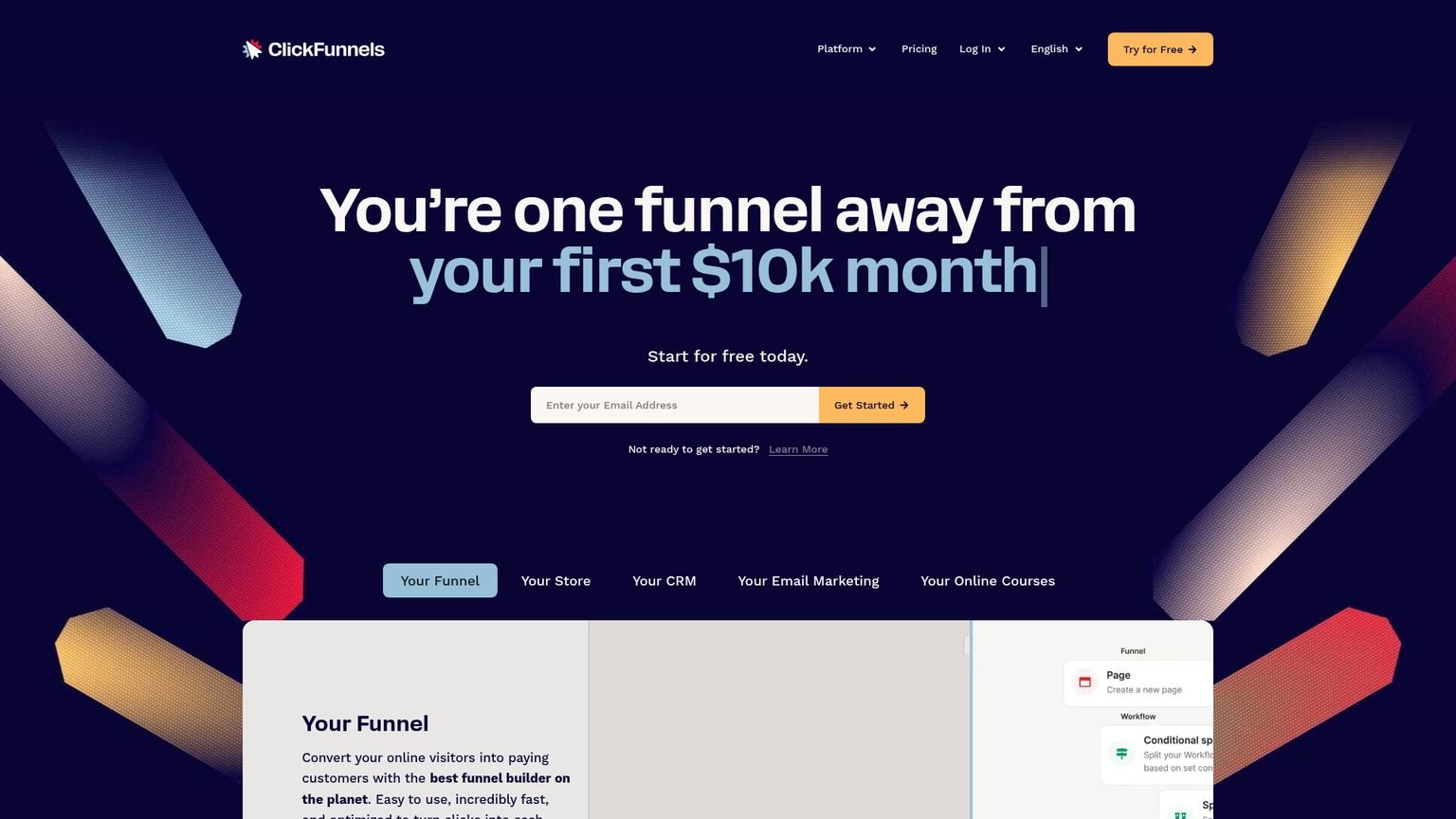
Access Tested We used the product hands-on but did not buy it at retail for this review.I've built funnels in ClickFunnels 2.0 myself. What 2.0 actually includes vs the original, the real price, and my honest 2026 verdict.

Best funnel builder for paid traffic: 2-step checkout, upsells, order bumps built in
Starts at $97/mo, steep if you haven't validated an offer yet
- Review type
- Access Tested. We used the product hands-on but did not buy it at retail for this review.
- Last verified
- September 2026
- Evidence reviewed
- Vendor pricing page · G2 reviews · Own account use
- Affiliate relationship
- Yes, disclosed above
| Closest alternatives | Price | Score |
|---|---|---|
| Systeme.io | Free-$97/month | 4.1/5 |
| LearnWorlds | $24/mo (annual) - custom enterprise | 4/5 |
| Podia | $42/month to $150/month | 3.8/5 |
Yes, ClickFunnels 2.0 is still worth $97/month in 2026, but only if you run paid traffic to an offer that already converts. It’s the strongest funnel builder I’ve used for that job. The 2-step checkout, native upsells, and Payments AI are the best in this category. The caveats are real too: email costs extra per send, the blog tool won’t compete with WordPress, and $97/month burns fast if your offer isn’t converting yet.
TL;DR: ClickFunnels 2.0 starts at $97/month (or $81/month billed annually) and gives you unlimited funnels, built-in email, courses, community, and a CRM under one login. Best for coaches, course creators, and affiliates running paid traffic to a validated offer. Skip it if you’re SEO-first or haven’t proven your product converts.
What Does ClickFunnels 2.0 Include Compared to the Original?
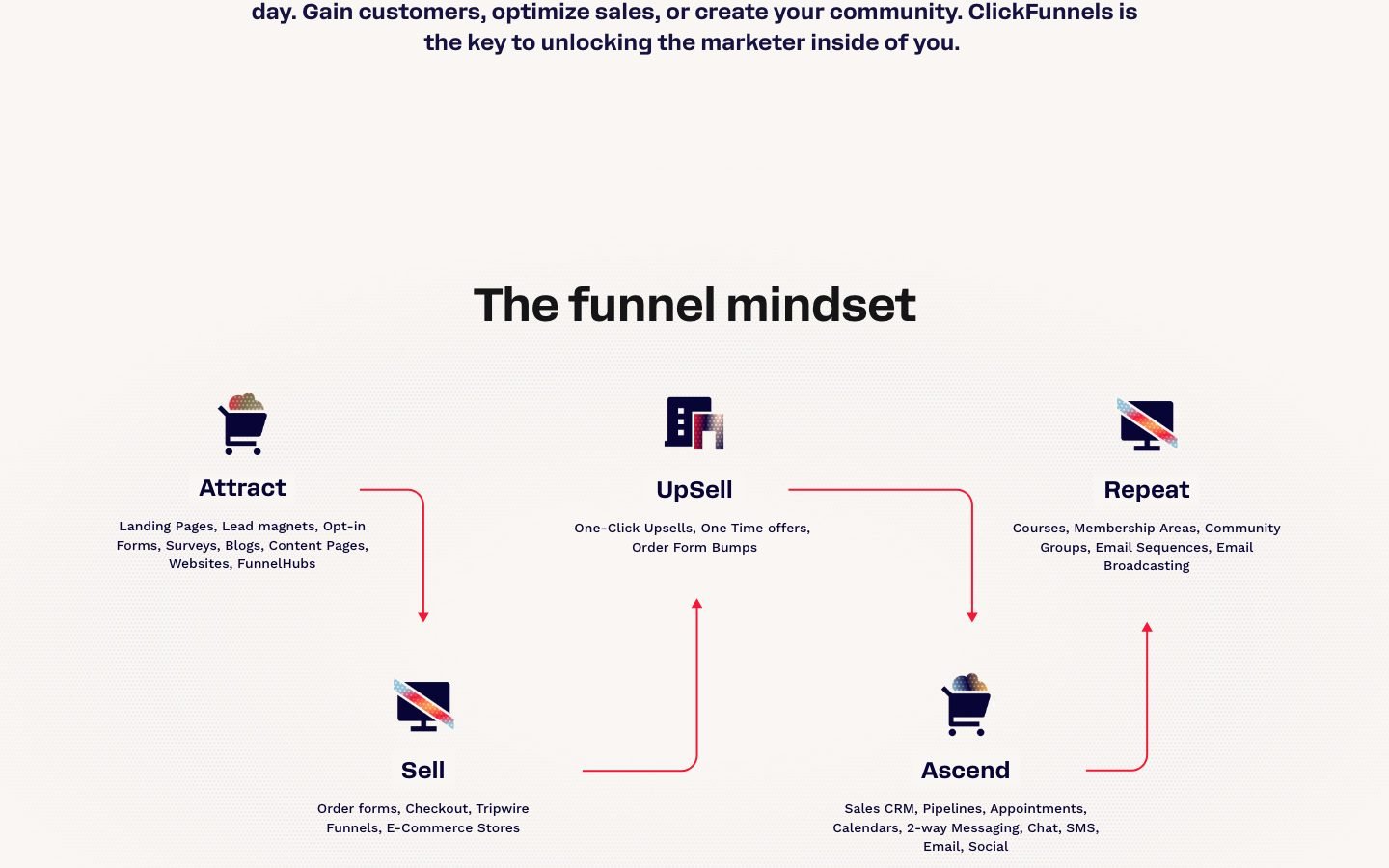
The original ClickFunnels was a funnel and landing page builder. ClickFunnels 2.0 keeps that and adds built-in email marketing, online courses, membership sites, community, CRM, ecommerce, a blog builder, and a full automation workflow engine.
ClickFunnels 2.0 launched in 2022 on a completely new codebase, so it’s a different product, not an upgrade to Classic.
Here’s the side-by-side:
| ClickFunnels Classic (original) | ClickFunnels 2.0 | |
|---|---|---|
| Launched | 2014 | 2022 |
| Funnels & landing pages | Yes (capped: 20 funnels/100 pages on Basic) | Yes, unlimited on all plans |
| Email marketing | Actionetics (add-on, discontinued) | Built in, $0.675 per 1,000 sends |
| Affiliate management | Backpack (add-on, discontinued) | Affiliate Center (Optimize plan+) |
| Courses & memberships | Basic membership areas | Full course builder with drip and progress tracking |
| Community | No | Yes, basic |
| CRM & pipelines | No | Yes |
| Blog builder | No | Yes (weak) |
| Ecommerce store | No | Yes |
| Automation workflows | Limited (via Actionetics) | Full visual workflow engine |
| Sold to new users | No | Yes |
Classic (built by Russell Brunson and Todd Dickerson) established the “funnel builder” category. Version 2.0 tries to replace the entire stack a course creator or info-product seller would normally stitch together from five separate tools.
I’ve built funnels in ClickFunnels 2.0 myself, and I’ve spent a lot of time inside high-converting funnels on the platform, studying what top performers run and where they hit friction. This review reflects that work, not a first-week trial.
If you’ve read older ClickFunnels reviews referencing the $97 Basic plan with 20 funnels and 100 pages, that’s Classic. The plan names, prices, and feature sets in 2.0 are different. Same if you see Actionetics or Backpack mentioned; those were Classic-era products that 2.0 replaced.
What’s New in ClickFunnels 2.0 in 2026?
Not much, and that’s the honest answer. ClickFunnels 2.0 is a mature platform in 2026, not a mid-rebuild. Pricing held steady all year and the plan structure did not change (ClickFunnels, verified September 2026).
Two additions are worth knowing:
- Payments AI routes each transaction across multiple gateways and retries failed charges automatically to cut decline rates.
- Funnel Stats reports conversion at each node in a funnel, so you can see the exact step where visitors drop instead of guessing.
One caution on the “ClickFunnels news June 2026” results you will find: ClickFunnels does not publish a public monthly changelog, so most of those roundups are third-party blogs restating the same feature list. The prices and mechanics in this review reflect what the platform shows in September 2026.
What Does ClickFunnels Cost in 2026?
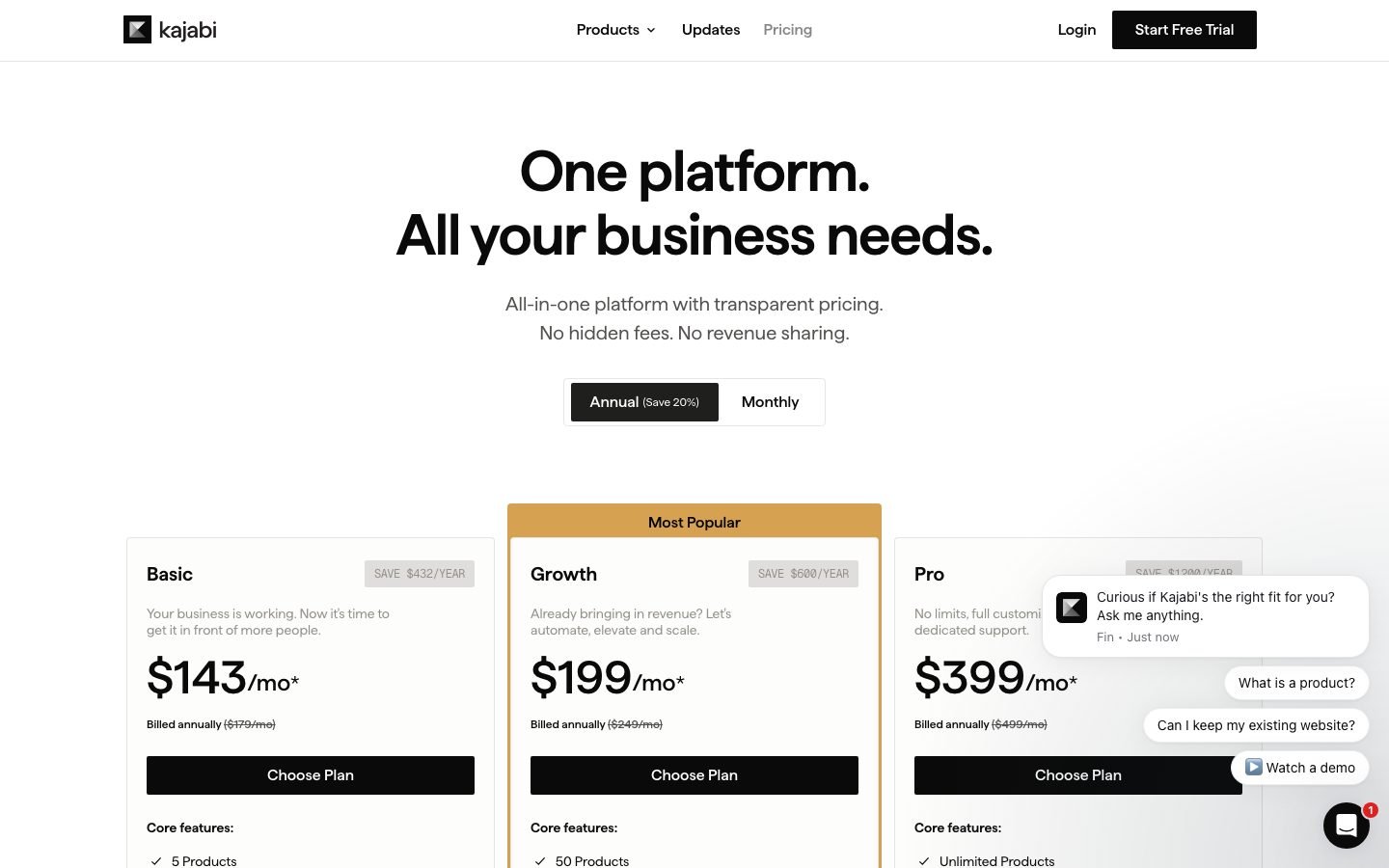
ClickFunnels 2.0 pricing runs from $97/month (Launch) to $5,997/year (Dominate), with annual billing saving 16-17% on the three monthly plans (ClickFunnels, verified August 2026). No transaction fees on any plan. Email sends are billed separately at $0.675 per 1,000 emails, and that line item compounds fast at scale.
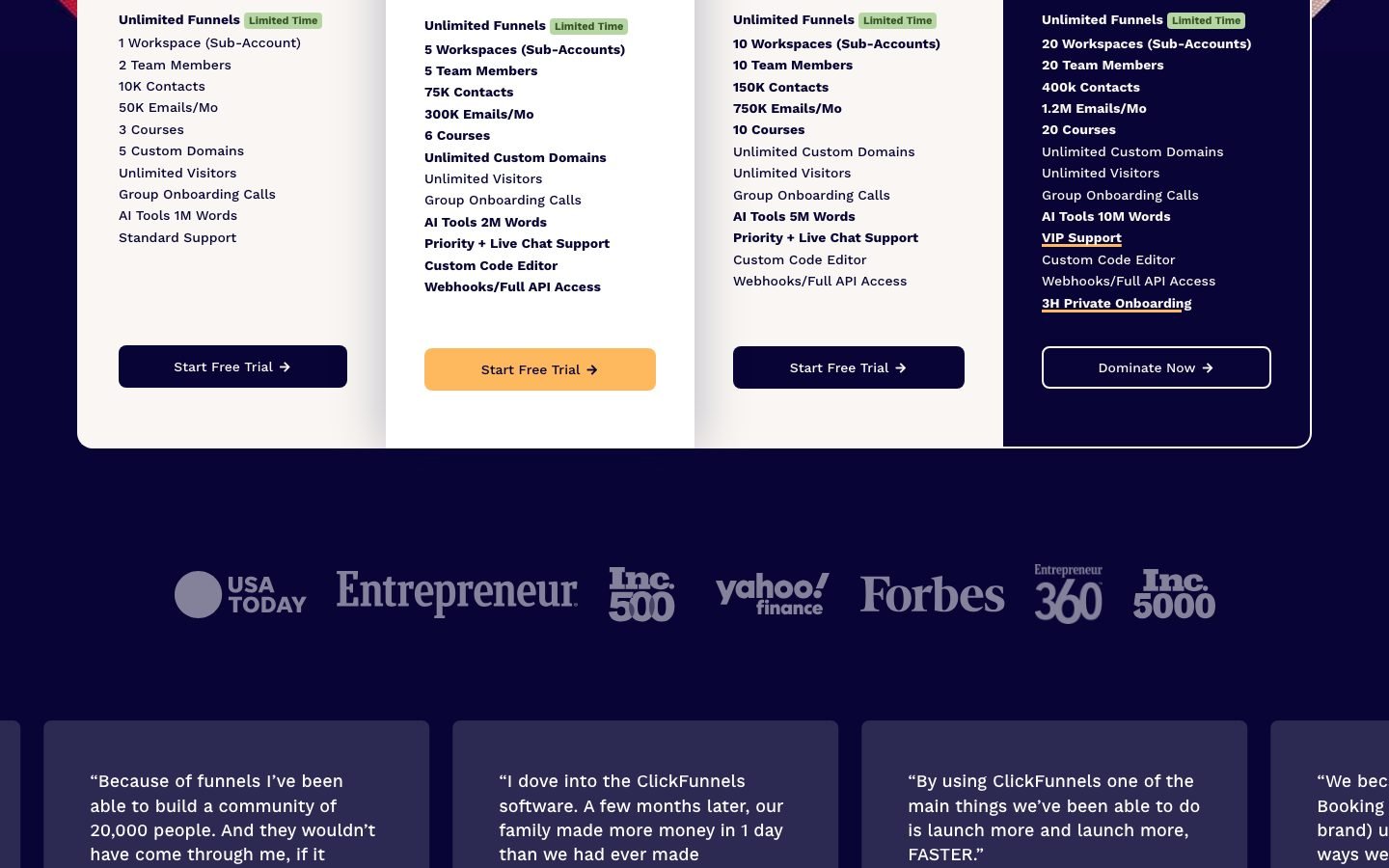
Four plans. No percentage cut on your revenue. Worked monthly bills for three business types are in the ClickFunnels pricing breakdown.
| Plan | Monthly | Annual (per month) | Contacts | Team Members |
|---|---|---|---|---|
| Launch | $97/mo | $81/mo ($972/yr) | 10,000 | 2 |
| Scale | $197/mo | $164/mo ($1,968/yr) | 75,000 | 5 |
| Optimize | $297/mo | $248/mo ($2,976/yr) | 150,000 | 10 |
| Dominate | Annual only | $499/mo ($5,997/yr) | 400,000 | 20 |
All plans include unlimited funnels, unlimited visitors, unlimited landing pages, unlimited site pages, and group onboarding calls. The differences are workspaces, team seats, contact limits, courses, and support tier.
What’s the difference between plans?
Launch gives you 1 workspace, 2 team members, 3 courses, 3 communities, 5 custom domains, 50,000 emails/month included, and standard support. Scale jumps to 5 workspaces, 5 team members, 6 courses, unlimited custom domains, 300,000 emails/month, and priority plus live chat support. Optimize adds the Affiliate Center, 10 workspaces, 150,000 contacts, and 750,000 emails/month. Dominate is enterprise-tier: 20 workspaces, 400,000 contacts, 1.2 million emails/month, private 3-hour onboarding, and VIP support.
Scale and above also unlock webhooks, full API access, the custom code editor, and advanced automation workflows not available on Launch.
ClickFunnels $97 vs $297: What’s the Difference?
$97 is the Launch plan and $297 is Optimize. Both use the same funnel builder and the same checkout. You pay the jump to $297 for the Affiliate Center, higher limits, and priority support, not for a better builder (ClickFunnels, verified September 2026).
- Launch ($97/mo): 10,000 contacts, 2 team members, 3 courses, 5 custom domains, 50,000 emails/month, standard support.
- Optimize ($297/mo): 150,000 contacts, 10 workspaces, 750,000 emails/month, and the Affiliate Center to run your own affiliate program. Scale ($197/mo) sits between them.
Pick Launch unless you specifically need the Affiliate Center or the higher contact and email limits. The checkout mechanics that make ClickFunnels worth buying are identical on the $97 plan.
The per-send email fee is the real hidden cost
Email sends cost $0.675 per 1,000 emails on top of your plan price. This is not a flat rate. If you have 20,000 contacts and send four campaigns per month, that’s 80,000 sends, roughly $54/month extra. At 100,000 contacts sending weekly: $270/month on top of your plan.
Two other costs worth knowing. Video hosting charges $0.10 per video asset plus bandwidth fees if you use ClickFunnels’ hosting instead of a third-party embed. And if you want to pause your account rather than cancel, the pause plan costs $17/month. Most competitors offer this free.
The 14-day free trial requires no credit card. There’s a 30-day money-back guarantee after your first payment.
Does ClickFunnels Have a Black Friday Deal?
ClickFunnels had not announced a 2026 Black Friday offer by October 19, 2026. Last year ClickFunnels did not cut the pricing page. It sold a bundle by email and webinar called The Last Secret.
The Last Secret bundle included 12 months of ClickFunnels plus white-label rights to Doodly, Toonly, Voomly and other tools. That offer closed at 11:59 PM Pacific on December 1, 2025, and the emails I received stated no price.
So do not expect a cheaper ClickFunnels Launch plan on November 27. If you only need funnels, the 14-day trial and annual billing at $81 a month are the better deal today. If you want the bundle, get on the ClickFunnels email list before Thanksgiving week. The full timeline is in my ClickFunnels Black Friday guide, and my Black Friday software deals tracker covers the other tools I review. For the deals you can claim today, including 3 months of Scale for $99, see my ClickFunnels discount guide.
Does ClickFunnels Have a Free Trial?
ClickFunnels offers a 14-day free trial with no credit card required on all plans (ClickFunnels, 2026). After that, a 30-day money-back guarantee applies to the first payment. No prorated refunds after the initial 30-day window.
If you searched for a ClickFunnels 30-day trial, note that the ClickFunnels trial itself is 14 days. The 30 days people remember is the money-back guarantee on the first payment, a separate thing. Stack the two and you get up to 44 days to test the platform at low risk. The ClickFunnels free trial guide lays out a 14-day test plan.
Start with the ClickFunnels trial. Build one funnel from a template, connect your Stripe account, and see whether the checkout flow matches your use case. Don’t sign up, consume tutorials for two weeks, and then start building. That’s the pattern that ends in “I didn’t really use it.”
Try ClickFunnels free for 14 days →
What Can You Build with ClickFunnels 2.0?
ClickFunnels 2.0 supports 12+ distinct tools under one login, including sales funnels, landing pages, email marketing, online courses, membership sites, community, ecommerce stores, CRM pipelines, appointment booking, survey workflows, countdown funnels, and an affiliate management center (ClickFunnels, 2026). The breadth is real. The depth varies by feature.
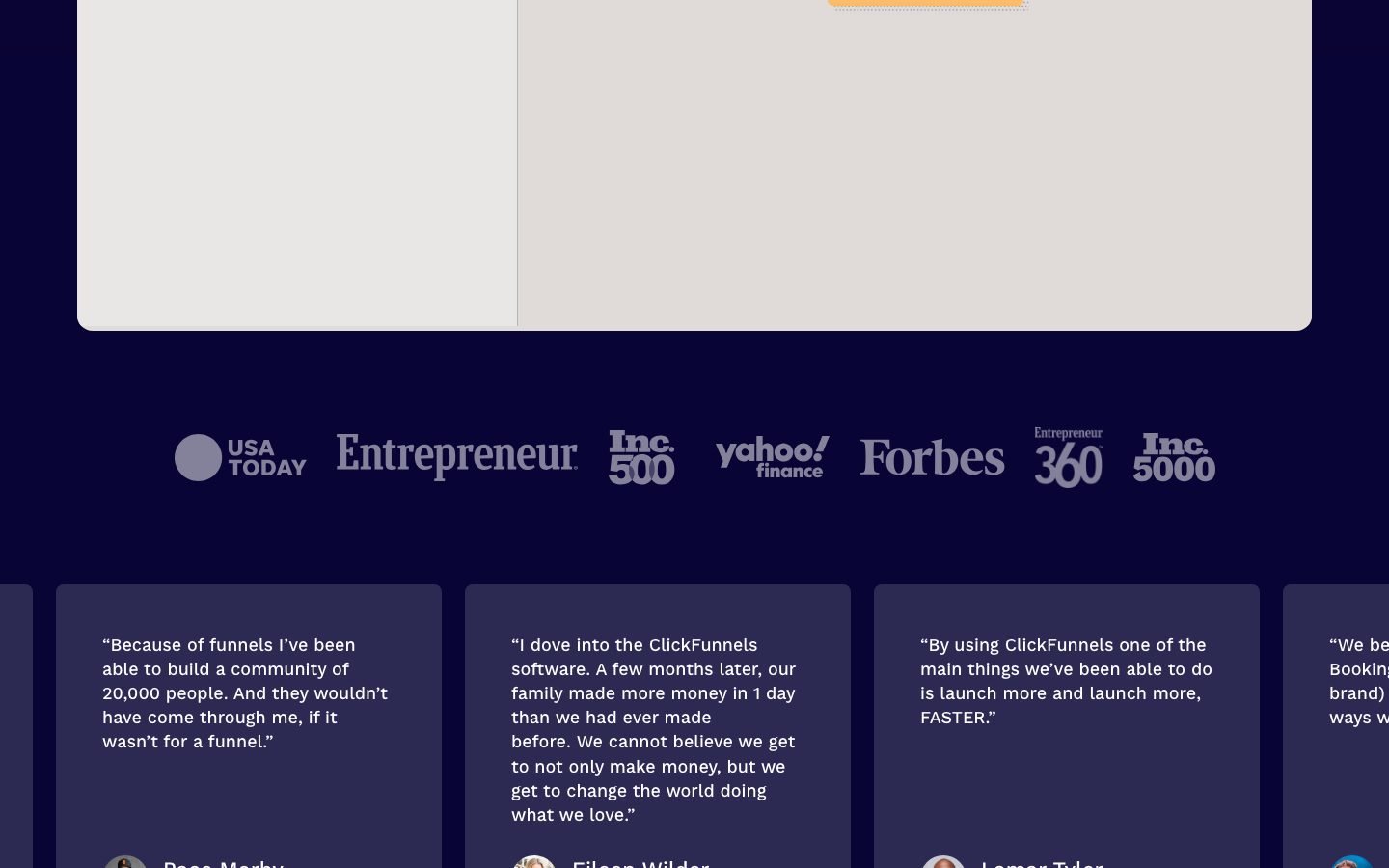
Here’s what each major feature delivers:
The Funnel Builder Has No Real Peer for Paid Traffic
The 2-step checkout flow captures email on page one and payment on page two. A visitor who enters their email but bails at checkout still becomes a lead. Standard email follow-up sequences for cart abandons convert 3-7% of those leads into buyers.
Order bumps, one-click upsells, and downsells are native to the platform, no third-party integrations needed. Countdown Funnels add urgency timers. Smart Checkout enables one-click repurchases. Payments AI routes transactions across multiple payment gateways to reduce decline rates.
Courses Work, but Kajabi’s LMS Runs Deeper
Courses in 2.0 are functional. You get modules, lessons, student progress tracking, drip scheduling, and clean course templates. Students access everything through a unified member portal that ties together checkout, course access, and community. The post-purchase experience feels clean.
What’s missing: no graded assignments, no advanced student analytics showing where people drop off in a video, and no native mobile app. For basic course delivery bundled with a funnel, it works. For serious education businesses where completion rates matter, Kajabi’s LMS runs deeper.
Email Is Included, but the Meter Is Always Running
Email is included on all plans, but the per-send pricing applies the moment you start sending. The Workflow builder handles branching automations, wait steps, tagging, and conditional triggers. It’s solid for sales follow-up sequences.
The native email tool isn’t built for complex behavioral sequences, the kind where triggers fire based on how long someone watched a video or which quiz answers they selected. Those workflows typically need an external tool. In my experience, ClickFunnels handles transactional and campaign email well, but advanced nurture sequences run better on a dedicated platform.
Community Is the Weak Spot
The community feature exists. Discussion threads, moderation, basic member profiles. It’s not competing with dedicated platforms on engagement mechanics. If community is central to your offer, tools built specifically around it deliver better engagement.
The CRM Covers Standard Workflows
The CRM tracks contacts, pipelines, and opportunities. Tagging, segmentation, and automation triggers all connect to the same contact record. It handles standard course-creator and affiliate-business workflows. It won’t replace a full sales CRM if you run a large outbound operation.
How Do You Get Started with ClickFunnels 2.0?
A first funnel built from a ClickFunnels 2.0 template goes live quickly. Full configuration, including email sequences and payment processor integration, takes longer.
Have these ready before you sign up: your Stripe account connected and verified, the URL of your offer page if you’re building a bridge funnel, and a clear decision on funnel type (lead gen, sales with upsells, or course delivery). That shapes which template to start from.
The three things worth doing in the first 48 hours:
-
Attend the group onboarding call. Every plan includes these. The 2.0 interface changed a lot from Classic and the onboarding covers those differences. Worth the hour.
-
Build your first funnel from a template before attempting blank canvas. ClickFunnels organizes templates by goal: lead generation, product launch, webinar, VSL. Starting from a goal-matched template is faster than building from scratch and teaches how the elements connect.
-
Set up email follow-up for non-buyers immediately. The 2-step checkout captures emails from visitors who didn’t buy. If no email sequence is running within 48 hours of going live, you’re leaving those leads on the table.
The biggest ClickFunnels setup mistake I see is signing up without a validated offer and spending weeks optimizing a funnel for a product that hasn’t proven it converts. The other is migrating a large existing email list to ClickFunnels without accounting for the per-send charges. Run that math before you migrate.
What Does ClickFunnels Do Well?
ClickFunnels dominates paid traffic use cases through its 2-step checkout, native upsells, order bumps, and Payments AI routing. The Russell Brunson training ecosystem and the ClickFunnels Facebook community are real assets.
Funnel Builder
The funnel builder is purpose-built for paid traffic to a single offer. 2-step checkout, countdown timers, order bumps, upsells, downsells, Smart Checkout, Payments AI: all native. For anyone running Google Ads or Meta to a single high-converting offer, no other platform packs the same density of conversion-specific features at this price point.
A/B testing works across pages, funnel paths, and email campaigns. The Universal Sections feature (Scale and above) lets you build a testimonial block or guarantee section once and use it across every funnel, and edits propagate automatically. If you manage five or more funnels at once, this alone saves hours per week.
Training Ecosystem
The One Funnel Away Challenge, DotCom Secrets, Expert Secrets. These aren’t just products; they’re a methodology for building offer funnels that the ClickFunnels community rallied around. FunnelFlix, the training library included with all plans, is substantial. The 441,000-member Facebook group is active, with real answers from working practitioners.
Platform Consolidation
For coaches and course creators who want one login for funnels, courses, email, CRM, and community, ClickFunnels 2.0 delivers that. The alternative is assembling a stack: a funnel tool, a course platform, an email service, and a CRM. That stack commonly runs $150-250/month and means managing four separate integrations.
Where Does ClickFunnels Fall Short?
ClickFunnels 2.0 falls short on SEO content tools, email deliverability at scale, multivariate testing, live webinar hosting, and community engagement depth (G2 Reviews, 2026). The blog builder doesn’t compete with WordPress. A/B testing caps at two variants per test.
The Blog Builder Is the Wrong Tool for SEO
If organic search traffic is your primary channel, ClickFunnels is the wrong tool. A self-hosted WordPress site with a page builder costs under $100/year and outperforms ClickFunnels’ blog in every meaningful SEO dimension: structured data, crawlability, plugin ecosystem, site speed control.
Email Gets Expensive at Scale
Email deliverability complaints appear consistently in G2 user reviews. The per-send pricing model also makes ClickFunnels progressively more expensive as your list grows. At 50,000+ active contacts, a dedicated email platform like Kit (formerly ConvertKit) or ActiveCampaign typically delivers better inbox rates at a comparable or lower cost.
Testing Caps at Two Variants
A/B testing is limited to two variants per test. No multivariate testing. If you run aggressive multi-element split tests (headline, image, price, CTA at the same time), this is a real constraint that needs workarounds or an external tool.
Live Webinars Still Need Zoom
ClickFunnels supports webinar funnel pages but not live broadcasts. You still need Zoom, WebinarJam, or Demio for the actual live event. The funnel page redirects to an external platform. It works, but it’s one more tool to manage.
Is ClickFunnels Worth It in 2026?
ClickFunnels 2.0 is worth it for coaches, course creators, and affiliates running paid traffic to a validated offer at $97+/month (ClickFunnels, 2026). The ClickFunnels funnel builder and checkout mechanics are the best in this category.
ClickFunnels is a bad buy for SEO-first content sites, unvalidated offers, or businesses where high-volume email is the primary revenue driver.
The ROI case for ClickFunnels is cleaner than for most SaaS tools because the impact is measurable at the checkout page. Say you’re sending $2,000/month in paid traffic to a funnel and the 2-step checkout converts 1% better than a standard checkout. At a $500 product price, that’s $1,200/month in additional revenue from the platform’s core mechanism alone, and the $97 plan cost becomes a rounding error. The flip side: if you’re not yet sending paid traffic to a validated offer, the math works against you.
The right fit checklist:
- You have a validated offer that converts with paid traffic
- You need 2-step checkout, upsells, and order bumps in one system
- You want funnels, courses, and email under one login
- You’re willing to account for per-send email costs as you scale
Skip ClickFunnels if:
- Organic search is your primary traffic source
- You haven’t validated your offer yet; test cheaply first (a free plan like Systeme.io’s works for this)
- Your email list is large (20,000+) and you send frequently
- You need live webinar hosting as a core feature
Rating: 4.2/5
ClickFunnels vs Kajabi: Which Should You Pick?
ClickFunnels and Kajabi serve different primary use cases. ClickFunnels wins on checkout conversion for paid traffic; Kajabi wins on LMS depth and student experience for course-first businesses (Kajabi, ClickFunnels, 2026). At the same price point, ClickFunnels gives you more contacts but fewer education-delivery features.
| ClickFunnels Launch | Kajabi Basic | |
|---|---|---|
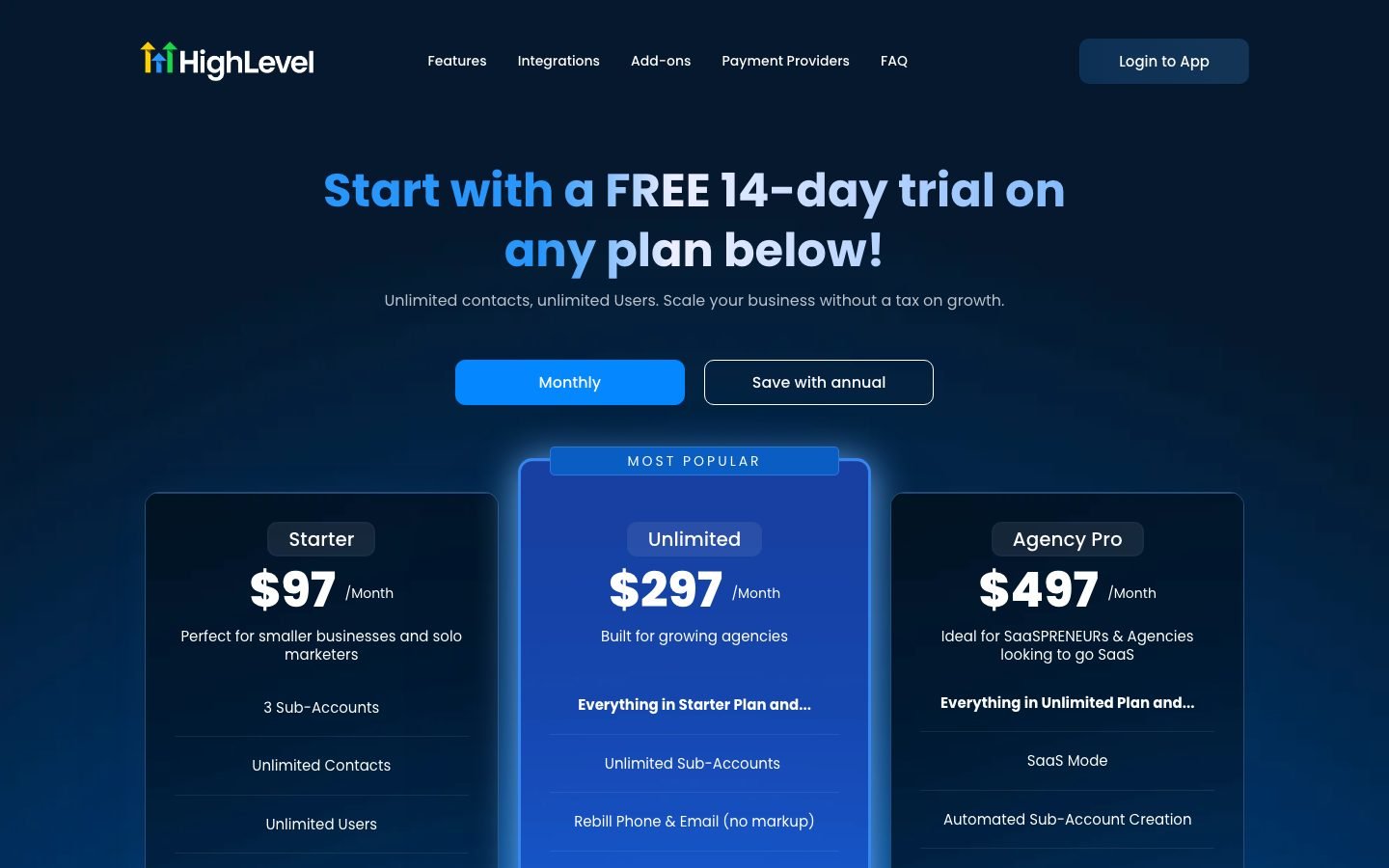
| Monthly price | $97/mo | $179/mo |
| Annual price | $81/mo | $143/mo |
| Contacts | 10,000 | 2,500 |
| Funnels | Unlimited | Limited Pipelines |
| A/B testing | Pages, funnels, emails | Landing pages only |
| Student mobile app | No | Yes |
| Native LMS | Basic | Advanced (drip, grading) |
| Community | Basic | Advanced (gamification) |
Kajabi restructured pricing in January 2026 and introduced a 2% surcharge if you use your own Stripe account rather than Kajabi Payments. On $5,000/month in course revenue, that adds $100/month to your real cost.
ClickFunnels wins for media buyers and direct-response marketers. Kajabi wins for coaches building premium education brands with completion rates and student retention at the center. I break the two down feature by feature in my Kajabi vs ClickFunnels comparison.
ClickFunnels vs GoHighLevel: Which Is Better for Solo Operators?
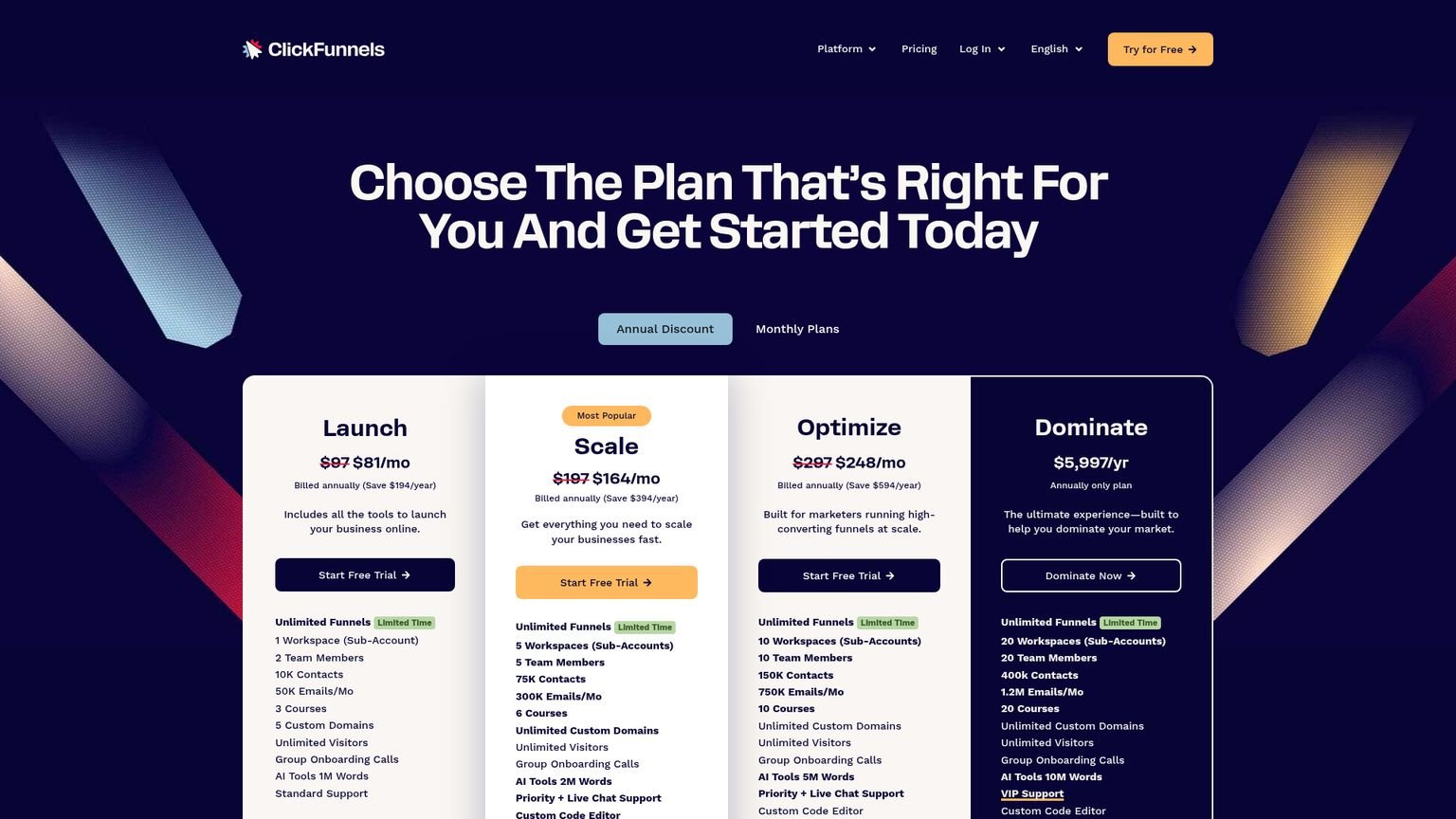
GoHighLevel at $97/month includes white-label CRM, email, SMS, call tracking, unlimited contacts, and agency-level client management, but it’s built for agencies, not solo operators running one offer (GoHighLevel, 2026). ClickFunnels wins on checkout mechanics, training ecosystem, and simplicity for a single-offer business.
GoHighLevel usage fees push the real cost 30-50% above the listed plan price once SMS, phone calls, and email sending are active. A $97/month GHL account commonly runs $140-150/month in practice. My full GoHighLevel review covers those usage fees in detail.
For a solo affiliate or coach selling one high-ticket offer via paid traffic, ClickFunnels is the cleaner choice. For agencies managing 10+ client accounts who want to consolidate tools and resell the platform white-labeled, GoHighLevel makes more sense.
ClickFunnels Affiliate Program: Is It Worth Promoting?
ClickFunnels pays 30% recurring commission for the lifetime of the customer, with no cap and no expiry (ClickFunnels Affiliate Program, 2026). The Dream Car bonus pays $500/month toward a car at 100 active referrals and $1,000/month at 200 active referrals.
On the Launch plan ($97/month), 100 active referrals generates $2,910/month in recurring commission before the Dream Car bonus.
Two rules catch affiliates out. First, you cannot bid on trademarked keywords (“ClickFunnels,” “Russell Brunson”) in paid ads. Second, you cannot link directly from a paid ad to your affiliate URL. Traffic must go through your own page first. Both rules are actively enforced.
What Are the Pros and Cons of ClickFunnels 2.0?
The biggest ClickFunnels 2.0 pro is the 2-step checkout with native upsells and order bumps, the best setup for paid traffic. The biggest cons are the $97/month entry price and email sends billed at $0.675 per 1,000.
What works well:
- 2-step checkout with native upsells and order bumps, the best setup for paid traffic
- Unlimited funnels on all plans, no caps as you scale
- Payments AI routes transactions across gateways to reduce declines
- Consolidated platform: funnels, email, courses, CRM, community, one login
- 14-day free trial with no credit card, plus a 30-day money-back guarantee
- Russell Brunson’s training ecosystem (FunnelFlix, One Funnel Away, DotCom Secrets)
- 1 million+ sales funnels created, with a large support community behind it
What falls short:
- $97/month entry price is expensive for unvalidated offers
- Email sends billed at $0.675 per 1,000, real money at scale
- Blog is too weak for SEO-first strategies, not competitive with WordPress
- A/B testing limited to 2 variants, no multivariate option
- No live webinar hosting; Zoom or WebinarJam still required
- Account pause costs $17/month; most competitors include this free
- LMS features are basic compared to Kajabi: no graded assignments or student app
Verdict
ClickFunnels 2.0 earns its reputation for paid traffic funnels. The checkout architecture, upsell flow, and training ecosystem are hard to replicate at this price point. It works for the right use case.
The right use case: you have a validated offer, you’re running or planning paid traffic, and you want funnels, email, and courses under one login without stitching together a five-tool stack.
The wrong use case: you’re building an SEO content site, you’re still testing whether your offer converts, or you send email to a large list often enough that per-send costs become your second-biggest line item.
Start with the 14-day free trial. Build one funnel. Send some traffic. Let the data tell you whether this is your long-term platform or whether one of the ClickFunnels alternatives fits your business better.
Try ClickFunnels free for 14 days →
Key Takeaways
- Price: $97/month on Launch, $81/month annual, with email sends billed at $0.675 per 1,000 on top
- Rating: 4.2/5, the strongest funnel builder for paid traffic, held back by weak SEO tools and per-send email cost
- Learning curve: Moderate. The funnel builder is intuitive, but automation workflows take 2-3 weeks to master
- Biggest mistake: Signing up before validating an offer. $97/month burns fast while you’re still testing copy and audiences
- What moves the needle: The 2-step checkout plus native upsell and order bump sequence. That architecture alone justifies the cost for anyone running paid traffic to a proven offer
FAQ
Is ClickFunnels worth it in 2026?
For paid traffic to a single validated offer, yes. The 2-step checkout captures emails from non-buyers, native upsells increase average order value, and the training ecosystem is genuinely useful. Not worth it for SEO-first sites or unvalidated offers. $97/month is expensive while you’re still figuring out whether your product converts. (ClickFunnels, 2026)
What does ClickFunnels cost?
Monthly plans run $97/month (Launch), $197/month (Scale), and $297/month (Optimize). Annual billing drops those to $81, $164, and $248/month. Dominate is annual only at $5,997/year ($499/month equivalent). Email sends cost $0.675 per 1,000 on top of the plan price. No transaction fees on any plan. (ClickFunnels, 2026)
Does ClickFunnels have a free trial?
Yes: 14 days, no credit card required, on all plans. There’s also a 30-day money-back guarantee after your first payment. No prorated refunds after the 30-day window. (ClickFunnels, 2026)
ClickFunnels vs Kajabi: which should I pick?
ClickFunnels for paid traffic and direct-response funnels. Kajabi for education-first businesses that need advanced LMS features, drip scheduling, graded assignments, and a native student mobile app. At comparable price points, ClickFunnels gives far more contacts. Kajabi charges a 2% surcharge if you use your own Stripe account instead of Kajabi Payments. (Kajabi, ClickFunnels, 2026)
What are the hidden costs in ClickFunnels 2.0?
Email sending at $0.675 per 1,000 emails, not flat-rate. Video hosting at $0.10 per asset plus bandwidth. Account pause at $17/month. Webhooks and full API access require the Scale plan ($197/month) or above. The Affiliate Center requires the Optimize plan ($297/month) or above. (ClickFunnels, 2026)
What is the difference between ClickFunnels Classic and 2.0?
Different codebases, different products. Classic (still accessible but no longer sold to new users) was a funnel and page builder only. ClickFunnels 2.0 adds email marketing, courses, membership sites, community, CRM, blog, ecommerce, and a full automation workflow engine. Actionetics and Backpack were Classic-era products that no longer exist in 2.0. (ClickFunnels, 2026)
Can I try ClickFunnels for 14 days, build one funnel, and cancel before I pay if it does not convert?
Yes. ClickFunnels 2.0 gives you 14 days free with no credit card required, so nothing is charged unless you add a card and stay. Build one funnel, send real traffic, and cancel inside the window if the numbers disappoint. If you do pay, a 30-day money-back guarantee covers the first charge. After that window there are no prorated refunds, and pausing the account costs $17 a month. The trial pays off most when you already have an offer that converts. Start the 14-day ClickFunnels trial
Which funnel builder should a coach use to sell a $997 course with paid ads, ClickFunnels or a cheaper tool?
ClickFunnels 2.0 for a coach running paid traffic to one validated course. Its 2-step checkout captures the email of every buyer who stops at step one, and native order bumps and one-click upsells raise average order value on a $997 offer. Launch costs $97 a month, or $81 on annual billing, with email sends billed at $0.675 per 1,000 on top. A cheaper builder makes sense while you are still testing whether the course sells. Once the offer converts, the checkout architecture pays for the plan. Try ClickFunnels free for 14 days
I’m a solo coach who needs funnels, email, and a course area. Should I pick ClickFunnels or GoHighLevel?
ClickFunnels 2.0. It bundles funnels, email, courses, membership sites, and a CRM under one login, and its checkout flow leads the category for a single offer. GoHighLevel was built for agencies managing sub-accounts and takes 6-8 weeks to learn, which a solo coach rarely recovers. Both start at $97 a month, so price does not decide it. Speed to revenue does. Pick GoHighLevel only if you plan to run client accounts or resell the software. Start with the ClickFunnels 14-day trial
What is the best all-in-one platform for a course creator who wants funnels, email, and a course area without paying for three tools?
ClickFunnels 2.0 is the strongest single-login option for a creator running paid traffic to a course. Funnels, email marketing, courses, membership sites, community, CRM, and automation workflows all sit inside the $97 a month Launch plan. The trade-offs are weak SEO tools and email billed per send at $0.675 per 1,000. If your growth plan is content and search rather than ads, a dedicated course platform fits better. For a validated offer and an ad budget, one stack at $97 beats three subscriptions. Try ClickFunnels free for 14 days
Related Reading
Full pros & cons
- Best funnel builder for paid traffic: 2-step checkout, upsells, order bumps built in
- All-in-one: funnels, email, courses, community, CRM in one dashboard
- 14-day free trial, no credit card required, plus a 30-day money-back guarantee
- Payments AI routes transactions across multiple gateways automatically
- Starts at $97/mo, steep if you haven't validated an offer yet
- Email sends billed at $0.675 per 1,000, a hidden cost at scale
- Blog functionality is weak, a poor fit for SEO-first content sites
- No live webinar hosting: recordings only, live still needs Zoom
- Account pause costs $17/mo; most competitors offer this free
Partner offer
Want AI to draft your funnels, emails and ads?
We may earn a commission at no extra cost to you. Affiliate disclosure.
Reader feedback
Was this review helpful?
Your feedback helps us write better reviews.
Thanks for your feedback.

AI Funnel Insider is an independent review site covering AI tools, Skool communities, and online courses. Every review states what was paid for, what was accessed and what was verified before a verdict goes live. Reviews are independent and may contain affiliate links, at no extra cost to you.
Related Posts

GoHighLevel Review 2026: Worth the Learning Curve?
GoHighLevel replaces your CRM, email, SMS, and funnels in one tool. Is it worth the price and the steep learning curve in 2026? Honest verdict.

Russell Brunson Scam Allegations: What's Actually True
Is Russell Brunson a scam? The real allegations against him and ClickFunnels, what is true, what is hype, and an honest verdict for 2026.

8 Best ClickFunnels Alternatives 2026 (1 Is Free)
ClickFunnels costs $97 to $297/mo. These 8 alternatives match it for less, and one is permanently free. Full 2026 pricing, pros, and cons inside.

Kajabi vs ClickFunnels 2026: Pick by Business Type
Kajabi vs ClickFunnels in 2026: pricing, courses, funnels, and email compared side by side. Which one wins depends on what you sell.

Funnel Builder Certification Review: $5,500, Earned by Revenue
ClickFunnels' Funnel Builder Certification costs $5,500. You don't pass a test to get certified: Bronze needs $10,000 in verified sales.

One Comma Club Challenge Review: Free, 5 Days, One $5,500 Pitch
The One Comma Club Challenge is free and runs Oct 26-30, 2026. Expect about 20 hours of content, not 90 minutes a day, and a $5,500 pitch.
Price watch
Get told if ClickFunnels 2.0 changes price.
It is $97/month today. We re-check prices on everything we review and email you once when this one moves, plus the Sunday review.